
10 Places in Spain to Visit Before You Die


Dreamy waterfalls, forests that seem straight out of a fairy tale, beautiful architectural gems, caves where any dragon could take a nap, monumental cities... Spain hides corners worth visiting at least once in your life that prove you don't have to go very far to discover incredible places. If you can't resist the temptation and are planning a getaway to the various iconic sites of the country, mark September on your calendar.
With over 45 UNESCO World Heritage sites, Spain boasts magical corners that will remain etched in your memory. Below we present ten essential places you must visit according to the transport search engine and comparator Gopili.
Granada and its Alhambra
Machado said that all cities have their charm, but Granada has its own and that of all the others. The Alhambra, declared a World Heritage site in 1984, is undoubtedly the most emblematic monument of the city and one of the most visited in all of Spain. Its palaces, gardens, and fortresses attract over two million visitors each year from all corners of the globe.
Teide National Park in Tenerife
Located in the heart of the island of Tenerife, Teide National Park is a unique landscape formed by craters, volcanoes, and rivers of petrified lava, surrounding the stunning silhouette of Mount Teide, which at 3,718 meters above sea level, is the highest peak in Spain.
Seville and its Giralda
Seville has a special color! And not just because Los del Río say so. Touching the sky stands the symbol of the city: the Giralda, the bell tower of the Cathedral of Santa María. Built in 1568, with more than 35 ramps and a height of 100 meters, it is considered one of the tallest towers in Andalusia.
The historic center of Cáceres
Declared a UNESCO World Heritage site in 1986, Cáceres houses in its old town one of the most complete urban ensembles of the Middle Ages and the Renaissance in the world. Just by crossing the Arco de la Estrella, the traditional entrance to the city, tourists can discover some of its most representative buildings, including the Co-Cathedral of Santa María, the Palace of the Veletas, or the Casa del Sol.
Córdoba and the Only Mosque-Cathedral in the World
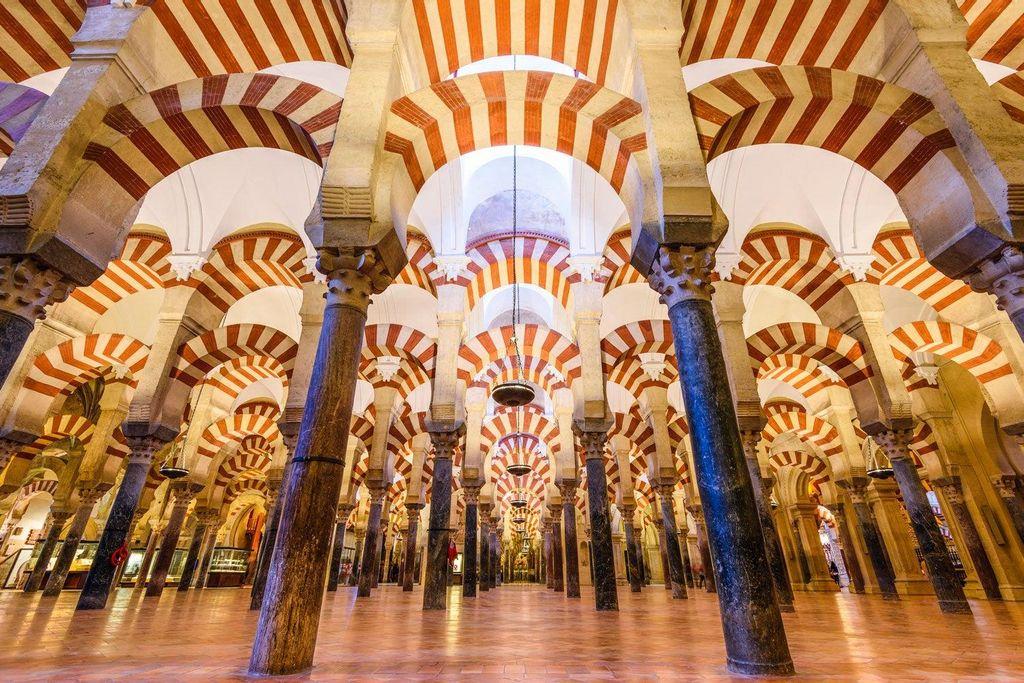
The Mosque-Cathedral of Córdoba began construction as a mosque in 785, and in 1238, after the Christian Reconquista of the city, it was consecrated as the cathedral of the diocese. Today, the entire complex constitutes the most emblematic monument of Hispanic-Muslim Umayyad art, and also of all Andalusian architecture alongside the Alhambra.
Toledo, Capital of Castilla-La Mancha (Alcázar)
The inspiration for El Greco, Toledo is known as the Imperial City for being the main seat of Charles I's court, and also as the City of Three Cultures for having been populated for centuries by Christians, Jews, and Muslims. Located on the right bank of the Tagus River, it has been a UNESCO World Heritage site since 1986 and houses various monuments, among which are the Alcázar, the Mosque of Christ of the Light, and the Monastery of San Juan de los Reyes.
Madrid and Its Magic
From Madrid to the sky. The Spanish capital has dozens of monuments and iconic places that you absolutely must visit. Some of the most popular include the Puerta de Alcalá, the Cibeles, the Prado Museum, or the Royal Palace.
Galicia and the Ribeira Sacra
Traveling through the Ribeira Sacra is to discover the most unknown and mysterious Galicia, entering a realm that for centuries belonged almost exclusively to monks and hermits. Located on the borders between southern Lugo and northern Ourense, this natural enclave boasts the highest concentration of Romanesque-style religious buildings in Europe.
Bilbao and the Guggenheim
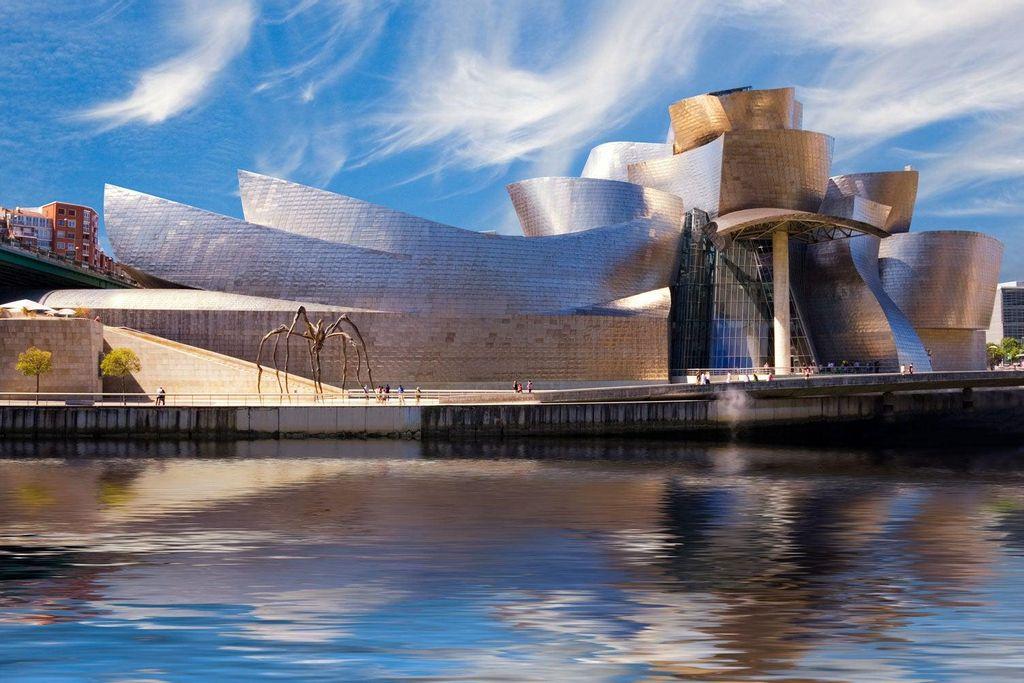
Bilbao, with the Guggenheim Museum as a great international emblem, is the gateway to the Basque cultural universe. Opened in 1997 and designed by Canadian architect Frank Gehry, it is considered the best building of the second half of the 20th century. Its avant-garde and groundbreaking design completely transformed the city from an industrial town into a modern urban center.
Barcelona and Gaudí's Art
All of Barcelona is marked by the imprint of Antonio Gaudí, the Spanish architect and leading representative of Catalan modernism. A very clear example is the Sagrada Família, the Casa Batlló, and Park Güell.