
A Journey Through Lorca's Madrid
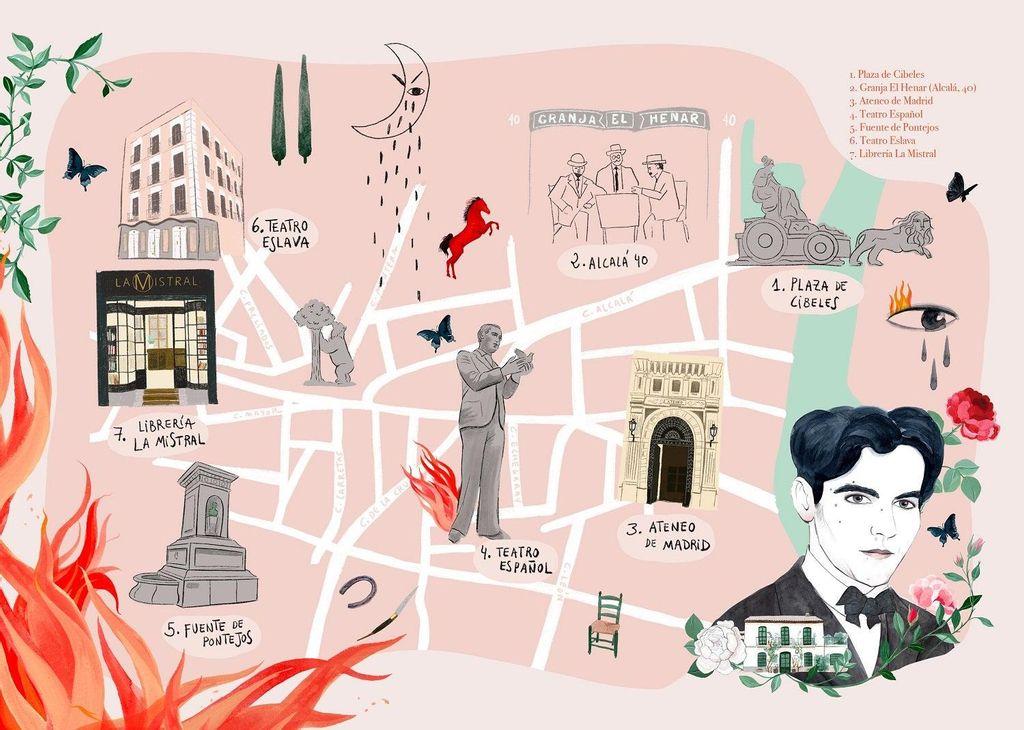

The presentation of Ana Bernal-Triviño's latest book, The Men of Federico (Lunwerg, 2022), is the reason we begin this Lorca route through Madrid. We explore the capital alongside the author, the book's illustrator, Lady Desidia, and María Belén Cantenys, director of the Rutas Teatrales company, to find Lorca's traces in Madrid.
Stop 1: Plaza de Cibeles

Margarita Xirgu, the actress, producer, and friend of Lorca, greets us at the first stop of this route. Margarita comes alive before our eyes thanks to this dramatized route and serves as a link between The Men of Federico and Ana's previous book, The Women of Federico (Lunwerg, 2021). The third book in the trilogy is yet to come.
María Belén tells us that initially, the gatherings were held at the Student Residence itself (Calle Pinar, 21), where Lorca arrived in 1919 (recent research dates it to 1920) and where he shared adventures with Luis Buñuel, José Bello, Salvador Dalí, José Moreno Villa, and Emilio Prados, among others. But the gatherings moved from the Residence to the cafés of the time, like Granja El Henar, Café Lion (also on Alcalá, but at number 59), Café Gijón (Paseo de Recoletos, 21)...
Stop 3: Ateneo de Madrid

We continue up Alcalá and take a left onto Calle Cedaceros to reach San Jerónimo street. We then proceed along Ventura de la Vega street to arrive at our new stop on the route: the Ateneo de Madrid (Calle del Prado, 21).
Our guide explains to us that many of the letters Lorca wrote from Madrid were stamped with the Ateneo seal, which is why we know the author spent time in its library. She reads us a couple of letters that Federico sent to his parents in 1920 and 1923, telling them how happy he was in Madrid.
The author of the book, Ana Bernal-Triviño, takes this opportunity at the Ateneo to talk about a special place in her book, the Huerta de San Vicente, the focal point of her two books to date about Federico and the place where she plans to conclude her trilogy. The illustrator, Lady Desidia, confesses that it was at this house of Federico's family in Granada where she bought a little sketchbook of Lorca that has been a total inspiration for her in both books. Lady Desidia immersed herself in Lorca's garden to draw the female characters from Lorca's works, to draw flowers, hugs, tears, and fire on every page. She also drew Federico himself, sitting at the piano in his house in Granada.
Stop 4: Teatro Español
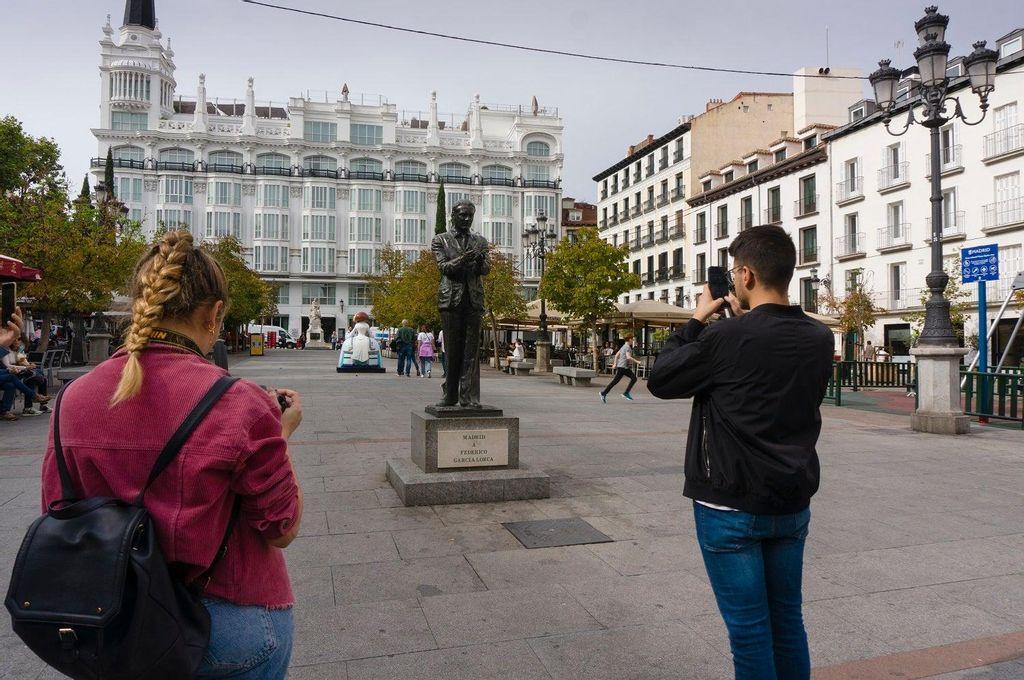
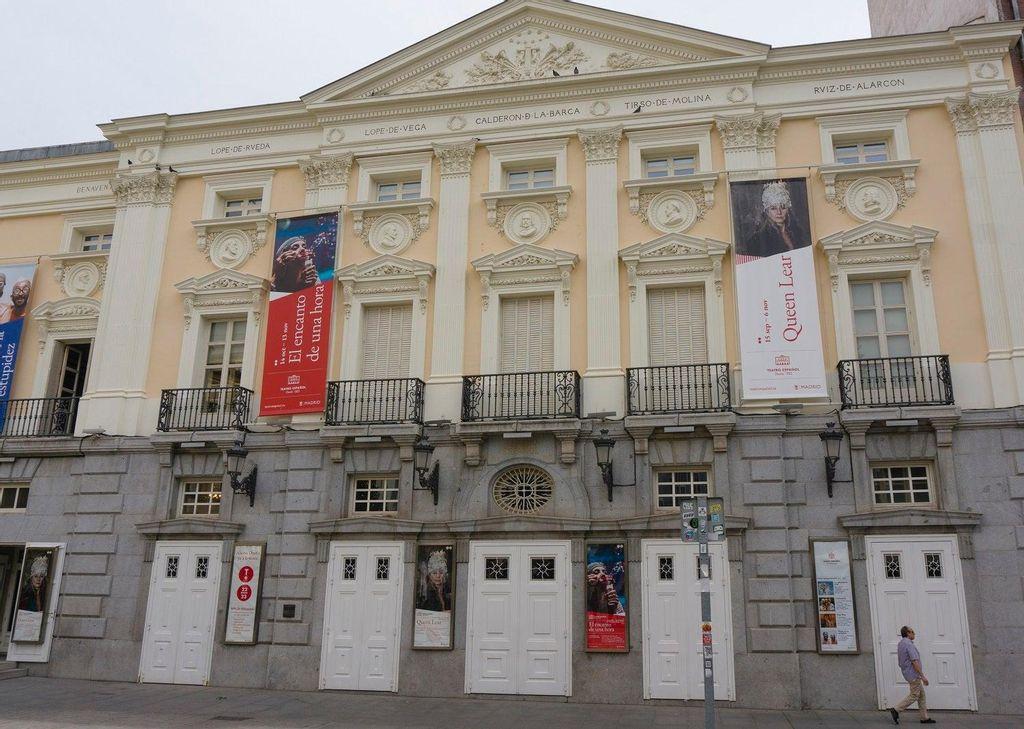
We make our way to the Teatro Español via Calle del Prado, where we encounter the bronze Federico looking towards the facade of this theater located in Plaza de Santa Ana in Madrid, where he premiered several of his works. On this occasion, we find Lorca without his faithful lark in hand, as someone stole it in the summer of 2022.
Another theater where Lorca premiered works was the Teatro Eslava, which is also visited on these dramatized routes. It was at the Eslava, on March 22, 1920, that Lorca premiered his first theatrical work, The Butterfly's Curse.
Stop 5: Fuente de Pontejos
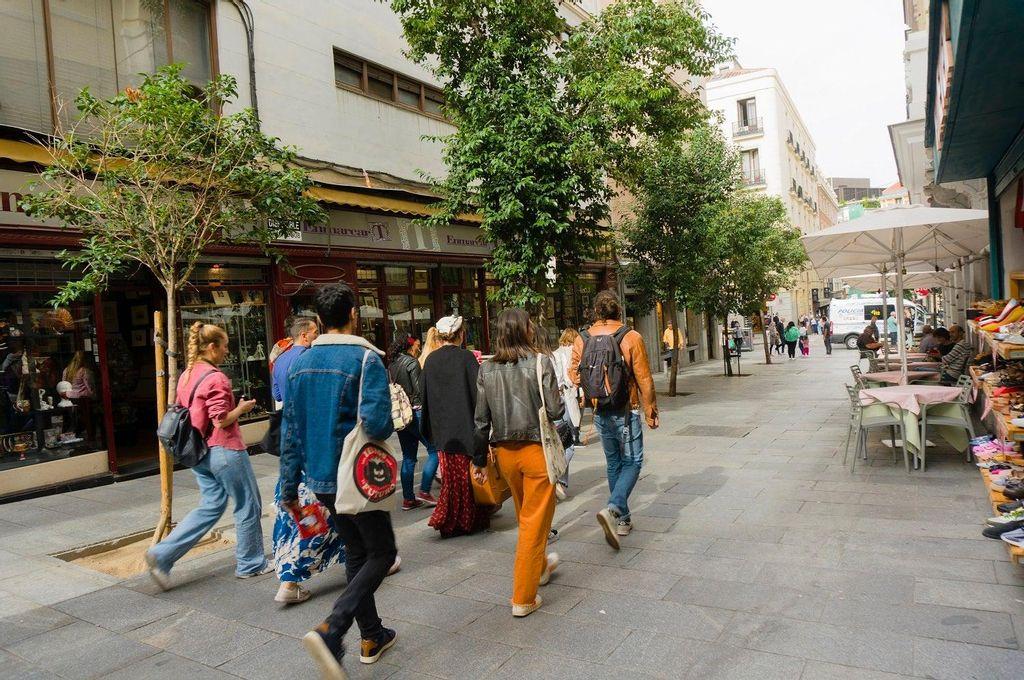
We leave Plaza de Santa Ana headed towards Jacinto Benavente and then, via Calle de la Bolsa and turning onto Calle de la Paz, we arrive at Teatro Albéniz. A few meters further on, in Plaza de Pontejos, we reunite with Margarita Xirgu, who, towards the end of this route, tells us about her last moments with Federico. Xirgu talks to us about how she headed to Mexico while Federico returned to Granada in 1936.
Stop 6: Librería La Mistral


We conclude this special Lorca route through Madrid at Librería La Mistral, a place that has been open for just over a year in the capital and has already become a meeting point for the literary scene. Here, Ana Bernal-Triviño and Lady Desidia have presented The Men of Federico, their second tribute together to the artist's figure, a book filled with Lorca's symbolism right from the cover, with that blood-red color.
Ana and Lady Desidia have again brought together the female characters from Lorca's works, who start by discovering a lost manuscript of Lorca titled 'Free Women,' a manuscript that will change their lives once more. In this second book, in addition to Lorca's female characters, the male ones also appear, coming to settle scores with them and with their author.
The routes usually last two hours and include about eight stops, with some parts dramatized.