
Best Things to Do:
Just When We Thought We Had Seen It All, Storseisundet Arrives, 'The Bridge to Nowhere'
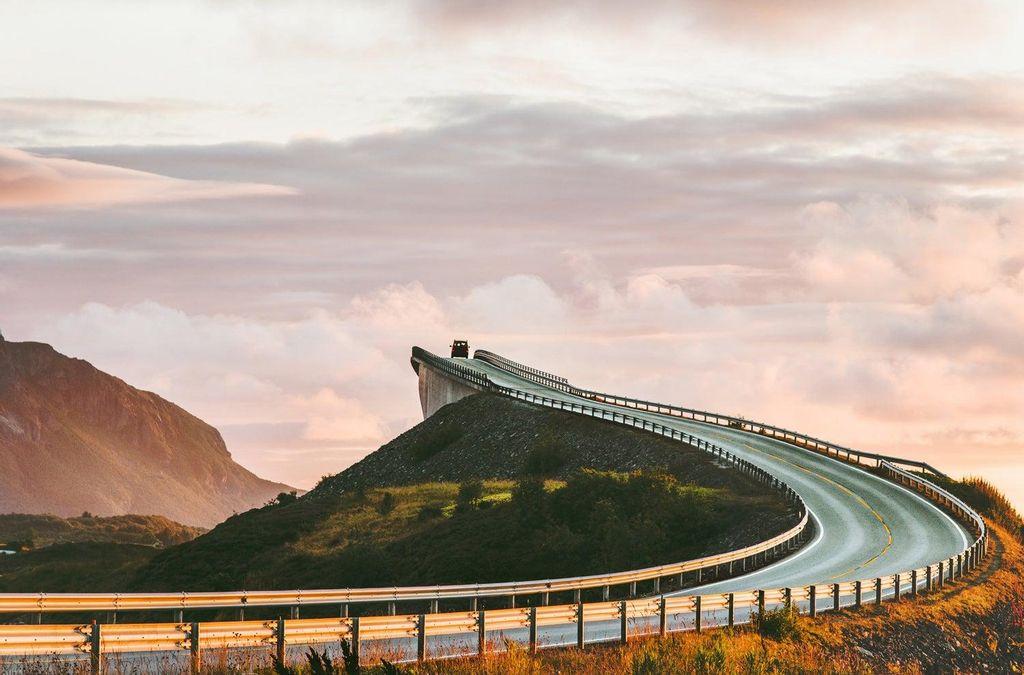
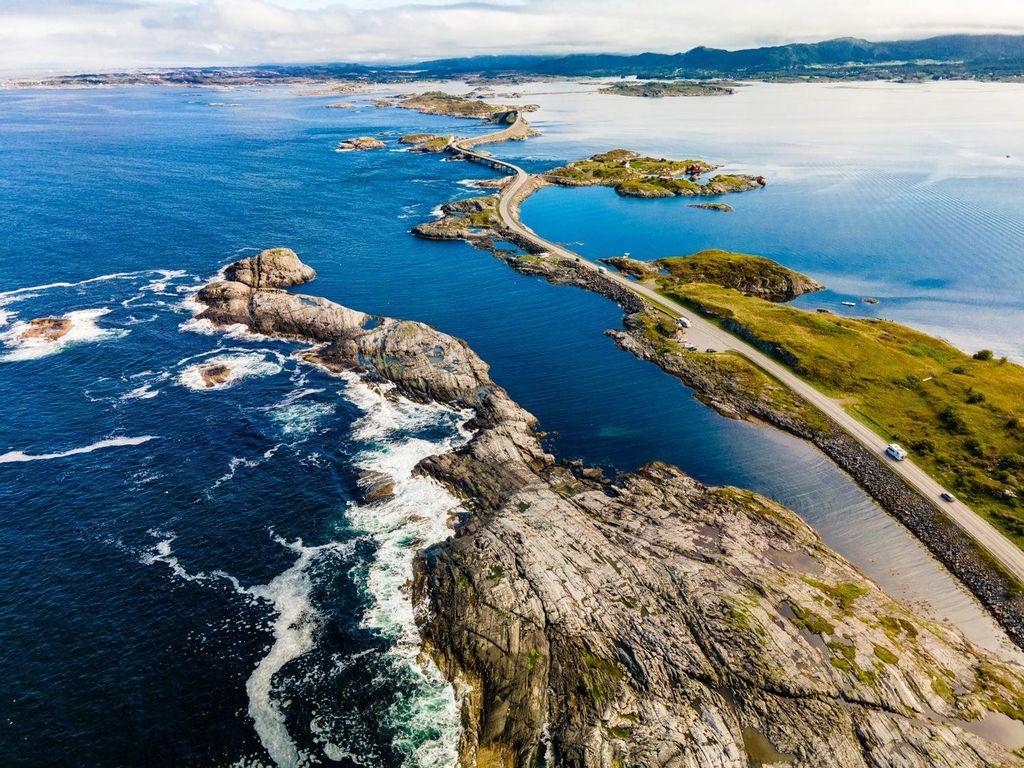
The Atlantic Road, one of the most beautiful roads in the world and the most dangerous in Norway. And, in one of its segments, the Storseisundet Bridge, an incredible engineering marvel that has rightfully become one of the biggest tourist attractions in the country. We delve into the land of fjords to discover what makes these two great constructions unique.
A Road that Battles the Atlantic Ocean

The Atlantic Road, as it is popularly known, is a stretch of just over eight kilometers that connects the different islands of an archipelago located between the municipalities of Eide and Averøy, along the Atlantic coast of this Scandinavian territory. Positioned more than 500 kilometers north of Oslo, this short segment of county road 64 is one of Norway's most cherished and visited routes thanks to its distinctive features.
The challenge of connecting the island of Averøy with the Romsdalshalvøya peninsula, within the Nordmøre region, began in 1909 with the proposal of a railway line, but the difficulties and the growing popularity of automobiles led to its abandonment. In the 1970s, the idea of linking this part of Norway resurfaced, with construction beginning in 1983 and lasting six years due to the area's adverse weather conditions. A major work that was classified within Norway as an incredible feat and has been expanding since 2005 with the Atlantic Ocean Tunnel, connecting the island of Averøy to Kristiansund, this time beneath the waters.
The series of viaducts and bridges just meters above sea level and the spectacular views have transformed the original segment of this Norwegian road into one of the country's top attractions, designated as a national tourist route and considered one of the most beautiful in the world, as well as the most dangerous in Norway due to its winding path with sharp curves, steep inclines, and the gusts of wind and ocean waves crashing against the asphalt during storms.
The Iconic Bridge of the Atlantic Road

Along the eight-kilometer stretch of the Atlantic Road, there are eight bridges, with Storseisundet being the longest, tallest, and most iconic of them all. Its 260 meters in length and 23 meters in height make it an impressive structure, but its unique design and exceptional curvature are what have propelled it to worldwide fame.

The requirements of the topography meant that this extraordinary bridge was constructed with an unusual curvature and slope - reaching a maximum gradient of 8% - creating an optical illusion while crossing it that makes it appear as if it abruptly cuts off mid-way like a cliff leading into the ocean. This feature has earned this segment of the Atlantic Road the nickname 'the bridge to nowhere', popularized from a publication in 2011 by the UK's second most read newspaper, the Daily Mail.
During its construction, there were up to twelve interruptions to the work due to strong winds, which gives an idea of the intensity with which the waves impact the structure during the strongest storms. This has not gone unnoticed by tourists, who come to this spot during the autumn - the most favorable season in this regard - hoping to witness it first-hand.