
August Blue Supermoon: When and Where to See the Largest Moon of 2023
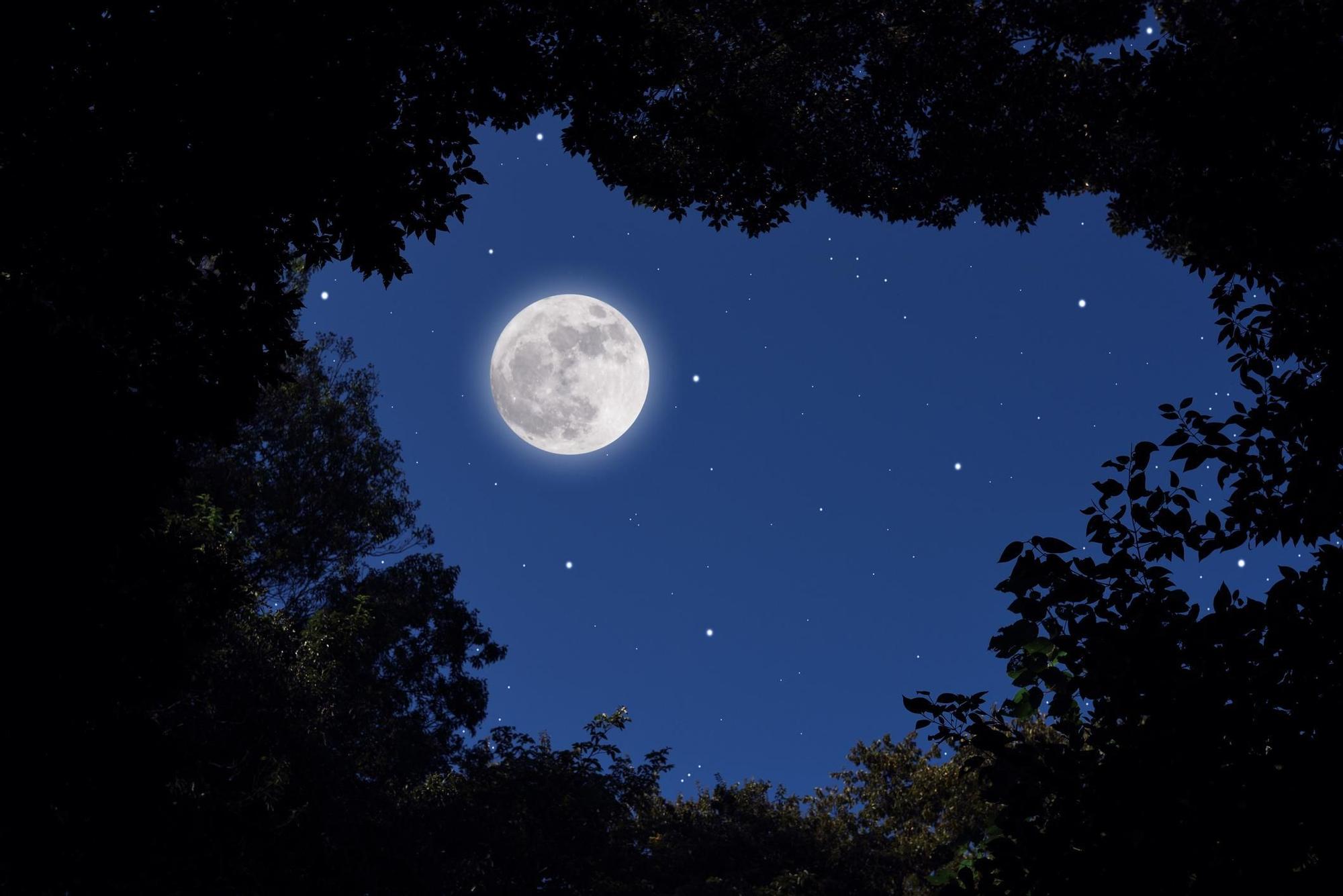
August will be an astronomically unique month, as we will experience a second full moon, which is quite rare. Additionally, this will not be just any full moon; we are talking about a blue supermoon, which occurs when the moon is at its closest point to the Earth. This phenomenon will take place on the night of August 30th to 31st.
The term 'blue' is assigned when two full moons occur in the same month, something that happens once every several years. In fact, this phenomenon will not occur again until 2037, when two supermoons will coincide in one month. However, this does not mean that you will see the earthly satellite as blue; it is simply the concept used when this double full moon occurs in the same month.
When and Where to See the Blue Supermoon
The blue supermoon will be visible from anywhere in the United States from 9:30 PM on August 30th until 7:50 AM on August 31st. Its peak, when it will appear largest and brightest, will be at 3:37 AM.
In 2023, we will have a total of 13 full moons, one every 29 and a half days. Thus, each year consists of slightly more than 12 lunar cycles, so the remaining days accumulate until two full moons occur in the same month. This typically happens about every two and a half years. In fact, the last blue moon occurred on October 31, 2020, after another full moon at the beginning of the month.
Supermoon and Blue

Moreover, the one on August 30th will also be a supermoon, which is what full moons are called when the satellite is closest to the Earth. In this case, the moon will be 357,181 kilometers away, the closest we will have this year. The next supermoon is expected on September 29th, when it will be 359,910 kilometers away.
This nocturnal phenomenon will noticeably affect the tides. Especially in the northern United States, where the rise and fall of the tides are most pronounced, the low tide will drop below half a meter. This will allow some areas that are normally partially covered by water to be exposed for a few hours, as the tide usually does not drop this low under normal conditions.