
August at Gai Jatra, the Nepali Festival of the Dead
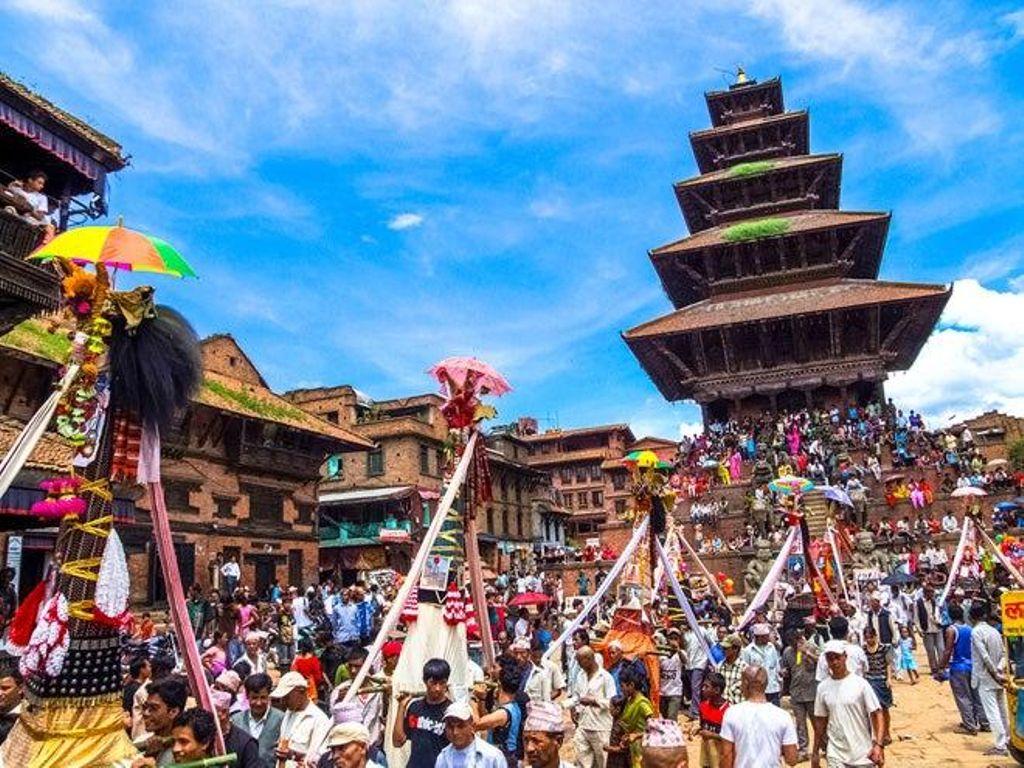
Although celebrated throughout the country, Gai Jatra is a festival that dates back to the traditions of the early inhabitants of the Kathmandu Valley, the Newars. Therefore, it follows the Nepali lunar calendar, under which this year it will take place on August 19, the first day of the Bhadra month and a day after the full moon.
Also known as the Cow Festival, Gai (cow) Jatra (procession) fills the streets of every corner of Nepal with music and dance. The festival begins at each house with a series of offerings and prayers, later spilling out into the streets in a parade of music and dance known as Ghinta Ghisi. In the city of Bhaktapur, during this parade, the so-called Taha Macha are carried, tall and colorful figures made by each family with bamboo and fabric, crowned with a cow's head and a photo of the deceased they wish to honor. Other families, in turn, carry smaller figures and parades or dress their children as cows. In any case, throughout the day and into the night, the streets fill with music, dance, and a deep scent of incense. Sunset is the moment when funny and grotesque costumes and social and political satire make their appearance.
During Gai Jatra, the cow, a sacred animal in Hindu culture, represents Lakshmi, the goddess of fortune, who guides souls in the afterlife to Yama, the Hindu god of death. The origin of this festival lies in the death of the favored son of King Pratap Malla's wife. In her sadness, the king ordered that all families who had lost a loved one join their mourning by bringing cows out into the streets. When this stopped comforting the queen, the king offered a reward to anyone who could make her laugh. It was then that the streets filled with costumes and parodies until the queen laughed, and thus this festival was born, celebrated mainly in Kathmandu, Patan, Kritipur, and Bhaktapur, where the celebrations last almost a week.
Gai Jatra is preceded by two other festivals, Janai Purnima and Raksha Bandhan, which will be celebrated this year on August 18. Janai Purnima is a festival in which only men of the Chhetri and Brahmin castes participate, renewing their janai, a sacred thread worn over the left shoulder throughout the year. The ceremony takes place at the sacred lakes of Gosainkund and at the Kumbeshwar temple in Patan. Meanwhile, Raksha Bandhan is a celebration of love between brothers, family, or friends through a ritual that ties the rakhi (sacred thread) to the wrist of the loved one.
To visit Nepal during these festivities, Incentive Group of Companies helps plan the trip.