
The Bocca della Verità


Rome is a city of legends. To begin with, its origin traces back to Romulus and Remus, twins who, seen as a threat by King Amulius, were abandoned by the banks of the Tiber River until a she-wolf rescued them and took care of them. Beyond the founding of the Eternal City, today we focus on the legend surrounding the Bocca della Verità, a sculpture located in the church of Santa Maria in Cosmedin.
This ancient mask (dated around the 1st century) is made of pavonazzetto marble and is one of the sculptures that captivates travelers who enjoy Rome. However, travelers should know that to access it, there is an entrance fee.
The Bocca della Verità has a diameter of 1.75 meters, weighs about 1,300 kilos, and represents a bearded male face with hollowed eyes, nose, and mouth. There is no certainty about whom this face represents, but depending on who tells the story, it could allude to Jupiter, Poseidon, an oracle, or even a faun.
Regarding the functions of this iconic sculpture, there are several versions. Some historians claim, for example, that the disc was actually the cover of a sewer used in the nearby Temple of Hercules Victor.
The Legend of the Bocca della Verità
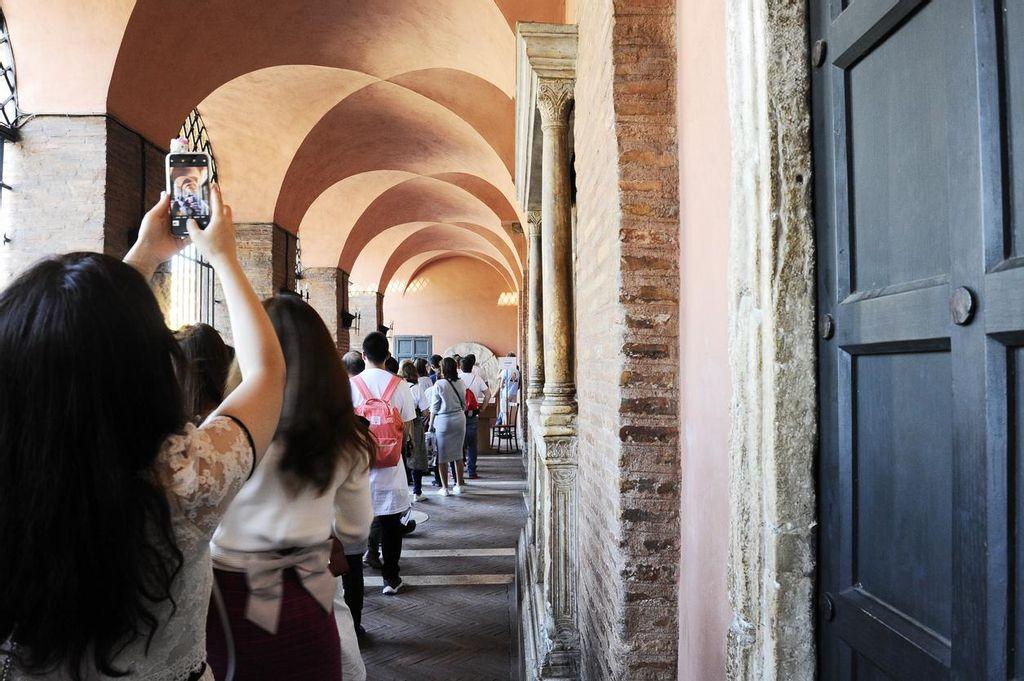
According to legend, a young Roman woman was accused by her husband of adultery, and he wanted to submit her to the trial of the Bocca della Verità. Knowing she would lose her hand, the woman staged a little play with her lover, who pretended to be a madman that kissed her moments before she was to face the relentless sculpture.
As she placed her hand inside, she swore that she had never kissed anyone other than her husband, except for the madman who had approached her moments before. In this way, and by telling the truth, she managed to keep her hand thanks to a magnificent performance. It is said that since then, the Bocca della Verità has never closed again to judge anyone, neither for their guilt nor for their innocence.
The Bocca della Verità in 'Roman Holiday'

The myth of the Bocca della Verità became globally known thanks to the 1953 film 'Roman Holiday'. In the film, Audrey Hepburn plays a princess who escapes her royal duties and discovers the Eternal City through a reporter (played by Gregory Peck), who shows her around on a Vespa.
At one point in the movie, the protagonists visit the Bocca della Verità and Peck, after telling Hepburn the legend, pretends to lose his hand. A scene that undoubtedly is part of cinematic history.
The Bocca della Verità, ancient lie detector

Piazza della Bocca della Verità was a key point during the medieval period for the trials of petty criminals. According to another legend, those accused of minor crimes had to prove their innocence by placing their hand inside the sculpture.
If they told the truth, they would come out unscathed, while if they lied, they would lose their hand. However, it seems there was some trickery involved, as on the other side of the sculpture there was an executioner with a sword who decided whether the accused was lying or telling the truth.
What to See Around the Bocca della Verità
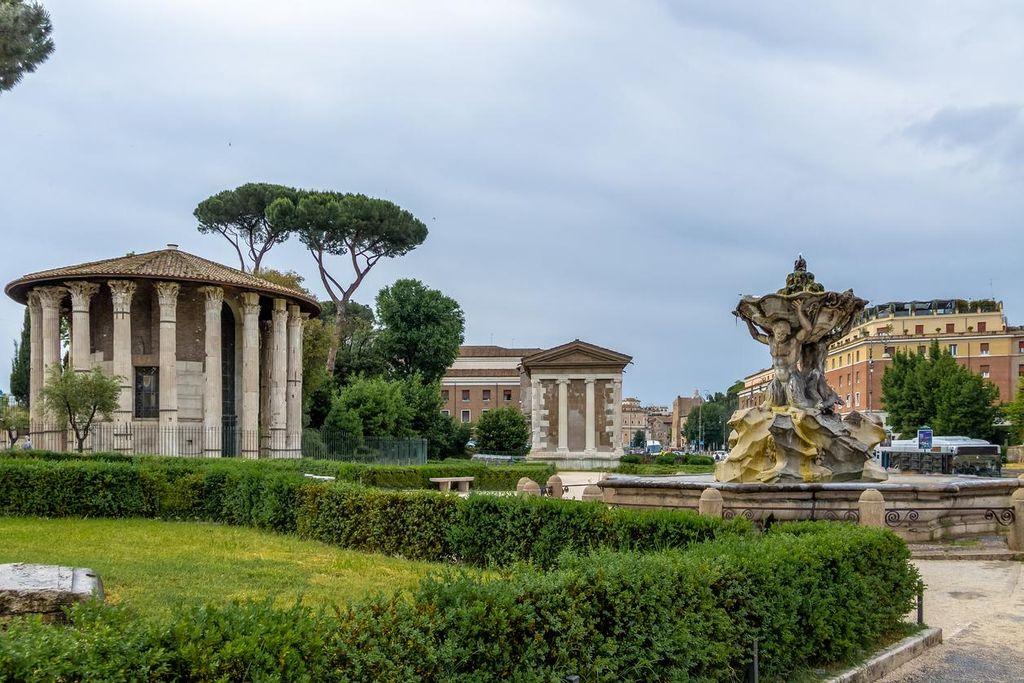
Just opposite the Bocca della Verità is the Boarium Forum, the cattle market of ancient Rome and the site where the first gladiator combat took place in 264 B.C.
It's worth taking a stroll around the area to discover the structures that still stand today: the Temple of Hercules Victor (notable for its circular shape), the Temple of Portunus, the arches of Janus and the Argentarii, and the beautiful Fountain of the Tritons, created by Francesco Moratti which references the Triton Fountain by Bernini located in Barberini Square.
Discovering the Bocca della Verità is one of the best things to do in Rome. However, even though it is just a legend, do you think you could put your hand in the mouth while telling a lie?