
- 1. On Book Day... exploring the most unique libraries in the world
- 2. Trinity College Library, Dublin
- 3. Public Library of Évora
- 4. National Library of Malta
- 5. Royal Cosmological Society, Santa Cruz de La Palma
- 6. Insular Library of Las Palmas de Gran Canaria
- 7. Can Vivot Library, Palma de Mallorca
On Book Day... exploring the most unique libraries in the world
Reading allows us to mentally travel to unimaginable places; sometimes the very books themselves are hidden in spaces that are worth visiting, like the libraries we showcase below: unique spaces around the world that have become true refuges where you can dive into captivating stories while exploring iconic historical buildings of great tourist and cultural value.
Trinity College Library, Dublin


The Irish capital boasts one of the most impressive and iconic libraries on the planet, both for its visual spectacle and for the history that resides in its halls. Trinity College has welcomed illustrious visitors such as Oscar Wilde, Samuel Beckett, and Bram Stoker, and today remains one of Dublin's key points of interest.
Today, the library houses the largest collection of manuscripts and printed books in Ireland, as it has received a copy of every published work in Ireland and Great Britain since 1801, totaling nearly 3 million items. The main hall, known as the 'Long Room,' constructed between 1712 and 1732, is 65 meters long and contains over 200,000 of the library's oldest books. The endless shelves fill the air with the scent of ancient wood while dozens of marble busts of renowned thinkers and writers watch over the room.
Without a doubt, the most famous gem of the library is the Book of Kells, probably the most famous medieval manuscript in the world, which contains the four Gospels of the New Testament written in Latin. Its authorship is attributed to monks from the Scottish island of Iona, who created it in the early 9th century to spread the message of Christ. Also within the library, we can find on display what is said to be the oldest harp preserved in Ireland, made of oak and willow with bronze strings.
Public Library of Évora


The Public Library of Évora is an imposing building in the upper part of the city, and an essential stop on any walk through the historic streets of Évora. It was inaugurated in 1666 with the aim of being the College of the Mozos of the Cathedral and is now one of the oldest and richest libraries in Portugal. Its collection of works is enormous and includes 664 incunabula; 6,445 printed books from the 16th century; various manuscripts, cartography, printed music, and 20,000 titles of periodicals.
In addition to all the ancient works, the Public Library of Évora has accumulated numerous works in its collection since 1931 because, from that date, it became a Legal Deposit, that is, the legal obligation for any publisher of books or publications to send one or more copies of any work printed in Portugal to a specific repository. No more and no less than... 612,000 volumes! It's no surprise that many researchers from the University of Évora, other higher education institutions in Portugal, and even from around the world come to this library to conduct research.
National Library of Malta

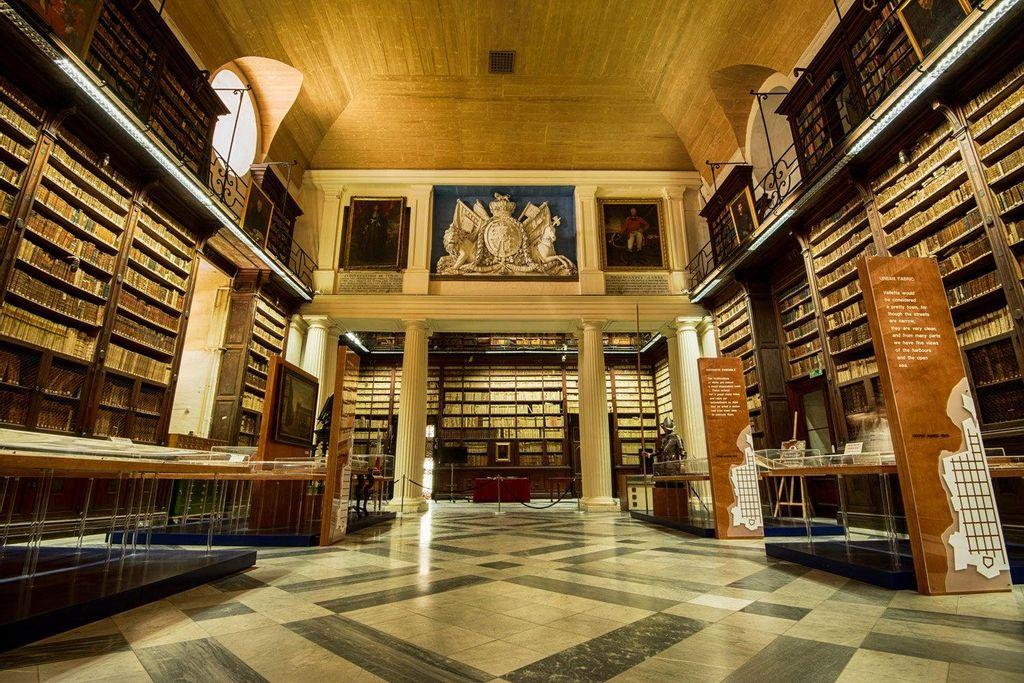
Situated in the center of Valletta, the National Library of Malta is one of the great treasures of the Maltese islands. A reference and research place that preserves the memory of the country with works that span from the Middle Ages to the digital era. All its documents are of great importance, not only for understanding the history of the Maltese islands but also for the assessment of European and Mediterranean history.
Among its most notable collections is the archive of the Order of St. John of Jerusalem, Rhodes, and Malta, which encompasses nearly 7,000 volumes and 900 years of history (from 1101 to 1798), or the oldest Maltese poem in history called Il-Kantilena written by Pietru Caxaro around 1458.
Royal Cosmological Society, Santa Cruz de La Palma
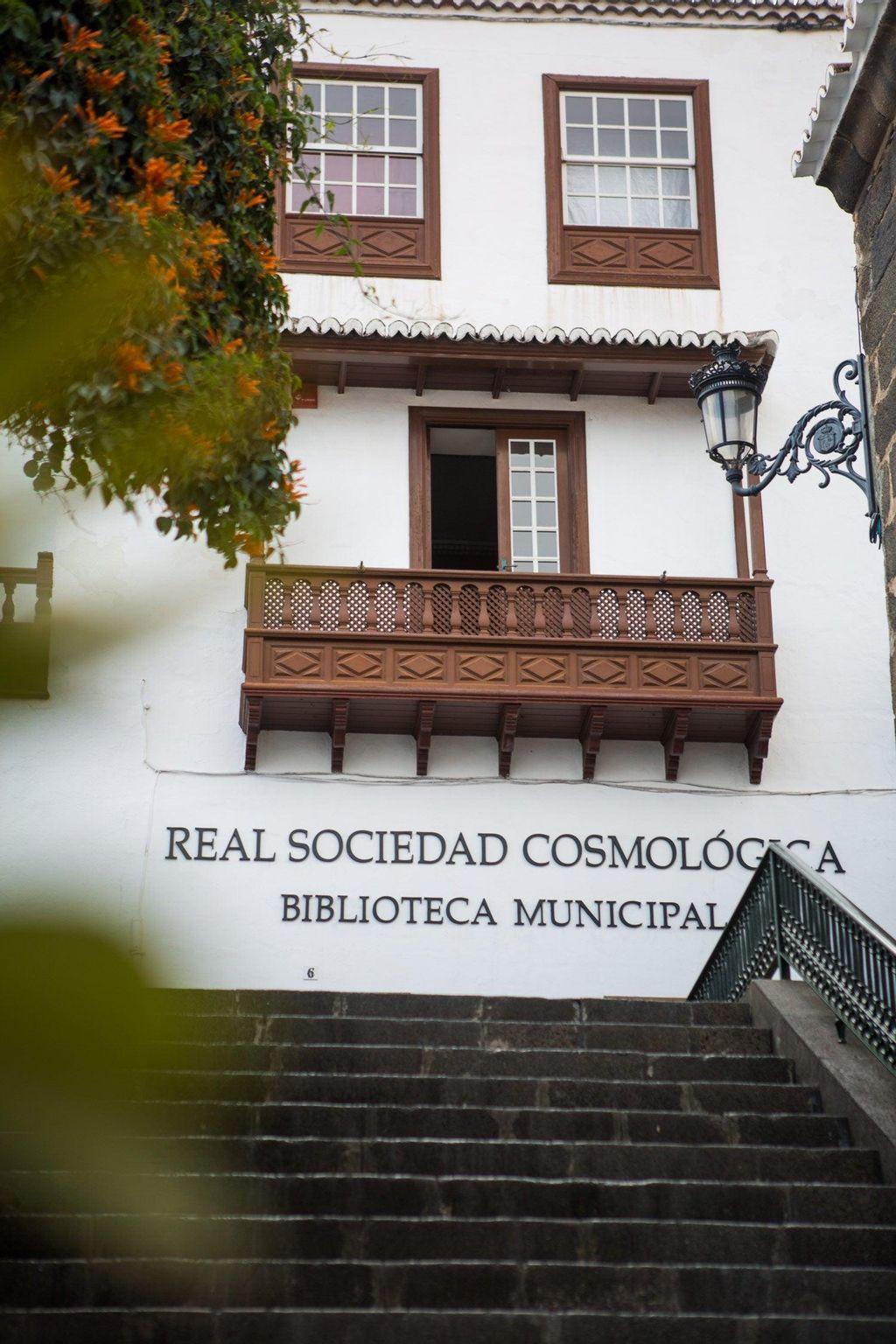
In Santa Cruz de La Palma is the headquarters of the Royal Cosmological Society, founded in 1881, and whose library, created later, is one of the most unique and oldest. The goal of this centennial institution has been to promote knowledge of the natural sciences throughout its history. It has played a very significant role in the scientific history of the Canary Islands, gathering doctors, botanists, humanists, and recognized researchers. Its initial aim was to create a Natural History and Ethnographic Museum for the study of these sciences, especially those related to the Guanches.
Its library, inaugurated in 1909 and named 'Cervantes' in honor of the author of Don Quixote, now serves as a public library and boasts a documentary collection of over 25,000 volumes. It also houses a valuable archive largely coming from the funds of expropriated convents in La Palma, along with other works important to the island's cultural heritage.
Insular Library of Las Palmas de Gran Canaria
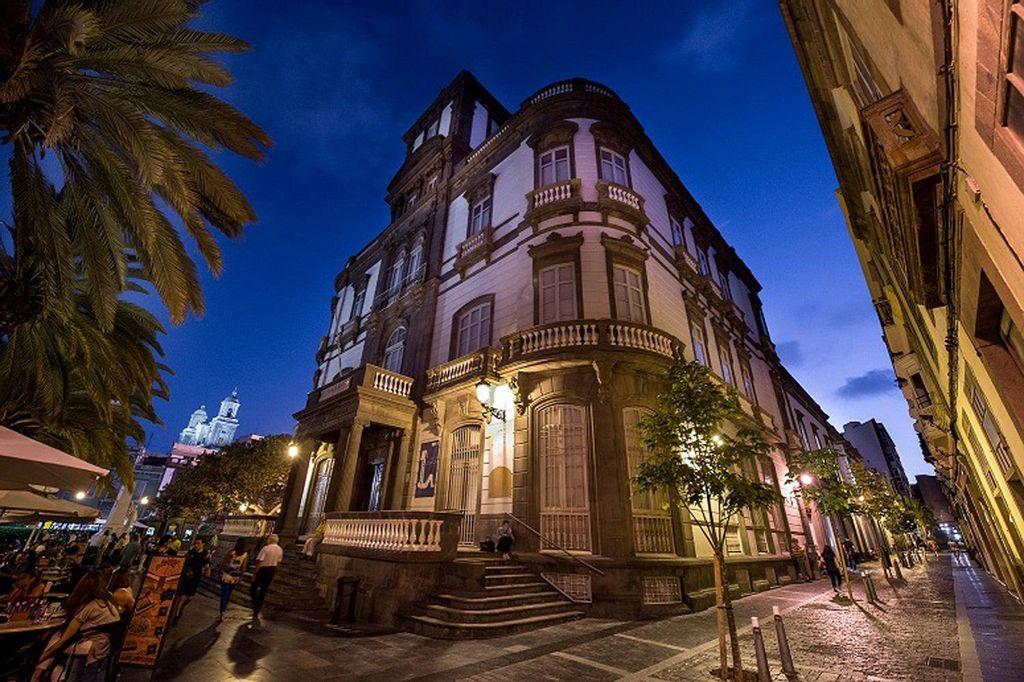
Located in the heart of Triana, we find the most peculiar and beautiful library in Las Palmas de Gran Canaria. Its historical building, declared of cultural interest, captivates any tourist visiting its picturesque streets. Contrary to what it may seem from the exterior of this magnificent Romantic Palace, the interior is full of life and diverse stories that will make you feel like the true protagonist of the tales told by its books.
With over 2,142 square meters of space, the Insular Library of Gran Canaria uniquely contributes to the enrichment of the island, offering unique value to users specializing in humanistic topics. Due to its large size and to foster participation and involvement from citizens, the library also offers various permanent activities, group activities for schools, organizations, and the general public, weekly activities like workshops or talks, and virtual activities programmed through social media and the library's website.
Can Vivot Library, Palma de Mallorca


In the Balearic Islands, we also find great historical buildings that house an exciting world of stories waiting to be discovered. This is the case of the Can Vivot library, located in the former palace of the first Marquis of Vivot, an impressive historical building from the 17th century that retains all its architectural charm. So much so that it was declared a Cultural Interest Asset and National Artistic Monument in 1973; moreover, its main patio is one of the most emblematic in Mallorca.
Inside, we find an incredible library decorated with unique pieces of architecture, geography, and paintings by the Milanese painter Giuseppe Dardanone. The library also houses historical manuscripts and printed works accumulated from many generations ago dating back to the time of the Ecclesiastical Disentailment. The library will soon open its doors to all types of audiences.
Additionally, throughout the islands, we can discover various buildings that host a multitude of cultural activities and services, but above all, captivating stories that transport us deep into our imagination. This is exemplified by the Cort Library in Palma de Mallorca, the library of the Monastery of the Real, and the Diocesan Library of Mallorca.