
Christopher Columbus, Admiral of the Ocean Sea
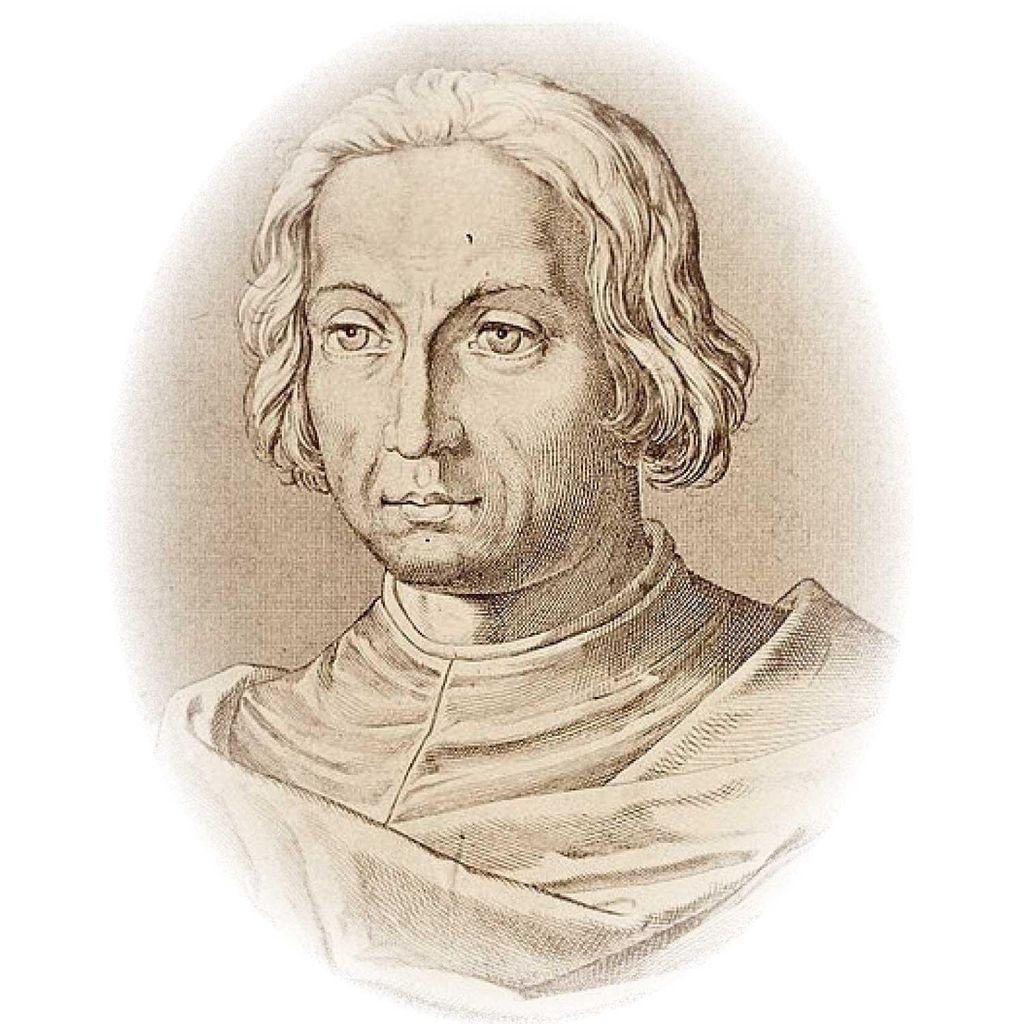

His plan was as outrageous as it was brilliant: to reach the East by sailing west across the unknown ocean; only he miscalculated the circumference of the Earth and along the way encountered - more than discovered - America. Christopher Columbus had extensive experience at sea: "From a very young age, I went to sea as a navigator, and I have continued until today. The very profession inclines those who pursue it to desire to know the secrets of this world...". From the Mediterranean to the western coast of Africa; he could have reached Iceland, accompanying merchant fleets as a privateer-escort. Many suspect he was born in Genoa; the date is uncertain; equally dubious is his lineage: although he never revealed it, it is believed his father was a weaver. He served as a cartographer.
The map of Toscanelli filled him with intuition to carry out his purpose; beyond the reading of the classics and Marco Polo. It took a while to obtain funding; in the end, it was granted by the Catholic Monarchs, although the Admiral had to pay a significant part to allow the trio of caravels to depart from Palos de la Frontera, three days into August 1492. It was a disappointment not to find the Great Khan in the Bahamas, as he was convinced that Cuba was Cipango and that he would return laden with gold. The venture took a turn when he lost the monopoly on exploration and was dismissed as governor for being a despot and a poor manager.
He litigated to recover royal grants for his children - one was legitimate, the other illegitimate - until he died in Valladolid in 1506 afflicted by arthritis, without completing the project of his life: landing in the coveted India (the real one).

The logbook that Columbus wrote during his first of four voyages constitutes the first record of a new and strange world for Europeans. "In all this region, there are very high mountains that seem to reach the sky, compared to which that of the island of Tenerife seems nothing in height and beauty, and all are green, full of groves, which is a marvelous thing." The original diary was lost; the text below is a version by Fray Bartolomé de las Casas published by Verbum, and refers to the day when they sighted land after 33 days of sailing through the Sea of Darkness.
"Your Highnesses, believe that this land is the best, most fertile, temperate, flat, and good land in the world."
And because the caravel Pinta was more sail-worthy and went ahead of the Admiral, she found land and signaled as the Admiral had ordered. This land was first seen by a sailor named Rodrigo de Triana; for the Admiral, at ten at night, while in the stern castle, saw a light, although it was so hazy that he did not want to assert that it was land; but he called Pero Gutiérrez, the King's steward, and told him that it seemed like a light, to take a look, which he did and saw it; he also told Rodrigo Sánchez de Segovia, who the King and Queen sent in the fleet as a surveyor, who saw nothing because he was not in a position to see it. After the Admiral spoke, it was seen once or twice, and it looked like a small candle made of wax that was rising and falling, which seemed to few to be a sign of land. But the Admiral was certain that they were near land. Therefore, when they said the Salve, which they used to say and sing in their own way, all the sailors were there, the Admiral urged and warned them to keep a good watch at the bow castle and to look closely for the land, and that whoever first said he saw land would immediately be given a silk coat, without the other rewards that the Kings had promised, which were ten thousand maravedís of interest to whoever saw it first.
Two hours after midnight, the land appeared, from which they would be two leagues away. They rigged all the sails and remained with the treo, which is the large sail without bonnets, and they waited until Friday, when they arrived at a little island of the Lucayos, which was called Guanahaní in the Indian language. Then, naked people came, and the Admiral went ashore in an armed boat, along with Martín Alonso Pinzón and his brother Vicente Yáñez, who was captain of La Niña. [...]
The Admiral called the two captains and the others who jumped on shore, and Rodrigo de Escobedo, the scribe of the whole fleet, and Rodrigo Sánchez de Segovia, and said that they should write down as faith and testimony how he, before all, took, as he indeed took, possession of the said island for the King and Queen, making the necessary protests, as is more fully contained in the testimony that was made there in writing. Then, many people from the island gathered there. What follows are the formal words of the Admiral, in his book of his first voyage and discovery of these Indies.
"I -he says- because they had much friendship for us, since I knew they were a people who would better be befriended and converted to our Holy Faith with love than by force, I gave some of them red caps and glass beads to wear around their necks, and many other things of little value, with which they were greatly pleased and became so attached to us that it was a marvel. Those who came to our ships would swim to us, bringing parrots and balls of cotton thread and spears and many other things, and they traded them for other things that we would give them, like glass beads and bells. In short, they took and gave everything willingly. But I thought they were very poor in all. They were all naked as their mother bore them, and so were the women, although I saw no more than one very young girl. And all I saw were young men, none older than thirty years: very well made, with beautiful bodies and very good faces: their hair thick, almost like horse hair silk, and short: they wear their hair above their eyebrows, except for a few behind that are long, which they never cut. They paint themselves dark, and they are the color of the Canaries, neither black nor white, and they paint themselves white, and others red, and whatever they find, and paint their faces, and their bodies all over, and only their eyes, and just their noses. They carry no weapons nor do they know them, for I showed them swords and they took them by the edge and cut themselves out of ignorance. They have no iron; their spears are sticks without iron, and some of them have at the end a fish tooth, and others of other things. They are all united. They are of good stature, great size, and good gestures, well made. I saw some who had marks of wounds on their bodies, and I gestured what that was, and they showed me how people from other islands nearby came to take them and they defended themselves. And I believed, and I still believe, that people from the mainland come to take them as captives. They must be good servants and of good wit, as I see they quickly repeat everything I said, and I believe they would easily become Christians; for I thought they had no sect. I, pleasing to Our Lord, will take six of them to Your Highnesses when I leave so that they can learn to speak. I saw no beast of any kind, except parrots, on this island." All are the words of the Admiral.