
- 1. Celebrating Eiffel's Centenary with a Tour of His Greatest Works
- 2. Eiffel Tower, Paris (France)
- 3. Statue of Liberty, New York (USA)
- 4. Palácio de Ferro, Luanda (Angola)
- 5. Garabit Viaduct, Cantal (France)
- 6. Adolpho Lisboa Municipal Market, Manaus (Brazil)
- 7. Iron House, Iquitos (Peru)
- 8. Long Bien Bridge, Hanoi (Vietnam)
Celebrating Eiffel's Centenary with a Tour of His Greatest Works
More than 500 projects in 30 countries across five continents over 59 years. These are the impressive figures carried by engineer Gustave Eiffel, who ceased to connect the world with his bridges, viaducts, and various other works on December 27, 1923. In celebration of the centenary of his death, we explore his works around the world, which go beyond the Eiffel Tower and the Statue of Liberty.
Eiffel Tower, Paris (France)

It was the tallest tower in the world for 42 years, standing at 1,000 feet (304 meters), a round number that no building could achieve in 1889. That it still stands today is a small miracle. It was originally conceived to last only 20 years as a monumental gateway to the 1889 World's Fair in Paris. Today, it is the most visited paid monument in the world, achieved through the efforts of Eiffel and the 300 workers who managed to erect it in just two years, two months, and five days. Eiffel won the competition to build a tower designed by two engineers from his company Eiffel et Cie, Émile Nouguier and Maurice Koechlin, but he tweaked the design, making the tower a personal project and refusing to have it dismantled 20 years later by placing permanent rivets to replace the bolts that joined its pieces.
Statue of Liberty, New York (USA)
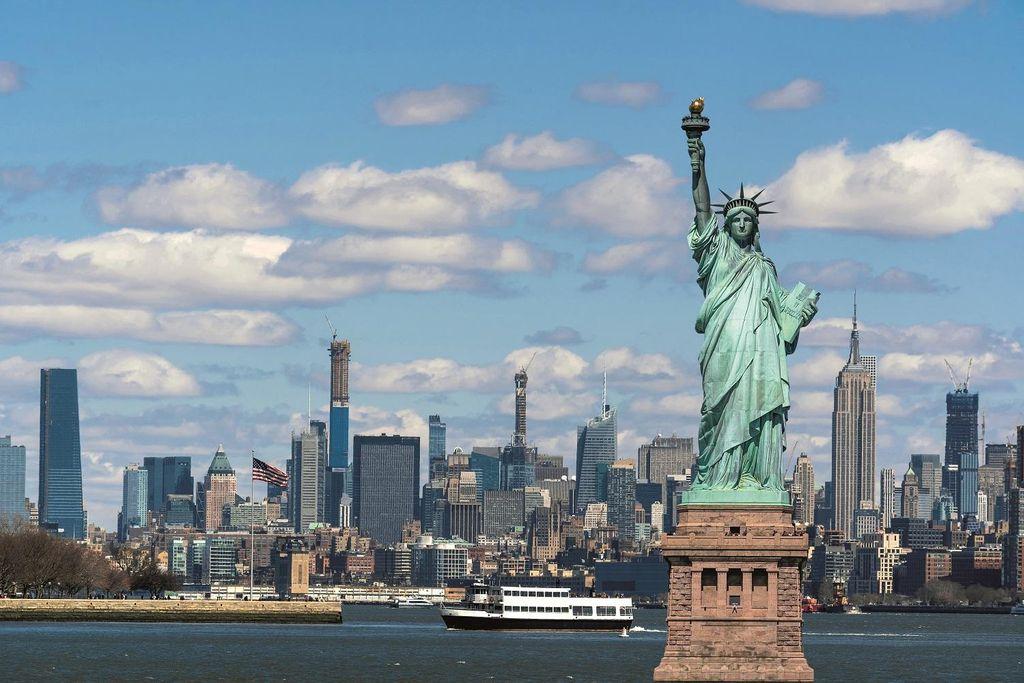
The Statue of Liberty is a gift from the French people to the Americans to commemorate the centenary of the U.S. Declaration of Independence in 1886 and is yet another gift from Eiffel to the world. Created by French sculptor Bartholdi, the heart of the statue was designed by Eiffel. In 1879, the initial interior designer, Eugène Viollet-le-Duc, unexpectedly passed away, and Eiffel stepped in to replace him. While retaining Viollet-le-Duc's plans to sculpt and connect copper bars for the internal structure of the statue, he ultimately added a flexible skeletal system with metal rods attached to the central iron pillar to support those panels and withstand the wind. Eiffel supervised the construction until its completion in late 1883. When visiting the statue, guides pay homage by recommending visitors look up when reaching the top of the pedestal: through the glass ceiling, one can admire the structure by the French engineer.
Palácio de Ferro, Luanda (Angola)

Gustave Eiffel's influence reaches into Africa. The iron sheets that make up the Palácio de Ferro in the Angolan capital were reportedly salvaged from a shipwreck, and while there is still doubt that Eiffel's company produced them, in 2015, the French government, through its ambassador in the African country, sought to certify that it was indeed constructed for the 1889 World's Fair in Paris. Acquired and assembled in Luanda by the Companhia Comercial de Angola in 1896, its richly detailed filigree and magnificent porch make it the best example of iron architecture in Luanda and throughout the country.
Garabit Viaduct, Cantal (France)
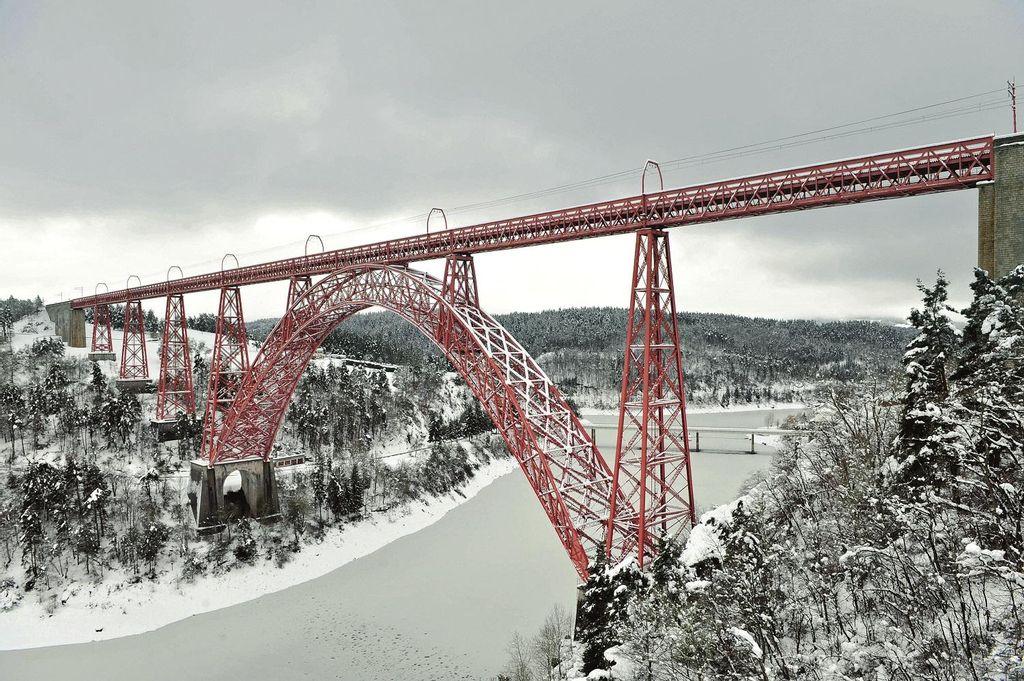
The French department of Cantal was a source of inspiration for Eiffel. The engineer spent part of his childhood in Saint-Flour, and years later he would build this viaduct near the town that serves as a gateway to the region. Although we see it today in red spanning the gorges of the Truyère, it did not originally have that color. It took 38 tons of paint from 1992 to 1998 to adorn it with the color that initially decorated the Eiffel Tower, connecting the viaduct to the father of the famous tower, who completed it at the request of Léon Boyer, the promoter and designer of this project intended to cross the Truyère valley with a 122m-high viaduct.
Adolpho Lisboa Municipal Market, Manaus (Brazil)

In 1987, the Adolpho Lisboa Municipal Market in Manaus was included in Brazil's Historical and Artistic Heritage. This happened exactly 104 years after the first of its pavilions, located by the banks of the Rio Negro, was inaugurated in 1883 with materials imported from Europe, including a cast iron structure designed by Eiffel. Its colorful and valuable stained glass windows adhere to the art nouveau style of the time, and it was named after Adolpho Lisboa, who was the mayor of Manaus at the time of the market's construction.
Iron House, Iquitos (Peru)
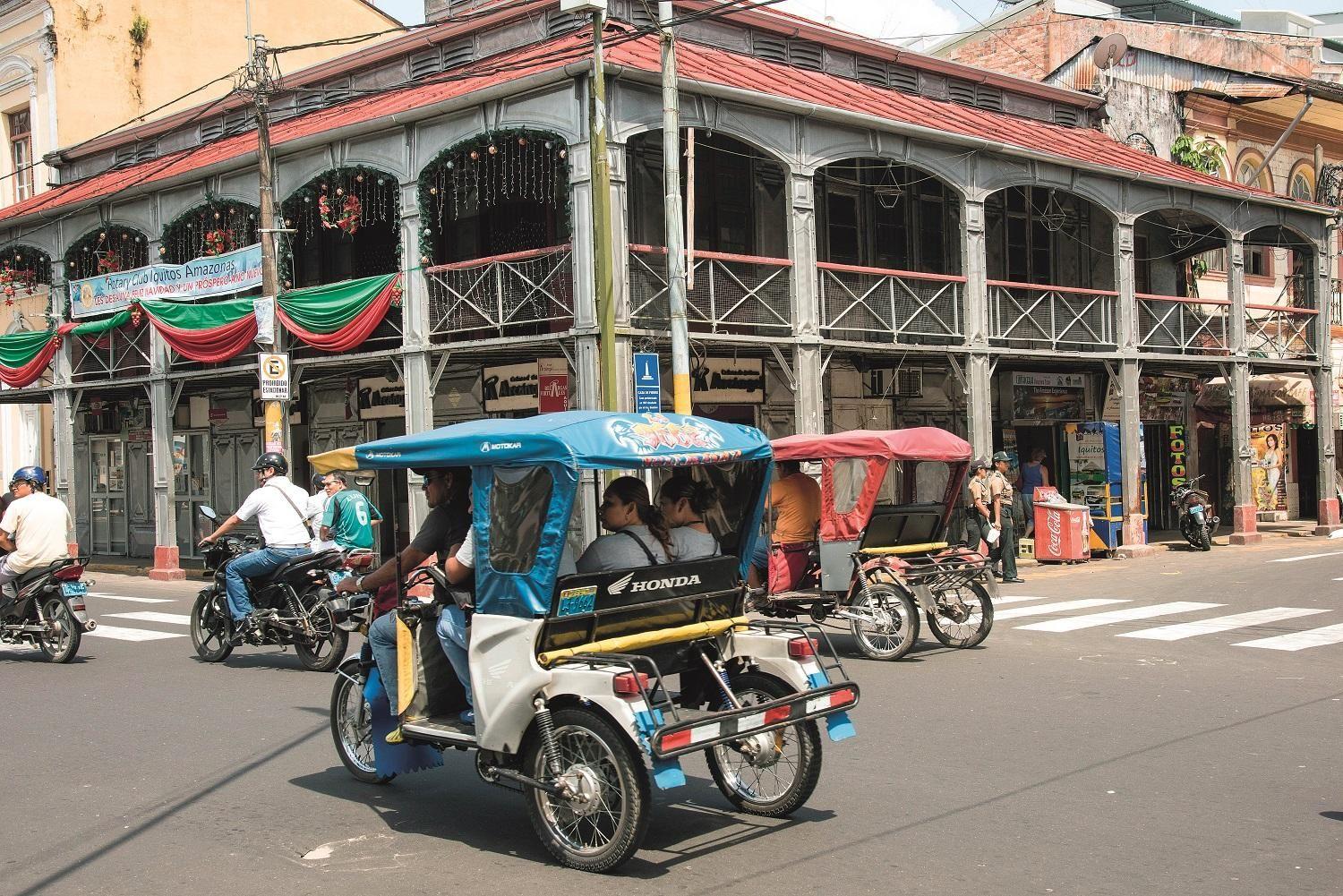
The Iron House is one of the cultural icons of the Peruvian city of Iquitos. Manufactured in Paris in 1860 and imported piece by piece to Iquitos around 1890, it is the only survivor of three iron houses that arrived in the city. In fact, it is considered the first prefabricated house in America. It appears to have been designed by Eiffel for the Belgian Société Anonyme des Forges d'Aiseau. After changing hands multiple times, with some pieces ending up in other buildings and serving various purposes, today its lower floor houses small souvenir shops while the second floor features various dining options.
Long Bien Bridge, Hanoi (Vietnam)

Many of Eiffel's bridges have connected city shores: from the Peixateries Velles Bridge in Girona to the Maria Pia Bridge in Porto. This one in Hanoi connects the districts of Hoan Kiem and Long Bien across the Red River. Built by over 3,000 Vietnamese workers between 1899 and 1902, with its 2.4 km in length, it was one of the longest bridges in Asia. It now seeks to revive its significance after falling into obscurity following bombing during the Vietnam War. The fact that the company Daydé & Pillé, which constructed it, eventually became part of Eiffel Constructions Métalliques is the reason this bridge bears Eiffel's imprint.