
Best Things to Do:
Ella Maillart, Pioneer in Asia


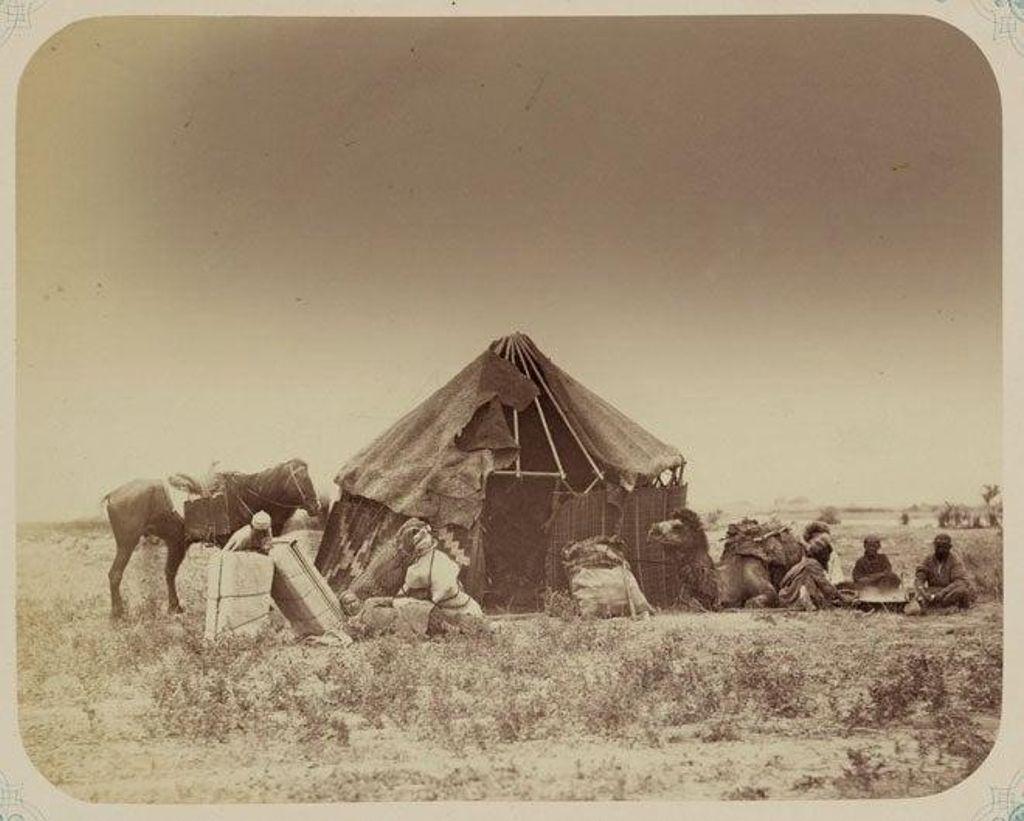
She has been seen crossing mountains and deserts; by car, on foot, or riding a camel; alone or in the company of Russians, Tibetans, and Chinese; her skin weathered by the winds. She is Ella Maillart (1903-1997), but let's call her Kini, as her friends knew her before she began publishing books. It doesn't matter to say that she was born in Geneva, for this adventurer rarely settled at home. A pioneer in skiing and sailing, she represented Switzerland in World Cups and the Olympic Games: "Except when sailing or skiing, I felt lost, only half alive." She tried various jobs: typist, actress, teacher, model... "I only had one ambition: to become a vagabond of the seas."
After failing in her dream of living on the ocean, she headed East in search of happy people who had not yet been devastated by the West. She landed in Moscow with a dictionary and $50 borrowed from Jack London's widow; she climbed 5,000-meter mountains in Turkmenistan, explored steppes in Central Asia... Her most famous journey took her from Beijing to Kashmir, traversing forbidden regions during the Chinese Civil War. She left with a rifle, a Leica camera, paper, jam, Worcestershire sauce... and journalist Peter Fleming, an amateur traveler lucky enough to cross paths with this woman.
She returned to Asia with writer Annemarie Schwarzenbach, driving a Ford from Switzerland to Afghanistan; docked in India during World War II; anchored with her cat Ti-puss in Nepal... She died in Chandolin, a mountain village where she would moor until the wind inflated her curiosity, blowing towards remote regions.
Each adventure of Ella Maillart was accompanied by the publication of several reports and books quickly translated. No one would say upon reading them that for the author, writing was a torment. "It bores me, and I'm not gifted - she would claim. I write about travel because I have to make a living somehow." The following excerpt belongs to The Cruel Road (La Línea del Horizonte, 2015), where she recounts the journey she undertook with her friend and also writer Annemarie Schwarzenbach -Cristina in the text-, traveling by car across Central Asia at the dawn of World War II.
"You don't travel if you're afraid of the unknown. You travel for the unknown"
Overflowing with triumphant joy, we advanced, jumping and jolting through the desert. There were no more obstacles between us and that splendid, little-known country, the land of the Afghans. Our joys were to be their enormous mountains, their magnificent tribes, their frozen rivers, their ruins "as old as the world," the peace of their isolation. We burst into victory shouts, congratulating each other; I was laughing like a child and letting out all the nonsense that came to my mind. [...]
A strange sound accompanied the rumble of the engine as the tough thistles swept the bottom of the car. Sometimes we illuminated the unexpected silhouette of gigantic hemlocks, dominating leagues of dried grass. Suddenly, we had to brake: two men -white turbans, white teeth, wide white tunics cinched at the waist with a vest, baggy pants with deep folds- gestured as if to point their rifles at us. The moment, and especially their attitude, was such a perfect introduction to Afghanistan that, bursting out laughing, I exclaimed:
-Didn't I tell you? Aren't they splendid?
We stopped next to them. A soldier -for they were border guard soldiers who, thank God, no one had crammed into khaki uniforms yet- crouched between the radiator and the fender. The other, climbing like a cat onto our backrest without putting down his weapon, let himself fall like a lead between Cristina and me... and we resumed our journey. Two right-angle bends indicated the exact border. In my triumphant joy, I recited everything that came to my mind:
-Be careful, though here the desert is absolutely similar to that of Iran; although a Meshdi is ethnically similar to a Herati, we have just crossed a true border that separates two very different countries. Two ways of life (mutually despised) seem to be at the origin of this contrast. The Persian reis pitied us because we were going to travel among those "wild Afghans"... And I bet my movie camera that the Afghan chief would speak to us, as he did two years ago, about "those despicable Iranians, with whom it is better not to have dealings." Here, where the way of life has not yet changed, where the son thinks as the father thought, the men have retained their dignity as men. While in the West, where everything changes, no one knows what to think, no one sees their future secure, the rich less than anyone, and this not even in periods of peace. Here you will not see a single fashionable woman with too short a dress or too high heels. You are in the country without women, where some men, wearing snowy muslin, have large spiked shoes shaped like gondolas. You are in the country that was never subdued: Alexander the Great, Tamerlane, Nadir Shah, and John Bull tried one after another, always in vain. It is an Asian Switzerland; a buffer state that has no colonies or outlet to the sea; a land of towering mountains that shelter five races of completely different dialects; a country of simple mountaineers, but where the citizens...
I could not focus attention on my eloquence effects. Our new companion and the thought of what must be going through his mind kept distracting me. He clearly could not comprehend who those two foreign individuals were who were drenched in a wave of words. Could we have stolen the car from the other side of the border? Was it possible that those two individuals were women? The dim light from the dashboard only illuminated the lower part of our thin, feminine chins. But there was short hair on both heads. After attempts to start a conversation proved futile, the Afghan decided to clarify the mystery using the resources available to him: slowly, simultaneously, his hands followed the curve of our ribs. Could one imagine a more ridiculous situation? We couldn't afford to show offense, getting on the bad side of those feline Afghans, since we were entirely at their mercy. Explanations and reproaches were equally useless. Suppressing our expansive humor, we hoped our restrained attitude would convey our feelings. We would soon see our destination.
A modern rectangular building erected in the center of a barren space; a very long corridor; an oil lamp; a waiting room with thick curtains; plush-covered tables and chairs; such was our first Afghan night. We unwrapped our sleeping bags near the window, hoping for a bit of fresh air, and fell asleep with victorious smiles on our lips... only to wake very soon, restless, disturbed by a murmur. Yes, there was no doubt, it was a male voice coming from the window. Had the time come to defend ourselves? We were unarmed. That was when we laughed for the last time that day, and probably the one we enjoyed the most: we understood that the bandit was begging: "Janum, chigret!" ("Lady, cigarette!").
Text extracted from "The Cruel Road. A Journey Through Turkey, Persia, and Afghanistan with Annemarie Schwarzenbach."
Ella Maillart. La Línea del Horizonte Ediciones, 2015.