
Extreme Constructions of the World
Humans are capable of doing extraordinary things for their evolution. From a train crossing the desert in the daytime with temperatures reaching 122 degrees Fahrenheit, to a research station in Antarctica for biological study at minus 58 degrees Fahrenheit. Below we present all these constructions and some others that have been built under almost impossible conditions.
Rothera Research Station

In Antarctica, there is a research station where 130 people work at minus 58 degrees Fahrenheit. We are talking about Rothera, a British research center built on a rock in the southwest of Adelaide Island. Although it seems almost impossible, the UK had to transport all the infrastructure to Antarctica to enable the opening of this station. A distance of 11,000 kilometers which represents the most expensive project funded by the British crown on the Antarctic continent. This station is equipped with state-of-the-art laboratories, diving and navigation facilities, meteorological equipment, communication equipment...
They only operate between March and October, thus taking advantage of the astral summer, and among the projects currently underway, we can mention: the effect of climate change on Antarctica or the conservation of polar biodiversity. If you want to know more about life at the station, their official website provides a virtual 3D tour that takes you through the facilities where the researchers live.
The Etihad Rail

From the polar cold, we transition to the searing heat of the desert: the Etihad Rail. In the United Arab Emirates, they have been working since 2009 on this major project that will connect the UAE with Saudi Arabia. With a budget of 10 billion euros, they have managed to construct a railway network of 1,200 kilometers that connects the key cities of the country. It is undoubtedly one of the most ambitious infrastructures in the UAE that is currently operational for freight trains, but soon a passenger service will open that promises to transform mobility in the region, with trips between Abu Dhabi and Dubai in just 50 minutes.
The construction of the Etihad Rail has faced numerous challenges. The extreme geographical conditions of the desert and mountains have required workers to shift their work schedule to nights to avoid the extreme day temperatures. Additionally, the desert sand posed a significant challenge for the maintenance of the tracks, leading to the proposal for afforestation with trees around the tracks to prevent burying them in sand.
Another key aspect of this project is sustainability. The UAE aims to reduce CO2 emissions by 21% by 2050. Therefore, this railway network seeks to alleviate traffic and decrease reliance on trucks and cars, as it is expected to transport 36.5 million passengers per year.
Norway Will Have the World's Longest Underwater Tunnel
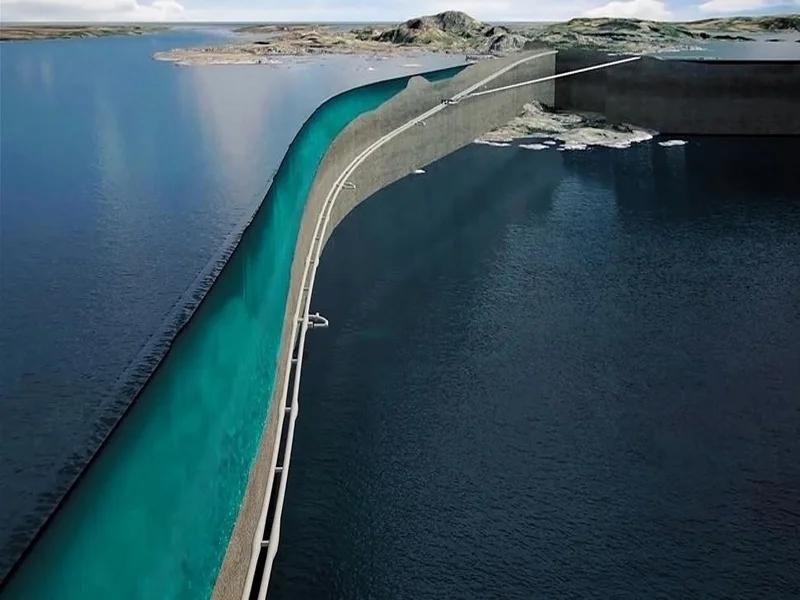
Norway is well known for its stunning geography of mountains, fjords, and rugged coastlines. With over 25,000 kilometers of coastline and its deep bays, road trips in the country can be quite challenging. Hence, the project to reconstruct the coastal highway E39 in Norway is one of the world's most ambitious infrastructure developments. This is especially true with the construction of the Rogfast tunnel, which, when completed, will become the longest and deepest underwater road tunnel in the world, measuring 27 kilometers and reaching a depth of 1,287 feet below sea level. Thanks to this tunnel, travel times along Norway's western coast will be cut in half, from 21 to 11 hours.
When completed, it will not only be the longest underwater road tunnel in the world, but also the deepest below sea level. This depth is comparable to the height of some of the tallest skyscrapers in the world, like the Empire State Building in New York, highlighting the magnitude of this engineering challenge.
The NEOM Project

Although we have only been able to see the early phases, the project initiated by Saudi Arabia with NEOM is one of the most ambitious and impressive projects we will witness in the future. Designed as part of the Vision 2030 plan, Saudi Arabia conceived the idea in 2017 of creating a large, futuristic, and sustainable city located in the northwest of the country, near the Red Sea, covering a total of 26,500 km² and designed for self-sufficiency. Additionally, this grand metropolis is intended to use only renewable energy.
Several key phases of the project have already begun, and in 2021 and 2022, significant advancements were announced, such as the first infrastructural works for The Line, the linear city. This city began construction in 2022 and is the part of the NEOM project that has generated the most interest. As its name suggests, The Line will be a linear city 105 miles long, 656 feet wide, and 1,640 feet high, without streets or cars. The city will be composed of two massive mirrored glass walls that will enclose the infrastructure, creating a contained and compact urban environment. Along its length, The Line will be connected by an underground high-speed transportation system, allowing travel from one end to the other in just 20 minutes.
The project is scheduled to unfold in phases until 2030 when we will see the complete vision of NEOM.
Tibet High-Speed Railway
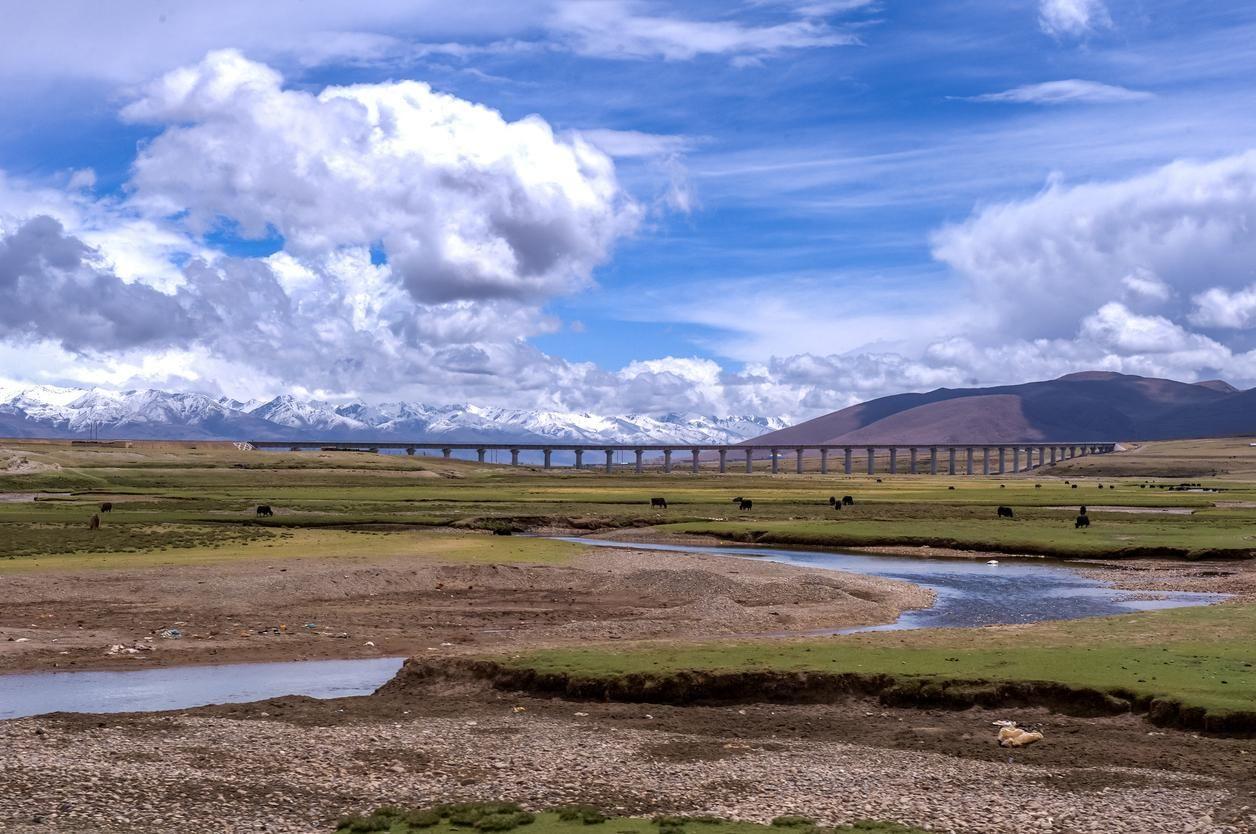
After exploring the scorching desert of the UAE with the Etihad Rail, the frigid Antarctic with the Rothera Research Station, and the underwater depths of Norway with the Rogfast tunnel, we now head to the extreme heights of the Tibetan plateau with the Tibet High-Speed Railway. This amazing engineering project stands as the highest railway in the world, traversing challenging terrains and rising to over 16,404 feet above sea level. Let us remember that Tibet is isolated on the highest plateau in the world, within mainland China.
Its geography makes access to the country's main transportation networks quite difficult. Due to this, in the 1950s, China began to consider creating a railway network that would reach there, but due to extreme technical challenges-including the lack of oxygen for workers, frozen ground (permafrost), and unpredictable weather conditions-the project was deemed unfeasible for safety for many years. It was not until advanced engineering and construction technologies became available that the idea could be brought to life. In 2001, China finally decided to carry out this monumental construction feat to boost economic development in Tibet and facilitate the transport of people and goods. The railway line was officially inaugurated in 2006, connecting the city of Xining in Qinghai Province with Lhasa, the capital of Tibet, bridging two geographic and cultural extremes of the country.
Some of these constructions have been operational for decades, while others are in their early phases or are merely visionary concepts. Only time will tell what new wonders humanity will continue to create, driven by the desire to innovate and push the limits of what is possible.