
This is the First Panorama of Mars Created by a NASA Rover
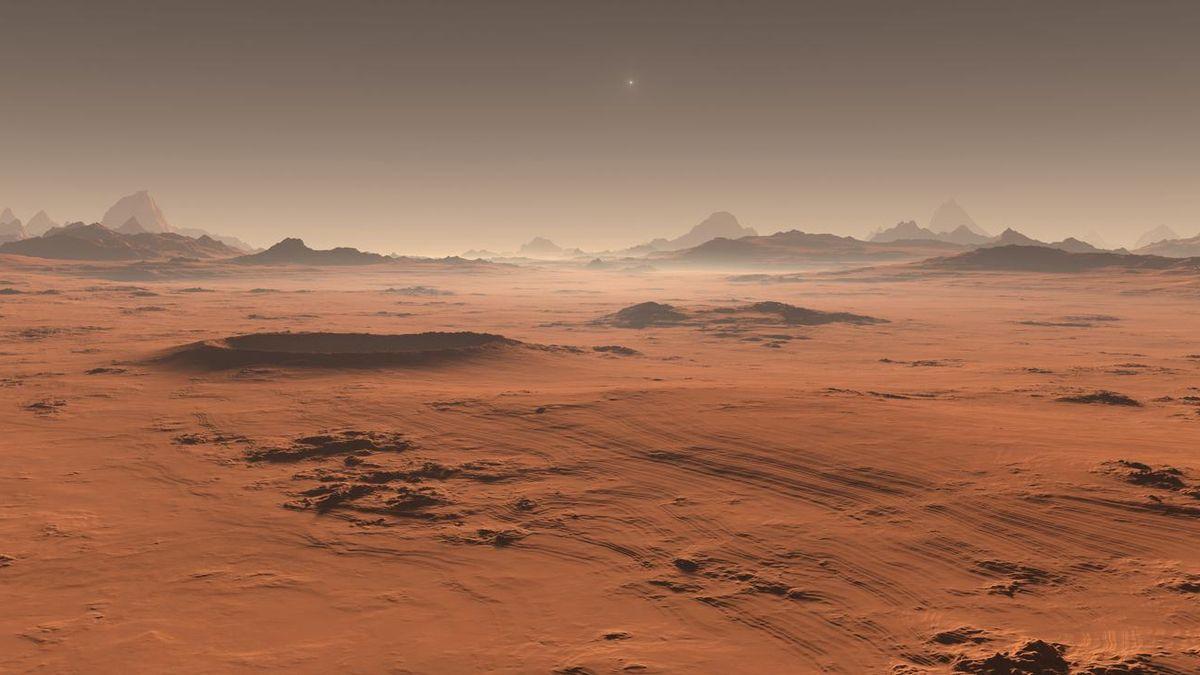
We know very little about Mars. It is known as the Red Planet and is the namesake of Martians, the supposed inhabitants of Mars that have inspired many legends and science fiction movies. Reaching Mars involves a journey of approximately seven months, depending on the alignment of the planets. Once there, landings are not easy due to the thinness of its atmosphere, which makes it difficult to slow down and land smoothly. Despite these challenges, the exploration of Mars continues. And our knowledge of the planet and the solar system keeps growing.
Is the Weather Good on Mars?
The weather on Mars is extremely harsh. The average temperature is approximately minus 60 degrees Celsius (minus 76 degrees Fahrenheit), but it can vary from minus 125 degrees Celsius (minus 195 degrees Fahrenheit) at the poles during winter to 20 degrees Celsius (68 degrees Fahrenheit) at lower latitudes in the Martian summer. The atmosphere, composed mainly of carbon dioxide, is very thin, which means that the atmospheric pressure at the surface of Mars is only 1% of that of Earth. This thin atmosphere also offers little protection against solar and cosmic radiation, posing a significant challenge for future crewed missions.
NASA and Mars

NASA's Curiosity rover has been exploring Mars for nearly a decade, sending us data and discoveries. Recently, it captured an image that appears to show a door carved into a rock formation, generating great interest on social media and forums like Reddit. However, geologists offer a more down-to-earth explanation: this "door" is a natural formation caused by Martian earthquakes, known as 'marsquakes,' which are common on the Red Planet. These seismic events create fractures in the rock, forming openings like the one captured by Curiosity.
NASA has explained that this type of open fracture is common both on Mars and on Earth. The phenomenon of 'pareidolia,' the tendency of the human brain to recognize familiar patterns in ambiguous shapes, also plays a role in how we interpret these images. What appears to be a door is simply a natural geological formation that our brains interpret as something more significant.
Mars has been the subject of numerous optical illusions in the past. In 2010, an image showed what seemed to be rows of trees over dunes, but in reality, they were flat structures of basaltic sands that sublimate into vapor under the Martian sun. The Opportunity rover captured a rock that resembled the outline of a gorilla, and Curiosity has photographed other curious formations, such as one that looked like a crab in 2015 and another that resembled a giant mouse in the same year. All of these are optical illusions that highlight the human tendency to seek familiarity in the unknown.