
Fridtjof Nansen, Polar Hero
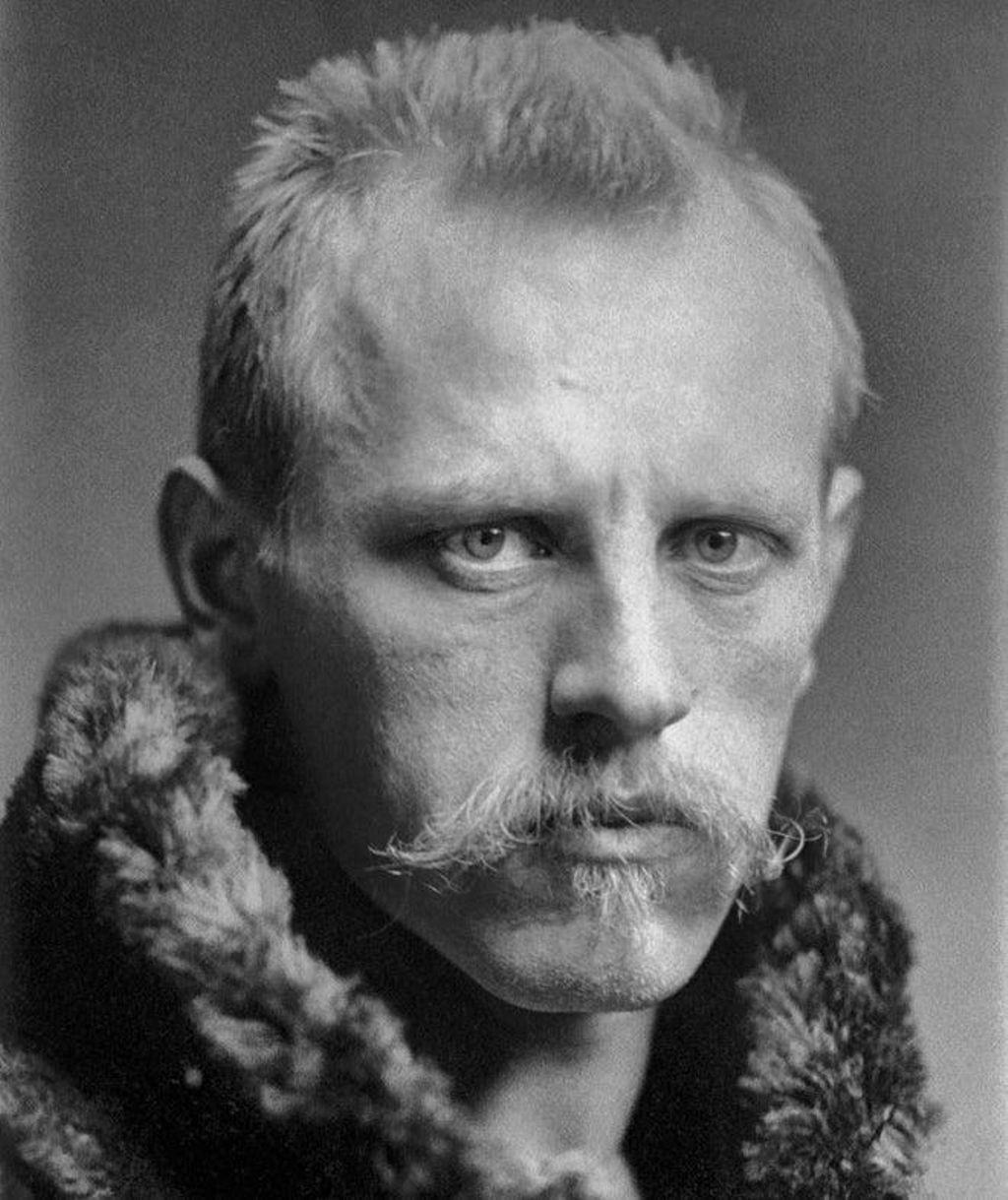

"Dr. Fridtjof Nansen has departed;
the cynics laugh and the pessimists scoff.
That Norwegian must be crazy, for he wants to conquer the icy North Pole."
It was not the first time Nansen's (1861-1930) northern exploits were labeled suicidal. He had been fascinated by the Arctic since he joined a whaling ship as a zoology student to conduct scientific research. In 1888, he became the first to ski across Greenland: 500 kilometers at -45°C (-49°F), through an then-unexplored and hostile island whose interior had only been touched by the Inuit. He lived among this people before returning to Norway as a true hero. A Nansen craze erupted; his image was everywhere: hats, gloves, cans of sardines, bottles of aquavit, candies, pencils... Everyone adored him, from the President of the United States to Jules Verne; children, men, and women; but it was with Eva Sars that he eventually married. He bid farewell to the mezzo-soprano and his newborn daughter in 1893 when he set sail with the Fram to be trapped by the ice and strive to reach 90°N adrift. The ship's progress was very slow; he attempted to reach the Pole with two kayaks, three sleds, 28 dogs, and a companion. Regrettably, after three Arctic winters, at 86°14'N, he left the challenge for those explorers who would come later. Awarded the Nobel Peace Prize in 1922, he dedicated the last years of his life to diplomatic and humanitarian work. He was not a madman seeking utopias; he only had the certainty that "what is difficult takes time; what is impossible takes a bit longer."
The Fram is the ship with which Fridtjof Nansen sailed through the polar regions, always "forwards," which is what the name of the vessel means in Spanish. Built with four hundred Norwegian pines, it was designed to avoid being crushed by the terrifying creaks of the ice. It featured electric light, a cozy lounge, and a library; music and chocolate were never absent from its varied pantry... "I myself have never lived a more lavish life," wrote Nansen. The following text corresponds to the crew's first winter, as narrated by the explorer in "Towards the Pole" (Interfolio, 2010).
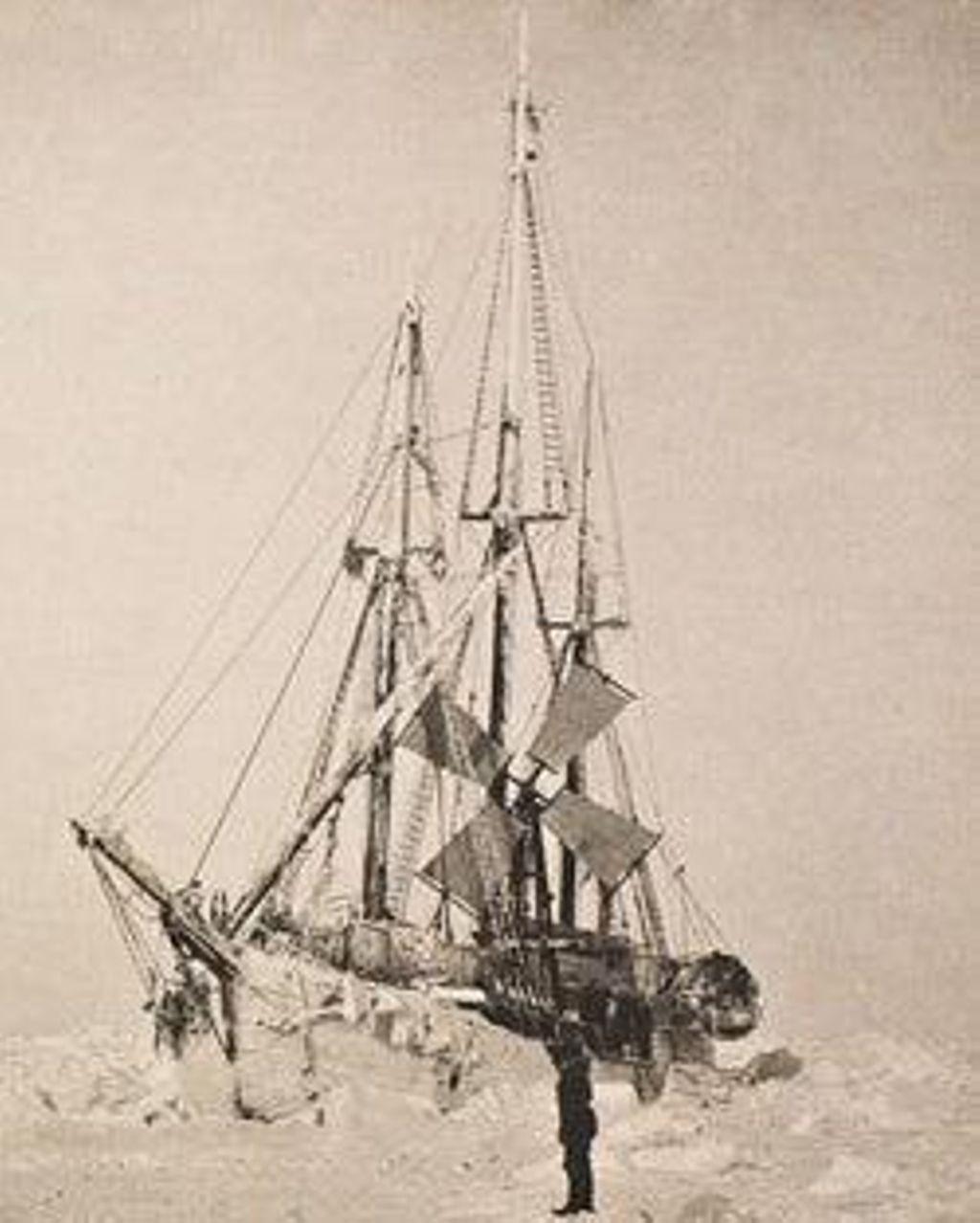

From all appearances, we are now definitely trapped in the ice, and I do not expect to see the Fram out of the ice until it arrives, on the other side of the Pole, near the Atlantic. Day by day, the sun declines over the horizon and the temperature drops; the long night, so feared, of the Arctic winter approaches. [...] The days passed without variation. To give an idea of what one of them was like, the reader can picture our life: we got up at eight; immediately afterwards, breakfast consisting of bread, cheese, corned beef, or cured mutton, ham, tongue from Chicago, cod caviar, anchovies, oatmeal biscuits or English hardtack, and orange preserves or compote. Fresh bread three times a week. As drinks, we had tea, coffee, or chocolate. After breakfast, we fed the dogs -half of a dried cod or a few biscuits per head-, after which we untied them and dispersed to attend to our tasks. We took turns every week as kitchen helpers and serving staff. The cook calculated his meal and immediately went to his stove. Meanwhile, some of us gathered on the ice to inspect its condition. At one o'clock, we all gathered again in the lounge for lunch. Lunch generally consisted of three courses: soup, meat, and dessert; dessert or soup was often replaced by fish. The meat was always accompanied by potatoes or green vegetables or, even, macaroni. After the meal, the smokers formed a circle in the kitchen, because pipes and cigars were formally prohibited in the accommodations, except on holidays. After a small nap, we returned to work until dinner time, which was at six. This third meal consisted of the same dishes as lunch. The evening was spent smoking in the kitchen or reading and playing cards in the lounge, while one of us played the organ or Johansen performed on the accordion his famous pieces: Oh Susanna! and Napoleon's March on a canoe through the Alps. At twelve, everyone went to bed except for the one on watch. The night watch lasted only an hour, and we took turns doing it. Generally, that time was spent writing in our journals, a task that was rarely interrupted except by the barking of the dogs when they sensed a bear nearby. Every four hours (and for some time every two hours), the watchman had to go to record the meteorological observations.
Thanks to the regularity of our life, time passed quite pleasantly and very quickly. My daily notes give the impression of the monotony of our existence. They hardly refer to any significant events; by their very poverty, they offer an accurate picture of our life aboard the Fram.
September 26. The temperature drops at night to -14.5°C (5.1°F). The observation shows no movement towards the north; we remain firmly at 78°50''. During the night, I stroll on the ice. There is nothing more wonderfully beautiful than this Arctic night. It is a dreamland, colored with the most delicate hues imaginable. The shades blend into one another in a marvelous harmony. Is not all the beauty of life elevated, delicate, and pure like this night? The sky is a vast blue dome towards the zenith that shifts to green, then lilac and violet as the gaze departs toward the horizon. In the ice fields, cold shadows of dark blue appear, and the upper edges of the ice shimmer with pink gleams, the last reflections of the dying day. Above shine the stars, eternal symbols of peace.
At noon, a great reddish glow appears surrounded by clouds of gold floating over the blue background. At the same time, the aurora borealis spreads its changing robe, now silvery, now yellow, green, or red. It changes shape every moment; at one moment the meteor expands, at another it contracts, then fragments into circles of silver with radiant rays, and finally, it extinguishes abruptly like a mysterious apparition. An instant later, flames flicker at the zenith and a bright stripe rises from the horizon, blending with the light of the moon. For hours, the luminous phenomenon radiates, spilling strange lights over the vast frozen desert and leaving an impression of vagueness and non-existence that makes us doubt reality for a moment. And the profound silence impresses us like the symphony of space. No, I will never believe that this world could end in desolation and nothingness. What then is all this beauty for if no creature exists to enjoy it?
Now I begin to glimpse this secret: here is the promised land that unites beauty with death. But, for what purpose? Ah! What is the final destiny of all these spheres? Read the answer, if you can, in that blue sky sprinkled with stars.
Text extracted from "Towards the Pole: Account of the Fram Expedition from 1893 to 1896". Fridtjof Nansen. Interfolio, 2010.