
Extinct Animals
Our planet is home to countless different species coexisting with vegetation, animals, and humans. The truth is that for thousands of years, evolution has changed the inhabitants of Earth, allowing only the strongest to adapt and survive. However, in the last 20 years, multiple species have faced inevitable extinction, and unfortunately, the main culprits are humans.
Poaching, which views certain animals as competition trophies, and climate change caused by humans are behind the majority of animal extinctions. The destruction of ecosystems and alteration of wildlife habitats also contribute to the disappearance of species. In the last 150 years, several species have vanished, but there are 10 in particular that could have likely been prevented.
Northern White Rhino

The northern white rhinoceros was one of the peaceful giants inhabiting Africa. Today, only two specimens of the animal remain, both female, thus making the species' survival impossible. The last northern white rhinoceros walked the African territory in 2018 but passed away in a sanctuary in Kenya.
Now, scientists are studying the possibility of using in vitro fertilization to attempt to breed these females in the hope of preserving the species and preventing its complete extinction.
Tasmanian Tiger

The Tasmanian tiger, scientifically known as the thylacine, is a nocturnal animal that inhabited the forests of Tasmania and fed on small rodents and kangaroos. Despite its dangerous and fierce appearance, the Tasmanian tiger was a shy animal that was heavily hunted.
Excessive hunting and habitat degradation have led to the near-complete extinction of a species, with no evidence of its existence in recent years. It is unknown if any thylacines are still roaming the forests, but all signs point to it being an extinct species due to human activity.
Quagga

Another unfortunate case of an extinct animal is the quagga. This species, originally from South Africa, can now only be seen in photographs due to overhunting that led to the creature's disappearance. This unique species had a close relationship with plain zebras.
Its appearance was similar to a mix between a zebra and a horse, featuring a striped front and a smooth back. After its extinction, scientists attempted to revive the species through genetic engineering by breeding zebras with quagga genes, but they have yet to succeed.
Pyrenean Ibex
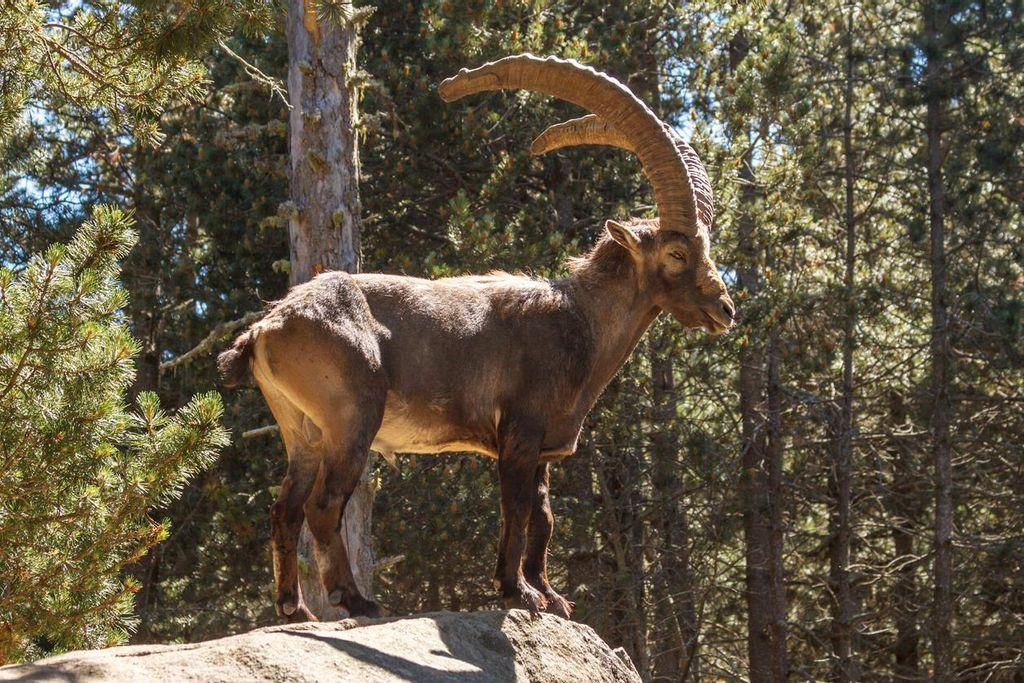
In our country, there was a beautiful and unique species known as the Pyrenean ibex, which was officially declared extinct in 2000. Like many other animals, its extinction is due to the rampant and illegal hunting that wiped out all ibex specimens.
In 2009, a clone of this species was created from preserved DNA, but extinction is inevitable, and it is no longer possible to see this animal running through our mountains.
Falkland Islands Wolf

In the Falkland Islands, hundreds of species have coexisted for thousands of years, able to adapt to temperature changes but unable to survive human encroachment. The best example of this is the Falkland Islands wolf, also known as the Antarctic wolf or Falkland fox. This animal shared its habitat with other species like penguins and ice birds, but could not coexist with humans.
When humans arrived, they encountered this friendly and easily hunted animal, leading to its extinction in a very short time. Humans were responsible for the complete eradication of every specimen of this species, but also for the goats and rats they brought, which complicated the habitat of the Falkland Islands wolf.
Large White Butterfly of Madeira
Insects are not exempt from the inevitable fate that awaits them. The large white butterfly of Madeira lived in the Laurisilva forests on the island of Madeira in Portugal, but this beautiful creature can no longer be seen flying there. Its presence is now just a memory due to urban expansion and pollution that caused the loss of its habitat and ultimately led to its demise.
The decline of the species' life has resulted in the extinction of every single one, and although it has not been officially declared extinct, no one has seen a Madeira white butterfly for over 30 years.
Spix's Macaw

A beautiful bird that we will no longer see flying in the sky is Spix's macaw, a spectacular animal known for its bright blue plumage. The place it inhabited was destroyed by humans and affected by climate change; additionally, illegal capture and trade were ongoing due to the beauty of its feathers. All these factors led to its disappearance in 2000 when the last of these spectacular birds was sighted.
Passenger Pigeon
Another bird species that has been declared extinct is the passenger pigeon, a type of bird that once flew over the skies of America, adorning them with its incredible beauty and majesty. Once again, excessive hunting for sale and for sport led to the species' disappearance. The few passenger pigeons that remained took refuge in the Cincinnati Zoo, where attempts were made to preserve the species, but it was impossible, and the last one passed away in 1914.
Giant Pinta Tortoise

Also, on an island, specifically in the Galápagos, there lived a species less than 150 years ago that we will never see again, and that was a true marvel of nature. We are talking about the Pinta tortoise, an animal that inhabited the area when Charles Darwin explored the archipelago in 1835.
This beautiful living being inhabited the island for centuries, but as always, the arrival of humans led to the extinction of the Pinta tortoise. The value of its shells and the destruction of its habitat resulted in the total extinction of an animal capable of surviving nearly everything.
Golden Toad

In Costa Rica, less than 200 years ago, there lived a species of toad known as the golden toad, which colored the tropical forests with its incredible hue. Unfortunately, this toad has been declared extinct after many years of facing the problem of habitat destruction and a strange disease known as chytridiomycosis caused by a fungus.
Pollution and climate change are the primary culprits of the golden toad's disappearance, which was last seen less than 150 years ago.
It is clear that humans must stop the rampant poaching that has led to the demise of hundreds of species in the last 150 years. Coexisting with animals is both possible and necessary, and the irreversible loss of these species should motivate us to take effective measures to preserve wildlife and the ecosystems in which they reside.