
- 1. Why Hike: Science Provides 10 Reasons
- 2. Reduces Negative Emotions
- 3. Improves Sleep Patterns
- 4. Improves Cognitive Skills and Short-term Memory
- 5. Boosts the Immune System
- 6. Enhances Creativity
- 7. Improves Family Relationships
- 8. Enhances Navigation Skills
- 9. Strengthens Muscles
- 10. Calorie Burn
- 11. Improves Cardiovascular Health
Why Hike: Science Provides 10 Reasons

Hiking is, according to the Royal Academy of the Spanish Language, an 'outdoor activity that consists of walking in the countryside following a predetermined route.' It's that simple. And such a simple thing allows us to discover wonderful towns (for example, the most beautiful in Spain), unique spots, and of course, to be in direct contact with nature.
Practicing hiking has countless benefits for the body, but not only at a physical level; in fact, numerous scientific studies have proven its mental power. And today, in VIAJAR Magazine, we reveal the 10 reasons provided by science why hiking is one of the best ways to travel and discover places like the Little Colorado Canyon in Toledo or the Spanish Alps.
Reduces Negative Emotions
A 2018 study conducted by academics from South Korea and Japan showed that walking in nature significantly reduces negative emotions and states of anxiety, hostility, anger, fatigue, depression, or confusion.
Improves Sleep Patterns

Two hours of walking in nature improve many sleep patterns, including average rest time, minutes without movement, depth, and quality of sleep. A study published in the Bio-Psychosocial Medicine magazine demonstrates that the benefits hiking can bring to our sleep patterns are undeniable.
Improves Cognitive Skills and Short-term Memory
The University of Michigan conducted a study (which you can read here in English) comparing the impact on cognitive and short-term memory of walking for 50 minutes in an oak forest versus walking on a multi-lane street. Results from the tests conducted on those who had walked in nature were better (around 18%) than those who walked in the city.
Boosts the Immune System
Natural environments can lead to significant reductions in stress and notable boosts to the immune system. When we walk in a natural environment (here you can discover six hiking routes with incredible views), NK cells increase significantly, while we reduce cortisol levels and blood pressure.
Enhances Creativity
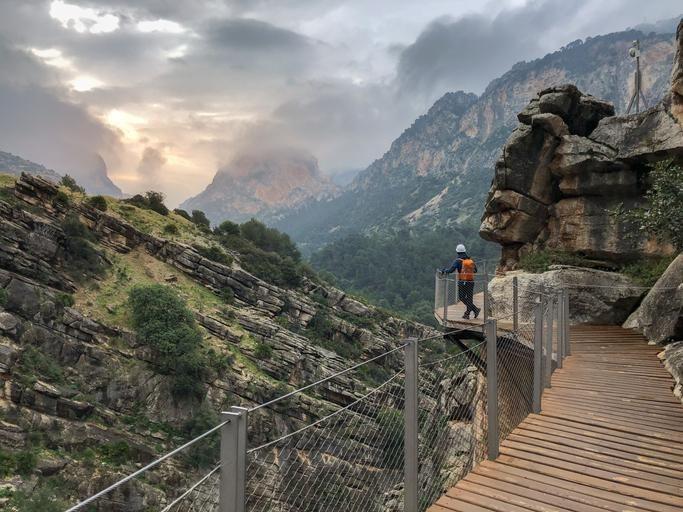
Once again, we refer to another scientific study published in Denmark that demonstrates that activities in natural environments (such as hiking) have a direct impact on increasing creativity.
The study explains how nature has the capacity to evoke creative thinking, elevate our curiosity, and enhance thought flexibility. Additionally, it aids with direct attention, which is fundamental in developing new ideas.
Improves Family Relationships
Hiking with family offers countless benefits for both adults and children, who will be able to discover perfect routes suitable for their physical condition. One example? The two routes that start from the Madrid town of Torrelaguna.
Enhances Navigation Skills
A person who can navigate in the wild has an advantage over city dwellers. It has been demonstrated (thanks to neuroscientist Daniel J. Levitin) that practicing hiking forces you to keep your hippocampus active, the part of the brain responsible for remembering where to go and how to move properly. If the hippocampus is not exercised regularly, it risks atrophy.
Strengthens Muscles

This benefit is perhaps the most recognized, as hiking strengthens the muscles and bones of the lower body more than a traditional walk. Walking on uneven or irregular terrain requires more energy and works different muscles that are not exercised as intensely during a leisurely stroll.
Calorie Burn
The Centers for Disease Control and Prevention (CDC) has published a study showing that hiking on moderately difficult terrain can help you burn up to 27% more calories than cycling (at less than 10 mph), 32% more than walking on flat terrain, or up to 68% more than a light weight training session.
Improves Cardiovascular Health
If you have high blood pressure, you should practice hiking, as it can reduce systolic blood pressure. The most interesting part is that these benefits are proven by taking just one hike a week.
In short, hiking offers countless physical and psychological benefits in addition to providing us with unique landscapes that could be the home to fairies or other wonderful beings.