
Best Things to Do:
Hong Kong Airport Aims to be the Best in the World

In 1997, Hong Kong's airport was named Kai Tak, located in the middle of the city by the sea, with runways that were particularly dangerous and risky for an airport in such an important city like Hong Kong was at that time.
A year later, in 1998, Hong Kong International Airport was inaugurated, a state-of-the-art and imposing construction located on the outskirts of the city, on a remote island in the South China Sea called Chek Lap Kok. Gone were the spectacular images of planes flying over the skyscrapers of the city, practically brushing them, before landing or taking off.
Now, 20 years after the construction of Hong Kong International Airport, and despite the fact that throughout this time the airport has remained a global reference, a new reform is already planned.
An Expansion and an 'Airport City'
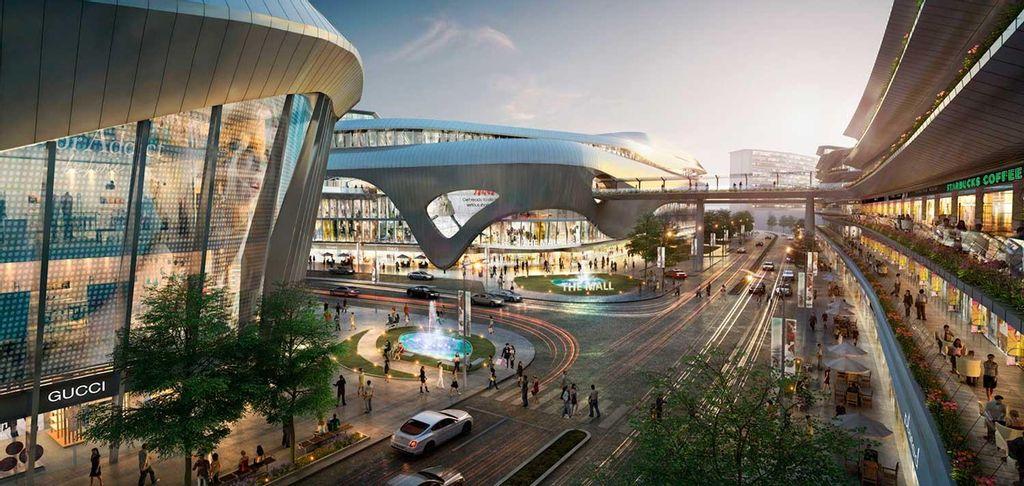
The idea is that between 2019 and 2027, through various phases, the new airport project will be completed. By the end of next year, the expansion of Terminal 1 (T1 Annex) is expected to be completed, a plan that aims to include an airborne bridge 200 meters high equipped with an observation deck, shops, and a rooftop garden.
A 12-story building will also be constructed, which will include an aviation academy, 1,400 new parking spaces, and a daycare for parents working at the airport. But the most striking aspect of the entire plan is 'Skycity', a 25-hectare space that will be occupied by retail and entertainment venues, various restaurants, hotels, and offices. With 'Skycity', there is an aspiration to create an airport city, a place that will ultimately become a tourist destination in its own right due to its diverse cultural and leisure offerings.
A Marvel of Engineering

Hong Kong International Airport was designed and built 20 years ago by British architect Norman Foster. However, what is truly relevant is how that point was reached, leading to the construction of the final structure. Initially, the island on which the airport now stands did not exist; rather, there were two small islands in that area of sea, covering barely 3,000 square kilometers and completely dominated by mountainous terrain.
As a solution, it was decided to merge both islands into one, forming the island of Chek Lap Kok, and the hills and steep areas were leveled to artificially add more space, reclaiming land from the sea. With all these issues resolved, Foster was able to begin his architectural work. The project, now completed, became one of the most significant in the entire history of civil engineering in the 20th century.
The Best Airport in the World?

Hong Kong Airport is the world's leading airport in cargo transportation. In terms of passenger traffic, it is not at the top but is among the top ten. In 2017, for example, it received nearly 73 million people. There is no airport with such a level of traffic when combining both passenger and cargo statistics.
However, nowadays, a good airport isn't measured by its volume of work but by its ability to create distinct and unique experiences for travelers. For a period, Hong Kong Airport was the international leader in this regard. From 2001 to 2005 and from 2007 to 2008, the airport was named the best airport in the world, but since that year, it has consistently lost ground.
Singapore's airport, Changi Airport, has held that title for six consecutive years, and in 2018, Hong Kong's airport fell to fifth place. "We really don't have the desire to pursue the title because many surveys like this aren't exactly a comparison of apples to apples; sometimes they compare apples to oranges," said the executive director of operations at the Chinese airport to CNN.
One question remains: considering all these planned reforms for the coming years, will Hong Kong International Airport manage to reclaim its title as the best airport in the world?