
Hungry Ghosts, by Luis Pancorbo
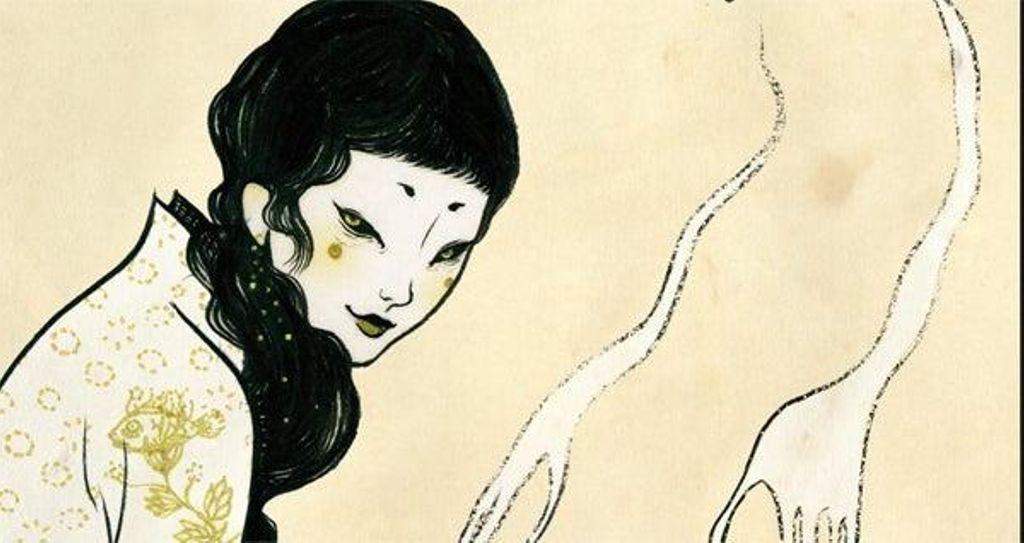
Hungry ghosts emerge from their hiding places in the afterlife on the fifteenth day of the seventh lunar month according to the Chinese calendar. This day, which falls between August and September, is celebrated as Yue Laan, a unique festival for the dead. Some spirits come from hell and take a stroll through the world, so the most sensible thing is to invite them to eat. Southern Chinese, especially those of Taoist faith, offer authentic banquets to their deceased, overlooking the fact that they do not have stomachs. The delicacies are generally not placed on the graves but in locations that individuals interpret as more favorable for the smooth passage of these beings. This is why so many people leave food on the streets.
Hungry ghosts are not satisfied with sugar skulls or hollow pumpkins like in other places; they prefer roasted chickens, whole pigs, fruits, and rice wine... They also demand money, even if it's paper money, vast amounts of banknotes that are then burned. Once, I bought a bundle of one hundred million dollars in a Chinese store that sells religious items. The paper money can be gold or silver colored, well-crafted, something beautiful and believable before being put in an oven or burned in a censer.
Not all dead Chinese are hungry ghosts. This class includes those who did not receive proper funeral honors, those who drowned at sea, or those who died in wars. It can happen that someone passed away normally but remained dissatisfied with their relatives, as they did not give them enough pomp and baggage to travel to the other world. The Yue Laan festival serves to placate their anger, not just their hunger. They are even offered cardboard airplanes, televisions, cars, anything desirable because for the Chinese, the afterlife is close to this world.
Emperor Wu of the Liang dynasty (502-507) established a festival to honor the deceased. He then took advantage of his invention from his mausoleum in the Golden Mountain. Wu was a powerful and attentive man, although when Bodhidharma, the patriarch of Zen in China, came to see him, he made the mistake of asking what was the essence of Buddhism. "A vast emptiness," the monk replied. The emperor became irritated and retorted, "Who do you think you are?" To which the monk responded, "I have no idea."
In Hong Kong, they are more practical than all that, and the Hungry Ghost Festival also involves thinking about the living hungry, so to speak, the marginalized of the capitalist, communist, and the hybrid system they are now trying. In the past, when there were more poor people in Hong Kong, it was customary to give them alms during these days while people honored their dead, indulged in their banquets, and enjoyed going to the Chinese theater or to puppetry shows.
A good place in Hong Kong to witness the traditions of hungry ghosts is the small island of Peng Chau. For three days, Taoist dances and profane dances do not cease, the streets are adorned with flags, and firecrackers and incense burn abundantly as it also commemorates the victory over a plague. People send boats filled with food, gifts, and good wishes out to sea. On the last day, at a signal, everyone rushes to snatch up the immense amount of food laid out on the temple floor. Many take home baskets filled with fruits and delicacies. Everything culminates when the colossal effigy of the King of Spirits, made of wood and bright fabrics, is burned, after which the island can breathe easily for the rest of the year.
The dates when the hungry ghosts wander are not the best for doing business or embarking on travels. What's customary is to participate in an auction, usually within the family, where bidding takes place fiercely for wu jin, black gold, or coal as we would say in Spain. The one who acquires that coal burns it on the family altar, confidently hoping that the coming times will shower them with real gold. It's all about hope.