
Best Things to Do:
Hyperloop: Elon Musk's Train Will Travel from Zaragoza to Berlin in Two Hours Without Polluting
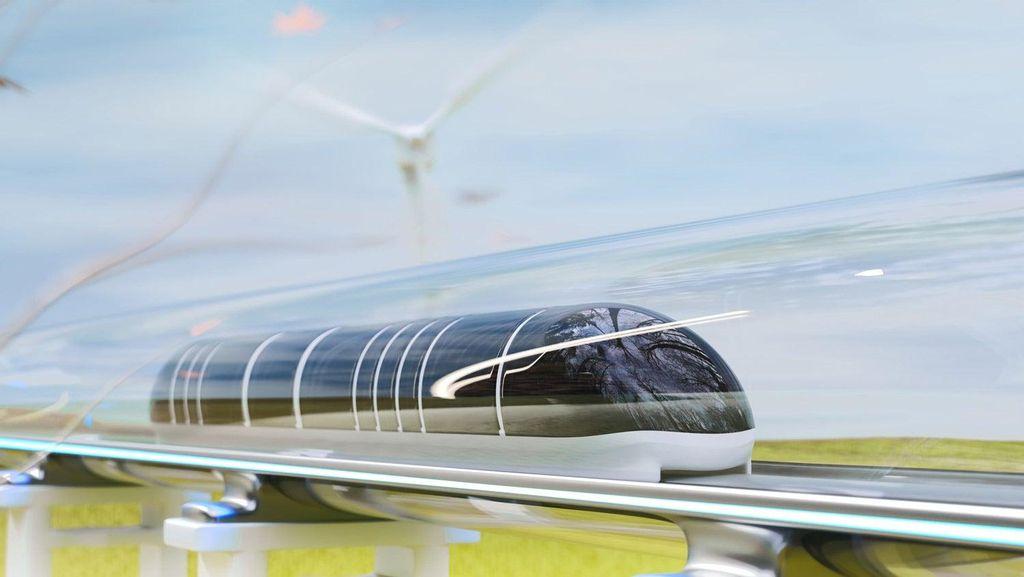

Between Zaragoza and Berlin, there are just over 2,000 kilometers. Traveling this distance by car takes about 22 hours, but in 10 years, it could be just two. Hyperloop is Elon Musk's revolutionary take on what a bullet train should be, capable of gliding at a maximum speed of 1,000 km/h without causing any pollution.
This is not science fiction; the project is underway, and Zaragoza wants to play a key role: as its mayor, Jorge Azcón, stated yesterday, the Aragonese capital will be one of the central nodes of the European Hyperloop network, alongside Rotterdam, Berlin, or Munich. In fact, the intention is for direct lines from the future Zaragoza station to these cities.
The project is being led from the Netherlands, specifically at the European Hyperloop Center. Its leader, Stan de Caluwe, visited the Zaragoza City Hall yesterday to present the plans to the media. "Many things are happening in the city of Zaragoza to make transportation more sustainable, but one piece is missing from the puzzle: going further. And with Hyperloop, we believe we have found that piece, because we can replace a large part of continental air traffic, both for passengers and goods, with another sustainable model."
How Does Hyperloop Work?

The Hyperloop has its origins in a concept by George Medhurst in 1799 and was subsequently developed under names such as "pneumatic railway," "atmospheric railway," or vactrain.
Elon Musk revived interest in this type of train after mentioning it at an event in 2012. It is based on a vacuum tube through which capsules (cars) travel, levitating inside thanks to the low air pressure, resulting in reduced friction with the surface and, as a consequence, less wind resistance. The best part? It does not emit polluting gases, is (theoretically) less expensive than a traditional railway network, and is resistant to earthquakes.