
Volcano in Iceland
Eruption Near the Capital


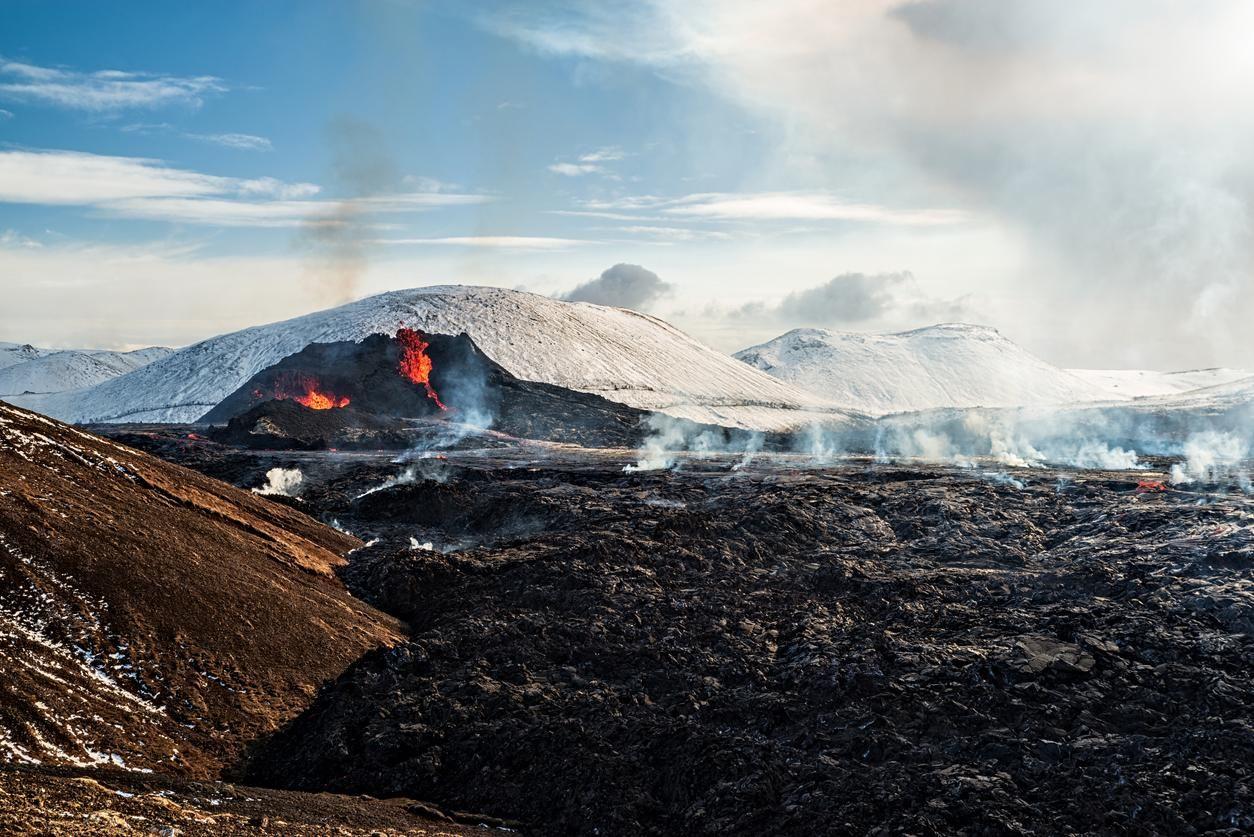


A volcano erupted in Iceland just a few days ago. In an uninhabited area about 30 kilometers from Reykjavik, the capital of the country, a volcano has reactivated and has expelled lava for the third time in just two years. Located on the small mountain of Litla-Hrút, just a few kilometers from the site of the previous two eruptions. This entire area belongs to the Reykjanes Peninsula, southwest of Reykjavik, according to the Icelandic Meteorological Institute.
Fortunately, the numerous minor earthquakes that occurred in the days leading up to the eruption served as a warning for experts that a natural phenomenon of this type could take place.
When the alert was given, as the volcano began to expel lava, there were no people nearby who could be injured, so there were no material or human damages to lament.
In the days prior, scientists had also warned that the magma beneath the surface had moved about several hundred meters below ground, which led volcanologists to predict an imminent eruption at some not very distant point.
Although there are no damages to report, local and national authorities warn that it is strictly prohibited to approach the site, at least until the eruption stabilizes and a thorough assessment of the situation can be conducted.
Though volcanic eruptions raised concerns about the impact they might have on residents of the capital or air traffic, they have ultimately proven harmless and have had no significant repercussions. The expelled magma has remained fairly concentrated around the crater, and the gases that have been released into the atmosphere have not posed any threat.
Until 2021, this area had not recorded a single volcanic eruption for eight centuries. However, in the past two years, there has been intense volcanic activity, something that volcanologists label as a new cycle of activity that could last several more years. In fact, earthquakes have also been a constant in the last two years, and it was precisely a magnitude 5.2 earthquake that caused this volcano to erupt.
Iceland is one of the most active volcanic regions in the world, with a total of 33 active volcanoes throughout the country. On average, Iceland experiences a volcanic eruption every five years, and there is an explanation for this. The country is situated on the Mid-Atlantic Ridge, between the Eurasian and North American tectonic plates, so the collision and friction of these plates causes earthquakes and volcanic eruptions to be quite common.