
Iridescent Clouds: The Most Beautiful Show in the Skies (and Where to See It)

The sky is one of the most impressive natural wonders of the planet we live on. At night, it becomes tinted with dark hues, and the vast expanse is adorned with millions of brilliant stars, creating a magical scene.
During the day, the bright sun illuminates our lives, sometimes accompanied by beautiful clouds. But our sky is also home to some of the most surprising and incredible natural spectacles in the world.
By lifting your eyes from the screens and looking up, you can discover a whole world of magic and color that will leave anyone speechless if they take just five minutes to contemplate it. On numerous occasions, when the day is cloudy and the sun peeks out, we can see a great rainbow decorating the sky, but that is not the only natural spectacle that occurs above us which is truly a wonder.
The Magic of Iridescent Clouds

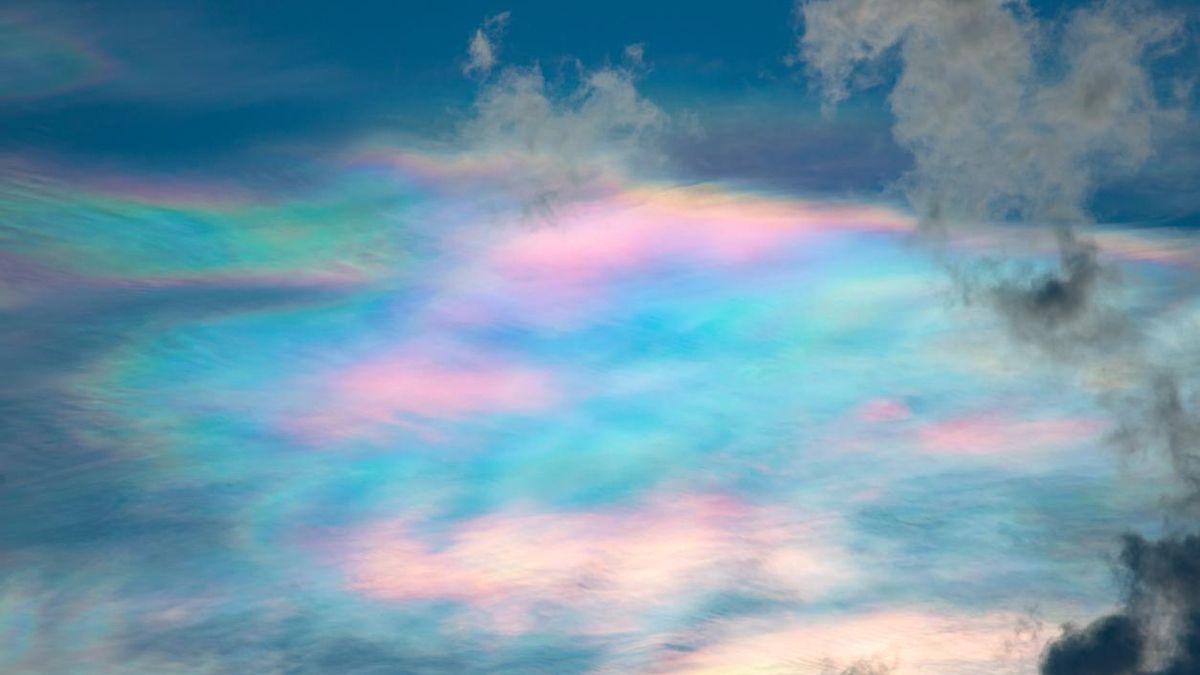
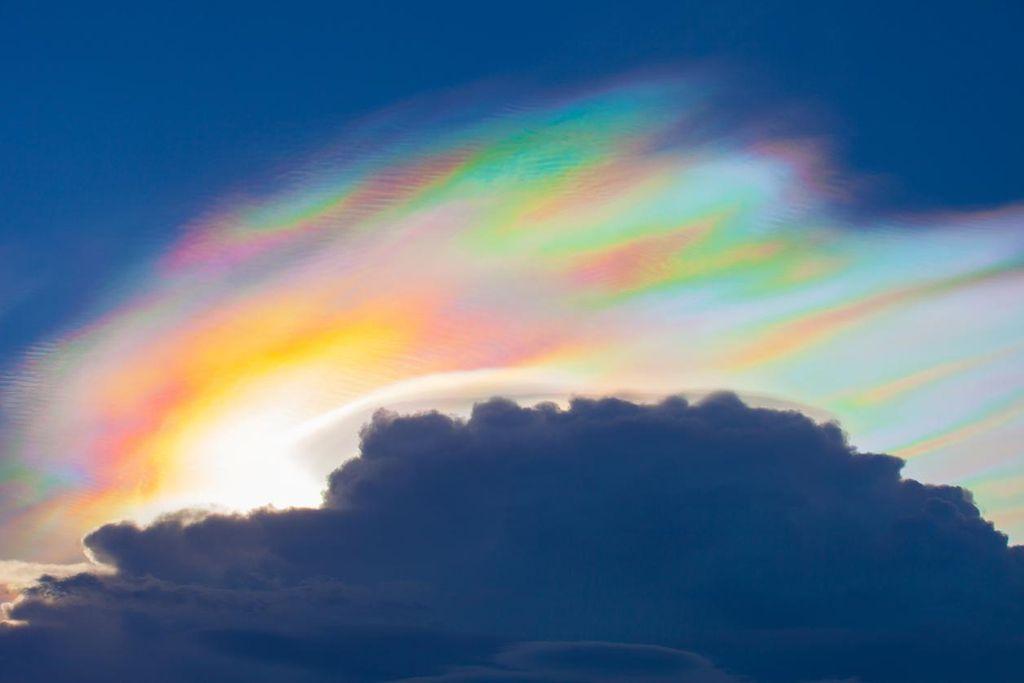
There is a very rare phenomenon that leaves everyone who encounters it speechless, known as iridescent clouds. When this happens, the clouds get tinted with the colors of the rainbow due to the interaction between sunlight and tiny water or ice particles that are continuously present in our atmosphere.
This occurrence is very infrequent, and its scientific explanation demonstrates the difficulty of its occurrence since specific processes and aspects must come together. This visual spectacle depends on two optical elements known as refraction and diffraction, and we will explain what must happen in order to enjoy an iridescent cloud.
Refraction and Diffraction

The process is similar to what occurs when a rainbow is formed. To create it, a situation of refraction must be established, which is a visual phenomenon caused by the change in speed and direction of light waves when passing from one medium to another where the refraction is different.
The clearest example of this event is when sunlight passes through the air and meets atmospheric water droplets, causing those light waves to disperse. While it may seem complicated to understand, it is quite a simple and common occurrence.
On the other hand, diffraction is necessary, a phenomenon that happens when this light wave encounters an obstacle that changes or halts its natural trajectory. In this case, the light wave could either surround the obstructing element or pass through a small gap, if available.
For an iridescent cloud to form, both the refraction process and the diffraction process must occur where the small obstacles interfering with the light's path act as elements that break down the main components, thereby creating that colorful spectacle adorning the clouds.
In simpler terms, light waves come into contact with and pass through specific particles that generate that separation of light, creating a visual rainbow in the clouds known as iridescent clouds. The difficulty in appreciating this phenomenon arises from the necessity that both events occur simultaneously.
The colors that tint the clouds when this occurs are very diverse and can be reds, oranges, greens, blues, yellows, violets, or indigos, roughly the same as those in a rainbow. Now that you have discovered this beautiful and magical fact, frequently look at the sky in case you can someday enjoy its beauty and even capture it in photographs.
The light created by the sun can lead to spectacular elements when it comes into contact with other particles or materials; having the opportunity to appreciate it is something that not many people can boast about, but everyone should see at least once in their lifetime.