
Best Things to Do:
The Library of the Future and the Books That Won't Be Read Until the 22nd Century


In the heart of the Norwegian capital lies a very special library: its books cannot be read. At least not for 90 years. It is not called the Library of the Future by chance. This project plays with the passage of time and nature, reflecting on the ephemeral nature of humanity. It was initiated in 2014 when the public library of Oslo began collecting one original work each year that could not be read or published until a century had passed. The manuscripts are stored on the top floor, in the Silence Room, which opens every spring to house a new one. The first decade has passed, and nine manuscripts have been collected.

The next writer to bring her work to Oslo on May 26 will be Mexican author Valeria Luiselli, who has stated: "I accepted this beautiful invitation to be part of the Library of the Future because I hope, with all my strength, longing, and capacity to imagine, that in 2114 there will be an abundance of musical scores, wild horses, a capella choirs, oil paintings, baobabs, astrological predictions, humpback whales, old and new languages, blooming saguaros, hands that write, and eyes that read." Her youngest daughter would be 93 years old, and the oldest could be 105. She would be 131.
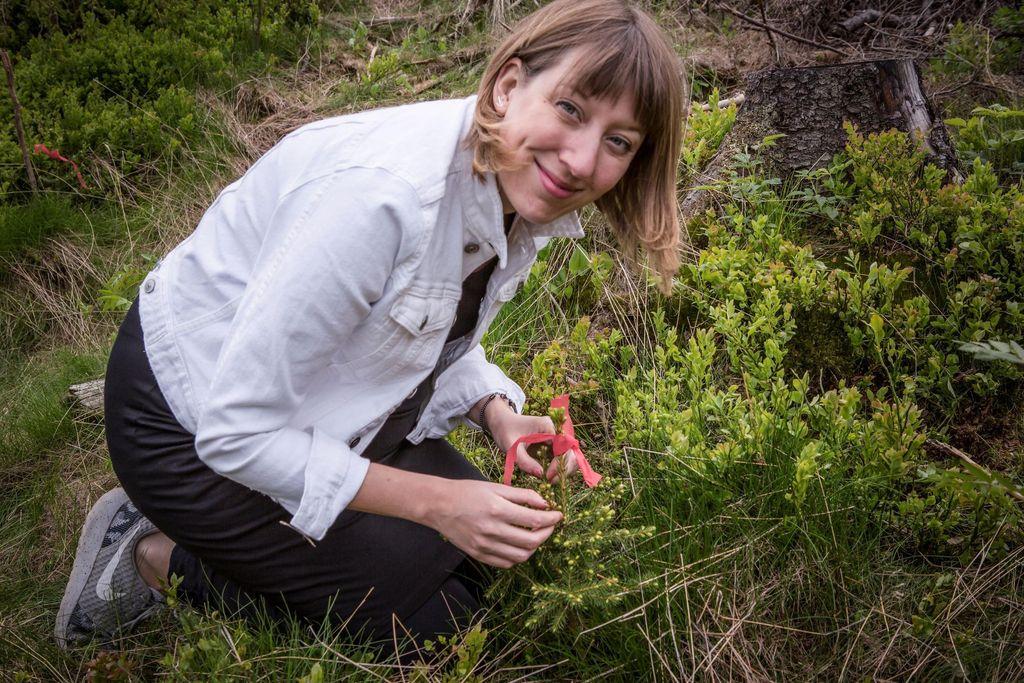
The artist behind this idea is Katie Paterson. Her art is created in collaboration with other experts such as scientists and researchers and is based on the "intimate, poetic, and philosophical" relationship between humans and the natural environment. She has now embarked on a work she will not see completed. In May 2014, she planted a thousand fir trees in Nordmarka, a protected forest area in northern Oslo that has become the forest of the Library of the Future. The Silence Room is situated in such a way that it faces the forest from which the wood will be taken to make the paper for the manuscripts.
A Multicultural Project
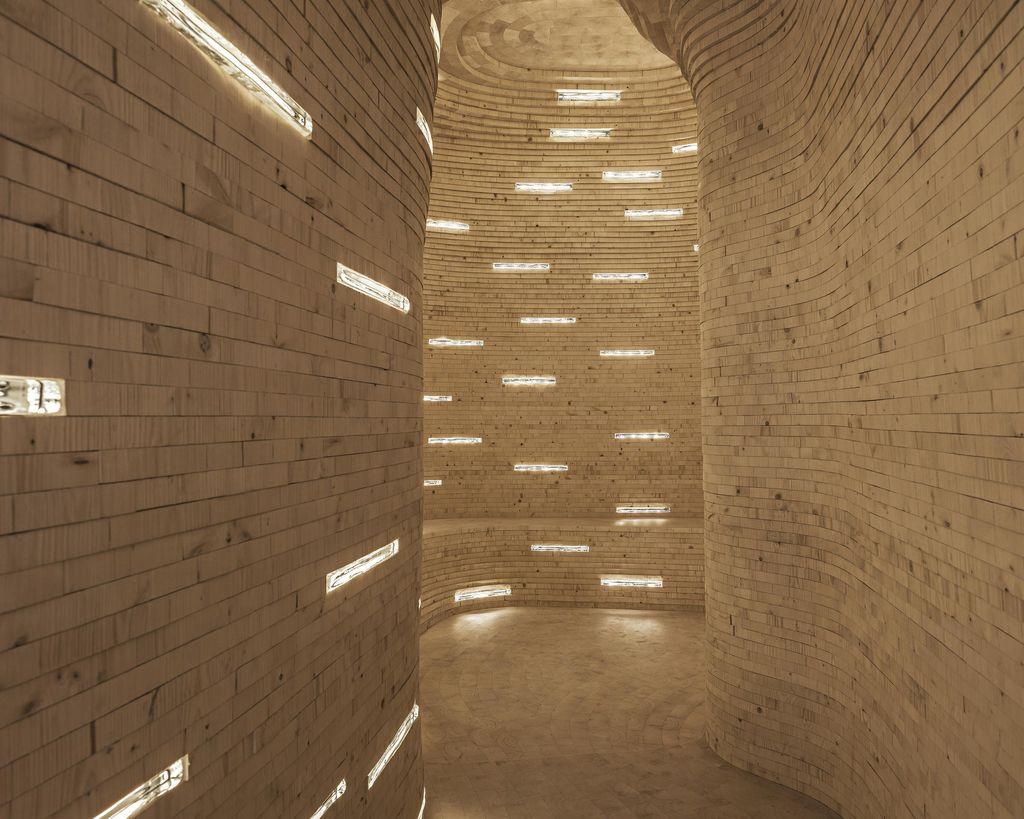
Many well-known writers are already confirmed to participate. The first was Margaret Atwood, author of the acclaimed 'The Handmaid's Tale'. Manuscripts have also been securely stored from David Mitchell, author of 'Cloud Atlas'; Elif Shafak, writer of 'The Bastard of Istanbul'; or Han Kang, author of 'The Vegetarian'; who will not see the impact of their works on society. Their manuscripts are not digitally printed and are stored in glass blocks that stand out against the undulating wood of the room, sourced from the fir forest.

It is a public entity, so this small space that resembles the inside of a tree can be visited - though always barefoot - and with an open mind ready to step into the future. Each year, before the written work is stored, the corresponding author attends a ceremony in the forest where they can only reveal the title of their work: Karl Ove Knausgaard announced that his was titled 'Blind Book' and Tsitsi Dangarembga named it 'Narini and Her Donkey'. It is said that knowledge is planted, and that is what this time capsule, described by some as "elitist," aims to do.
In contrast, Paterson describes it as a "one-hundred-year artistic project created to expand people's perspectives on time and their duty to posterity." The Library of the Future aims to collect as broad a spectrum as possible, with artists from all over the world. In fact, Sjón wrote his in Icelandic and worries that by the 22nd century there may be no one left to speak the language, as only 370,000 people currently do. Another common concern is that climate change will allow the work to continue. Just as there are authors who will not see their works published, there are also those who have not yet been born, but the hope is that the commitment will rise to the occasion, no matter how many years pass.