
Best Things to Do:
The Only Place in the World Where It Rains 365 Days a Year


Rain brings melancholy and sadness to travelers who encounter downpours upon arriving at a new destination, yet at the same time it also brings joy to locals during droughts. There are places in the world where it is almost impossible to avoid water. For instance, the village of Mawsynram in India holds the world record for the highest rainfall: a total of 26,000 liters. So does Cherrapunji in India, Tutunendo in Colombia, Cropp River in New Zealand, or San Antonio de Ureca in Equatorial Guinea.
When deciding on a destination, weather is important, although not decisive if one truly wants to explore a place. Especially if the place of interest is Ljubljana, the capital of Slovenia. Rainfall is abundant during winter months. Undoubtedly, it is neither the city nor the country with the highest rainfall, but there is one area where it never stops raining. In the heart of the city, at Prešeren Square, there exists a sort of artificial cloud that causes precipitation every day of the year.
Behind signs warning of the river center lies a circle that is always wet. It serves as a reminder to tourists that it rains a lot in the country and that water is in abundance in the capital. The sign reads: 'The area with Ljubljana's own water.' On the hottest days, children can be seen playing under that rain, refreshing those who stroll by in the summer. The downpour takes on a more romantic meaning and also serves as a meeting point for lovers.
Discover Ljubljana (Rainy or Not)
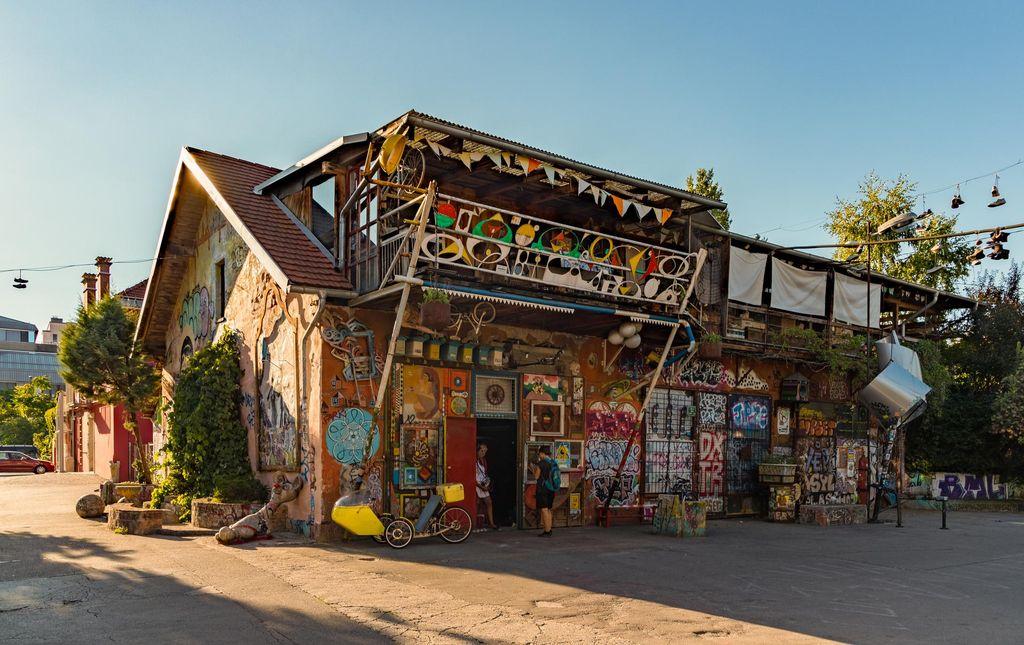
Ljubljana is a small city. Unlike other European capitals that have millions of inhabitants (Istanbul is the most populated with nearly 16 million), it has about 280,000. Its size is an advantage for travelers who feel more welcomed and can get to know it in just a few days. Despite this, it hides several corners to explore, such as the Metelkova art center, an independent association of artists similar to Christiania in Copenhagen, which was once a military barracks.
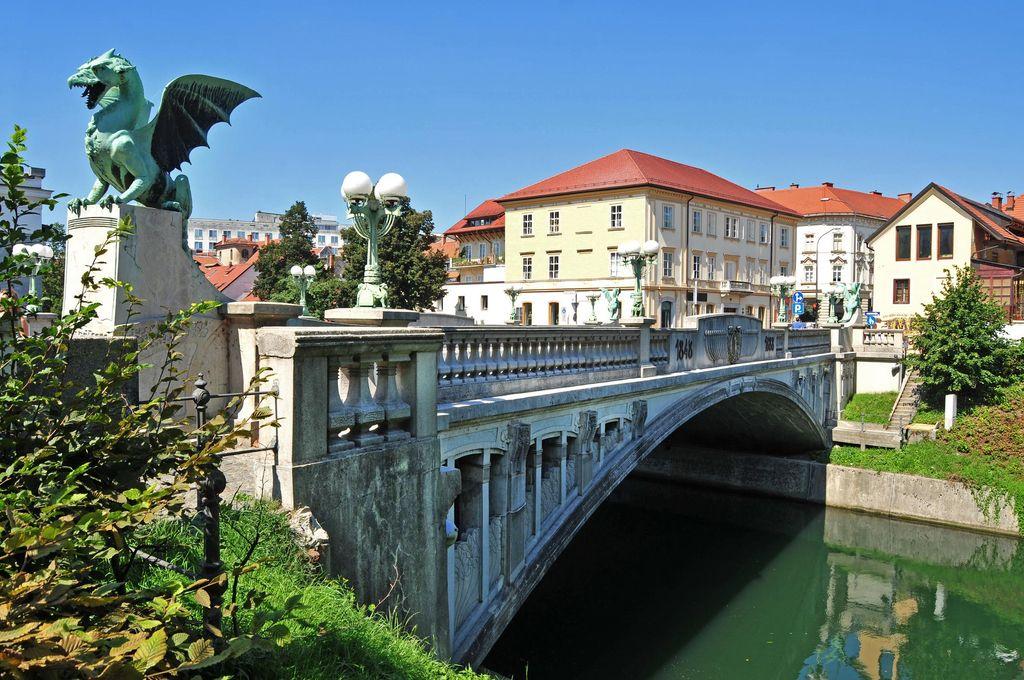
On a hill of just under 400 meters high stands the grand castle, from where one can view a panorama full of beauty. In its historic center, characterized by medieval and modernist styles, one discovers monuments such as the Dragon Bridge, the Preseren monument, or the bronze door with the heads of bishops. The Ljubljanica River flows through Ljubljana, creating a beautiful promenade along its banks. Green is the predominant color in the Slovenian capital, evidenced by Tivoli Park, the lungs of the city.
This large European capital and small city has a vibrancy that could be envied by the huge European metropolises. Believing in fairy tales is possible here, especially in the nearby village of Bled. Dozens of buses head in that direction every day, taking travelers deep into one of the greenest places on the continent. To be in Slovenia and not glance at the views from the Ojstrica viewpoint should be considered a crime. The rain will not deter any of its visitors, especially not the concentrated rain in downtown Ljubljana.