
Best Things to Do:
The destinations that will change your life, according to the creator of the Lonely Planet guides
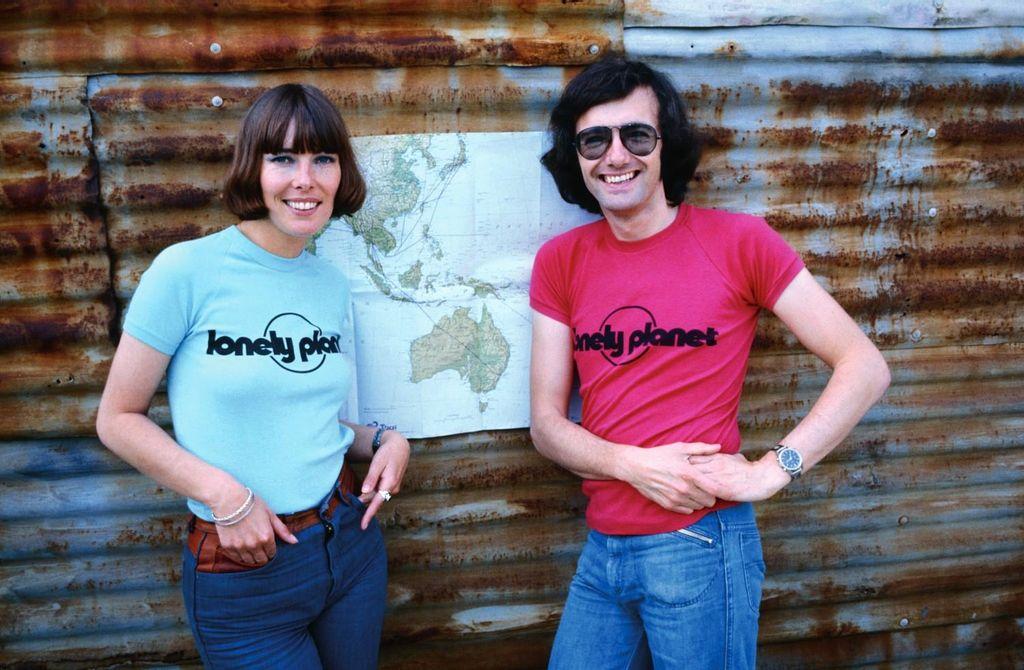

It is likely that 90% of the readers of this magazine have a Lonely Planet guide at home. Considered the bible of travelers, these guides were born 50 years ago from a simple premise: boy meets girl. By chance, Tony and Maureen Wheeler sat on the same bench in one of London's most popular parks: Regent's Park. A year later, they were married. And shortly after that, they invested their meager savings to embark on an adventure that made all their hippie friends green with envy: traveling through Europe and Asia until they reached Australia.
They drove to Afghanistan in a beaten-up second-hand car. From there, they traveled by bus, motorcycle, boat, or whatever fit their tight budget. When they arrived in Sydney, they had 27 cents in their pockets. Despite their dire financial situation, the adventure sparked a flood of questions among their friends. What is the best way to travel to X? Can you recommend a cheap hotel to sleep in Y? What do you eat in Z? This was the seed of the first Lonely Planet guide.
To satisfy all these pressing questions - so urgent at a time before the internet - Maureen and Tony wrote Across Asia on the Cheap. The success was immediate. Fifty years later, more than 1,000 Lonely Planet titles have been published - it is estimated that 150 million copies have been printed worldwide. Although Tony and Maureen sold their publishing house in 2007, they continue to serve as ambassadors for the brand. And, of course, they continue to travel... a lot.

At 76, Tony maintains an exhausting travel schedule. He notes everything related to his travels in a pocket planner. And, after checking it, he states that in the last 12 months, he has spent 150 days in hotel rooms. With a life dedicated to travel, one figures that his passport must be filled with stamps. "I have some friends who claim to have been to all 193 countries recognized by the UN," he admits. "I have been to many, but by no means to 193. I have never been to Algeria, for example. And I would love to visit the casbah of Algiers or the Roman ruins of Timgad... There are also some countries in South America that I do not know... I still have many countries to explore."
This is precisely another characteristic of Tony: an insatiable curiosity. His open attitude towards his surroundings makes wonders appear around every corner. "Just a little over a year ago, I was with a friend in Chad, Africa," he reveals enthusiastically. "I had no idea about the country. The only thing I knew was where to place it on the map. South of Libya, with Niger to its left and Sudan to its right. We spent two weeks there. And I completely fell in love! It has the Sahara Desert, mountains, active volcanoes, oases, the rock paintings of Ennedi... And I knew absolutely nothing about it."
With the house on my back


When talking about that trip that inspired the first Lonely Planet guide, the question arises whether the current Tony Wheeler has become complacent. "Now I'm in a magnificent hotel on the Gran Via in Madrid... and I think it's great," he admits. "But there are certain places I can only go if I bring a tent. I like to travel that way at least once a year." Okay, understood, but... is he still a backpacker? "I like to travel with baggage that I can always carry with me. I'm not talking about trekking, but about walking a kilometer with your suitcase on your back from the hotel to a train station, for example. If your suitcase does not meet this requirement, it's not ideal."
In recent decades, Lonely Planet has contributed to the popularization of tourism. And this popularization, of course, affects the environment. Faced with this dilemma, Tony avoids simplistic views: "We must be aware of the damage we cause when we travel. Perhaps we should rethink the viability of short-haul flights, for instance. It is clear that things can be done better... but we should also highlight the positive things tourism brings. For me, it is very important to personally meet people from other cultures. And there are also countries that could not survive without tourism."
However, when talking about the future, a shadow crosses his naturally radiant face. "In some things, I'm optimistic," he sighs. "But, it is also true that there are many things that sadden me. In recent years, I have been to Ukraine twice. And I never imagined for a moment that the Russians would end up invading the country. Or China. I have traveled through the country and find its culture and people fascinating. But the Chinese government is another story..." In any case, the shadow quickly disappears when travel comes up in conversation again. Tony pulls out his planner to see the destinations he will visit in the coming months. He might go to the opera in Milan, as his wife Maureen is very fond of it. And he is thinking about crossing the Pacific by boat. He has no shortage of plans. All of them, however, for traveling light.
The trips that will change your life, according to Tony Wheeler


Tibet
In a remote area of Tibet, Tony met two Western cyclists. Despite the popularization of tourism, there are still destinations that invite adventure.
The first trip
Freshly married, Maureen and Tony Wheeler embarked on an adventure across Europe, Asia, and Australia. From that experience, the first Lonely Planet guide was born.
Ennedi Plateau, Chad
One of the places that has recently captivated Tony. In this area, unexpected rock formations eroded by the wind and significant rock paintings can be found.
Bali
When talking about the homogenizing impact of mass tourism, Tony remembers that in a place like Bali, with a high influx of Westerners, young people are still learning to play the gamelan.
A man of action
Travel knows no age. At 76, Tony still leads an intense travel life. Among his plans is to cross the Pacific by boat.
Algeria
Despite having visited numerous countries, there are still many he has yet to see. Among them is the North African country, where he would like to get lost in the casbah of the capital.
Montana
In this U.S. state, he learned an important survival lesson: if you are fleeing from a bear, the best thing to do is climb a tree. If the bear can climb to catch you..., it's a grizzly bear. If the bear can only shake the tree until you fall and it catches you..., it's a black bear.
Alcántara
On his first, remote visit to Spain, Tony and his wife traveled a good part of the country, starting in Barcelona and ending in Madrid. There was one region that particularly surprised him: Extremadura.
A long journey
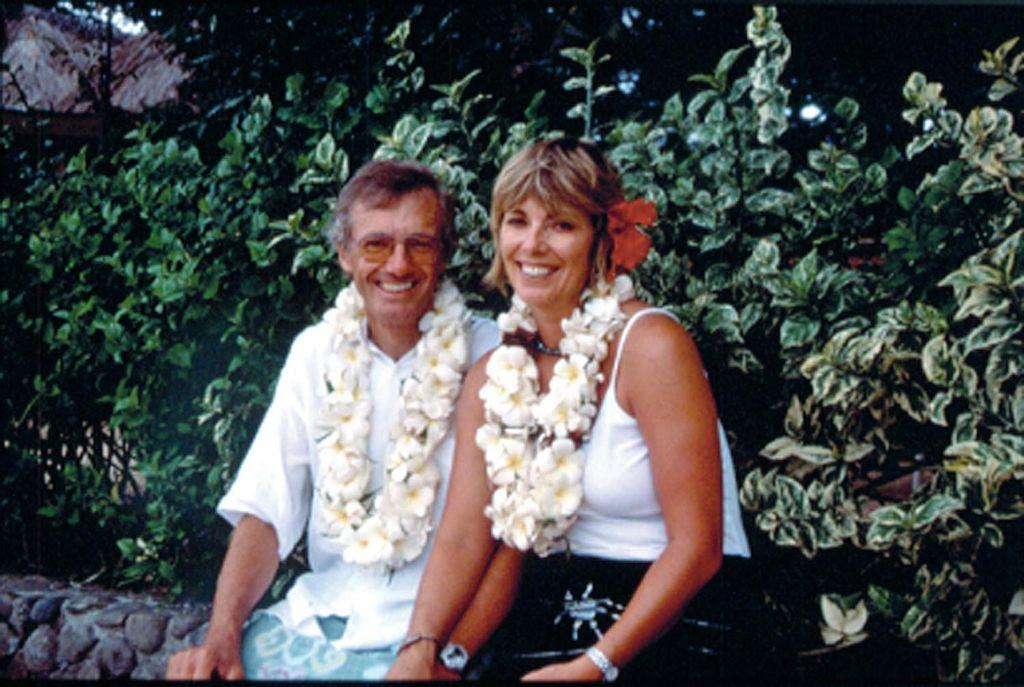
Traveling has been a shared passion for the Wheelers for over 50 years.