
Mangystau, by Luis Pancorbo
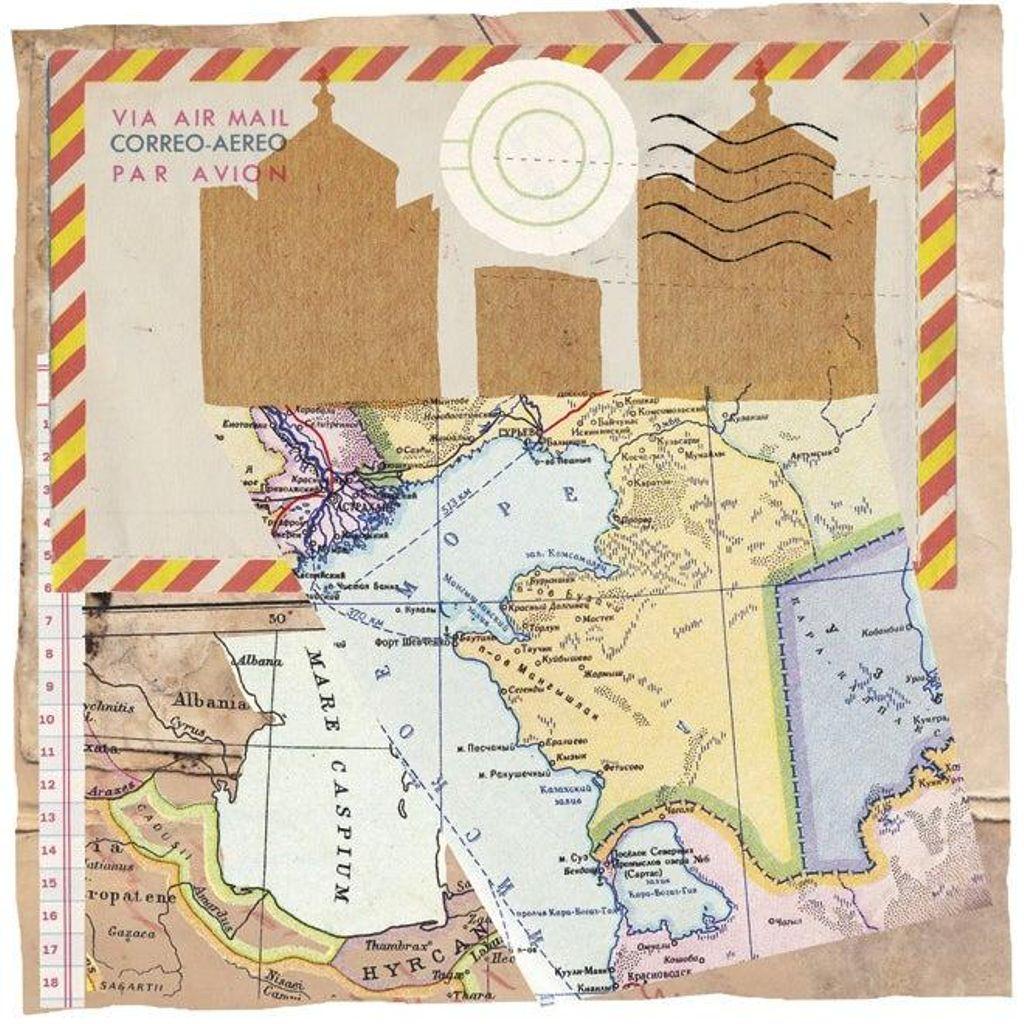
It is not the other side of the Moon. It is Mangystau, where a desert advances in the shape of a halberd-its Mangyshlak Peninsula-into the Caspian Sea, as if wanting to drink its waters until it, too, is left dry. It is the constant mirage of this remote region of strange beauty in southwestern Kazakhstan. But Mangystau barely represents the prologue to the next desert, the Karakum, and especially the Ustyurt, the most ferocious sandy expanse of that part of Asia. That's why Mangystau, which sometimes has four trees, seemed a delightful place to sailors crossing the Caspian or to the caravaners who included this branch of the Silk Road.
Mangystau can boast of housing two-thirds of the country's archaeological wealth and the largest concentration of hermitages. Sufi saints would come to Mangystau as if it were their own personal Thebaid. From the 10th to the 12th century, the cliffs of the Black Mountains were excavated. These are caves carved out of rock with a chisel, where the Sufis laid down a carpet and contemplated a wall oriented towards Mecca: that was their qibla. Of course, even more so, those men looked inward: they had to be strong because it was unclear if any crow would come to their aid with a loaf of bread in its beak. On the contrary, they could suffer what happened to Saint Anthony, where his nights were filled with temptations immortalized by Flaubert. The virgin Amonaria, the Queen of Sheba, at least cheered the imaginary nights, which were hotter and more tumultuous than those of Thebaid. In Mangystau, people would pilgrimage from the coast to those remote holes to see if they could attach some baraka, divine luck, or crazy luck, who knows. Many saints (marabouts, as they would say in Morocco) are buried in cemeteries where turtles nest, filled with funerary stelae and sirk-agash, which are like the ovo of Mongolia or Celtic cairns, mounds of stones with a stick planted on top that has a piece of cloth floating. Neither the Taj Mahal impresses as much as that modest flag of life that some see after death.
Shapak Ata, the Father Shapak, names one of the shrines carved into the edge of a flat mountain. A place that seems to quote Gaudí if it were possible to make that synesthesia uniting times and spaces, cultures, and colors. In the desert of Mangystau, there is no trencadís, broken mosaics, or pieces of polychrome ceramic like those that ignite the imagination in Barcelona. The filigree of walls and chimneys in Shapak Ata comes from the porous stones or cells, as if they were giant honeycombs of colored hues. Or like stalactites that were frozen upside down, that is, aborted by the heat.
That character, more extreme than that of the steppe, made Mangystau a place of exile for the condemned of the Tsarist regime. Ironically, they were given the best place in the world whenever it involved writers and artists of the stature and sensitivity of Taras Shevchenko, the man who became the literary glory of Ukraine. In exchange for his exile, Shevchenko obtained the fiery landscapes of Mangystau, those deceptions of light produced by the Caspian, which sometimes appears more like an oasis. Shevchenko painted his exile in watercolors, and today, as a posthumous triumph of reason and beauty, the Alexandrovsky Fortress where he was confined bears his name. It is the largest port in a region where gas and oil now abound. While potable water comes from a desalination plant and a Soviet-era atomic facility.