
Mary Kingsley, the Queen of Africa

Venturing alone through the remote jungles of West Africa was not what one would expect from a Victorian lady, but Mary Kingsley (1862-1900) was unlike her contemporaries. If she had hardly left home until the age of 30, it was because she had to care for her sick mother and younger brother while her father, a physician, accompanied wealthy patients on expeditions around the world. When her parents died, she calculated that her inheritance would allow her to travel for the rest of her life (as long as it was brief and simple). After visiting the Canary Islands in 1892, she traveled the Gulf of Guinea to study indigenous customs. She educated herself by reading scientific essays, ethnographic studies... and stories from her admired Burton.
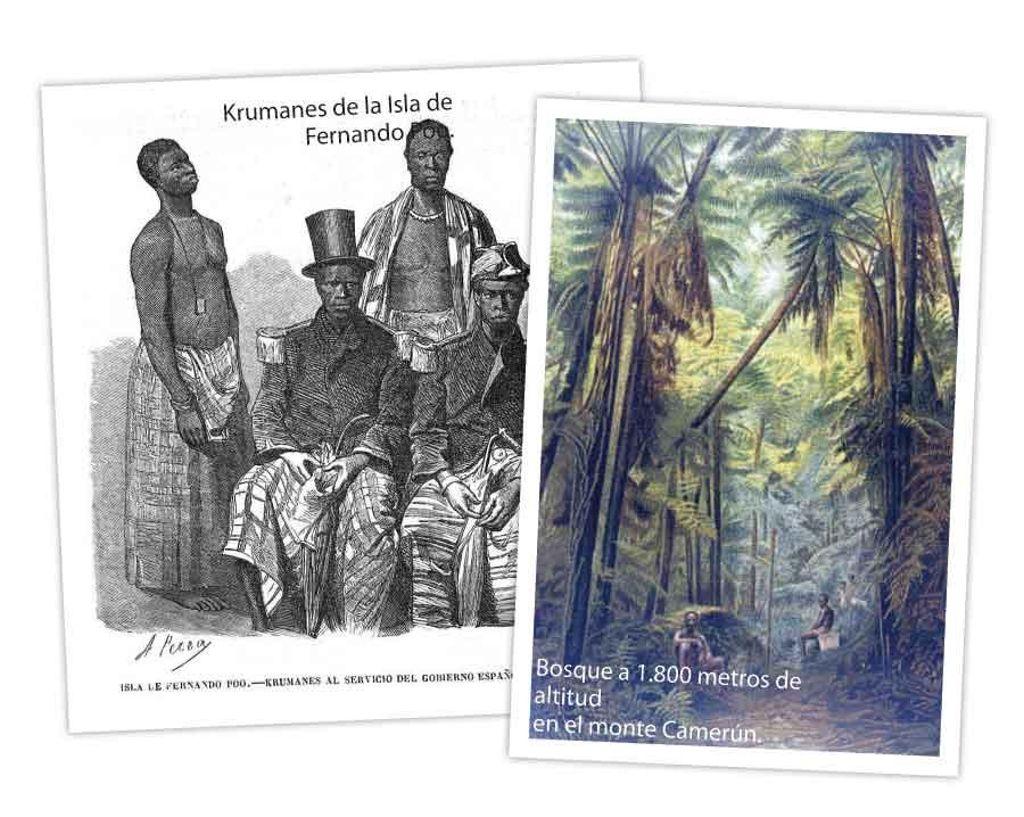
She was the first woman to climb the 4,090 meters of Mount Cameroon, dressed in cumbersome skirts that concealed a revolver and a knife. The formaldehyde and jars were for collecting fish that the British Museum had requested. The fact that they named three new species after her thrilled her as much as learning to navigate the rapids of the Ogooué. She slapped a crocodile with her oar and had a hippo confront her with her parasol; she had another run-in with a leopard, bargained with cannibals, and criticized the colonial administration for failing to understand practices like polygamy.

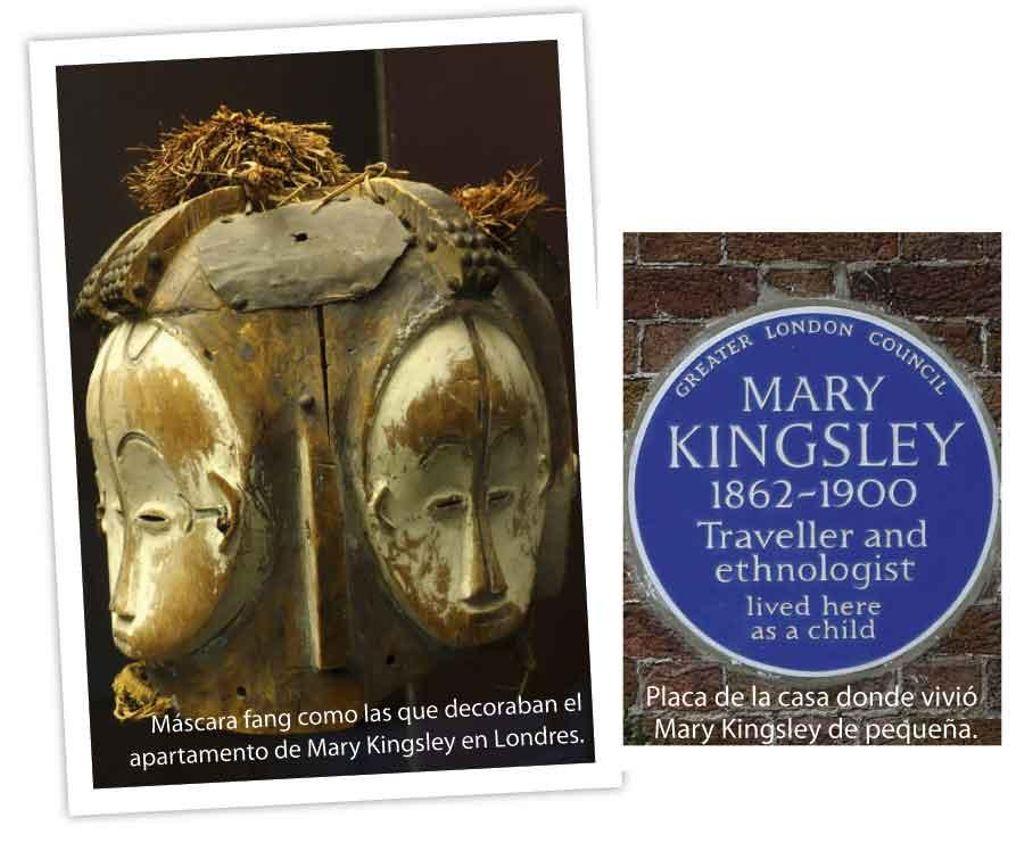
She filled her Kensington apartment with nostalgia, decorating it with fetishes, talismans, and masks... and setting the heating to tropical temperatures. The Boer War provided an excuse to end her days in Africa: she volunteered as a nurse and died in Cape Town from enteric fever.
Mary Kingsley was the talk of the town. She had returned from her second expedition to French Congo and everyone wanted to hear her stories about cannibals: "I don't think they pose a danger to white people. The only nuisance is trying to prevent some of your Black companions from being eaten." She gave lectures at geographical societies that did not always allow her to read herself, due to her being a woman (a situation that the anti-suffragist accepted without any resentment). Her book Travels in West Africa was the narrative phenomenon of 1897; it includes the following text published by Valdemar Publishing.
"Give me a river in West Africa and a canoe for an authentic pleasure."
Our first day of marching was truly hard and long. We found no paths as such. Hour after hour, mile after mile, we walked through a deep, dense, suffocating trail. The march of the Fang, undoubtedly the fastest and most resilient Africans I have known, exhausted my Ajumba, who were slower and perhaps more civilized, less skilled, akin to myself when navigating such challenging terrain. The Ajumba are certainly excellent river navigators, and they proved this to me from Arevooma to the region where we made contact with the Fang, that of M'fetta, but in the jungle they did not seem as strong or fresh. I even feared that one of them might fall ill. The Fang, on the other hand, moved through that environment like fish in water; it was a pleasure to see them navigate obstacles - fallen trees, exhausting vegetation, boulders the size of actual cliff rocks, and so on - as if it were nothing. The one who seemed to be struggling the most was the Igalwa, Ngouta, who appeared ready to faint, if not die, any moment.
I think that, ironically, what saved us all was the Fang's appetite: every two hours or so, they would stop and eat something they carried in their bags, so to speak, which they also offered us, and we ate as well, knowing it was just fish and hippo meat... After a sip of alcohol, they would smoke a pipe of tobacco, calmly and leisurely, and then back to walking. We survived, or at least kept up with their infernal pace, undoubtedly by eating as many times as they did, although we also resorted to our own rations. I, moreover, shared my tea with Ngouta. And we followed the Fang through the jungle as if they were the guiding star, the star of our good fortune. The lucky star that guided me, more specifically, on that late afternoon of our first day in the mischievous jungle, as we carefully descended down a ravine. Below there were several elephants, about five or six... And I felt it was time to show those men who I was. I had never shot a rifle at any animal, only at a few bottles, and I never thought I would be capable of hitting an animal, no matter how large, but at that point and hour, as we went down the ravine and were at a certain distance from the elephants, I asked one of my men for his rifle, put it to my shoulder, got a little closer, aimed at the head of one of those elephants, pulled the trigger... and the gigantic animal fell, mortally wounded, to my surprise and to the admiration of my men and the Fang. None of them could claim that they had had to rescue a European lady from the attack of a furious elephant, because the other poor noble brutes, upon hearing the shot, fled in a stampede. I never believed these things could happen so simply, but it was just as I described. I felt very proud of how my men and the three Fang looked at me. From then on, they could reproach me for nothing if I took too much time collecting dodder plants, which were abundant there and which I also wanted to take back to England, even if they were dry, as their medicinal applications in Africa attracted the attention of many researchers (...)
We continued through increasingly difficult areas to navigate: at one point surrounded by marshes, and worse yet, by quicksand. We went in a single file, holding hands, me like one of the men, as I believe that was how they considered me after the elephant incident, to help ourselves and avoid missteps, or to quickly pull up anyone unfortunate enough to fall into one of those traps, terribly deadly, with which nature has equipped the heart of the African jungle.
Later, in less dangerous lands, another new stop for food. And we continued... Until we reached a point in the jungle, in a muddy area, where another group of elephants was frolicking. Kiva, then the bravest elephant hunter, as they had introduced him to me, perhaps considering me already one of their own, called me to observe them. I suggested getting closer, but he refused, saying that in case we needed to use the rifles, we might not have enough ammunition and it was necessary to save it for emergencies. It was clear that when talking about ammunition, he was only referring to what he and I could shoot... Not considering either the Ajumba or the Igalwa, perhaps not even the other two Fang accompanying us. So we simply watched as those elephants peacefully took their mud bath, their huge legs like Madeira tables, their trunks intertwining to greet each other in friendship and joy. I believe that the deference shown to me by the Fang slightly annoyed my Ajumba. (...) The disdain I showed them regarding the elephants, considering that only he and I were capable of firing at the poor animals with any guarantee of success, had evidently affected their spirits. Well, they would get over it.