
Best Things to Do:
Medina Azahara, Capital of the World in the Year 1000, Declared a World Heritage Site

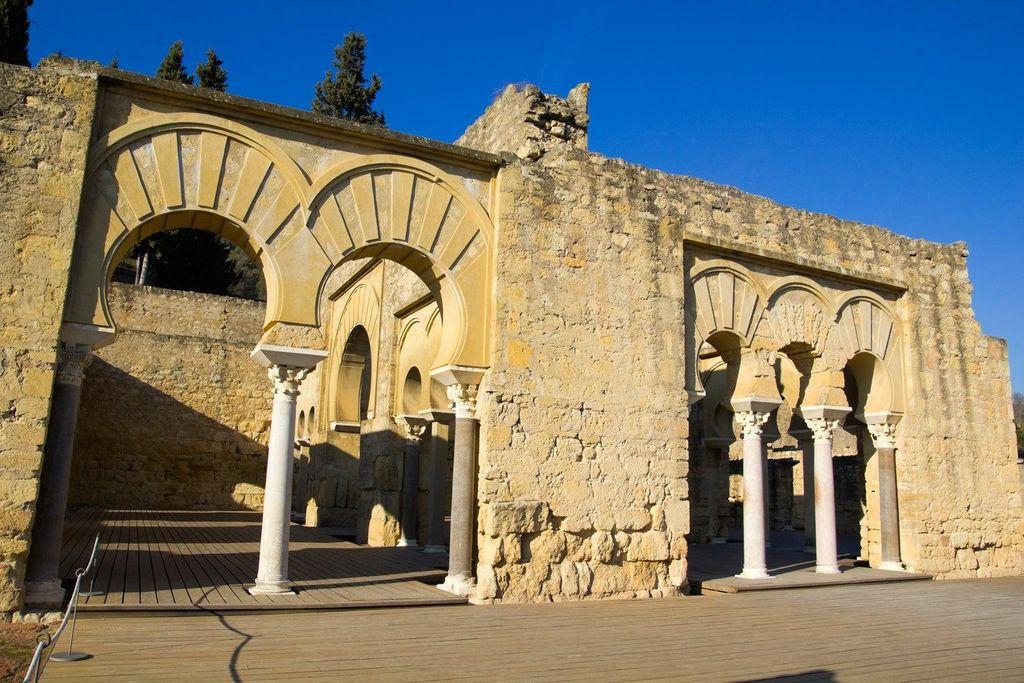

Romantic legends have made us believe that Medina Azahara is a gift commissioned by a passionate lover to honor his favorite. But that is not the case. Medina Azahara was the highest ideal of the self-proclaimed caliph Abd al-Rahman III, who aimed to build a city from scratch and make it the center of the world. That categorical. By the turn of the year 1000, al-Andalus was that center of the world. While Paris and London were insignificant cities lost in the obscurities of the Middle Ages, Córdoba was the capital of the West, despite its citizens practicing the Islamic faith. Córdoba lit up its streets at night, had a sewer system that no other city at the time possessed, paved its squares, and kept madrasas (universities) and hundreds of public baths open for the physical and spiritual hygiene of its inhabitants.
This Sunday, Medina Azahara has been declared a World Heritage Site by UNESCO. The committee of experts gathered in Bahrain, in the Persian Gulf, emphasized the historical significance and heritage value of this archaeological site located eight kilometers from Córdoba, on the gentle slopes descending from Sierra Morena towards the banks of the Guadalquivir, the longest river in Andalusia.
Madinat al-Zahra, castellanized as Medina Azahara, means 'the shining city.' Its builders laid the first stones in 936, and by 944 a good part of the city had been constructed. Medina Azahara was not a palace: it was a sprawling city covering one hundred fifteen hectares organized across three terraces, the uppermost for the Throne Room and the caliph's residence and family, the second for administrative, political, religious, and financial buildings, and the third and last, closest to the river and its wharf, designated to accommodate the inhabitants, military, and artisans.
To encourage the arrival of new residents, the caliph granted four hundred dirhams to any subjects who settled here with their families. Upon the death of Abd al-Rahmán III in 961, his son al-Hakam II continued the expansion works at Medina Azahara. History has granted him a place of honor for his love of bibliophily. It is said that his library was the largest in the world and that it had a retinue of librarians to organize it. The caliph requested that his embassies bring books from all their distant countries of origin instead of useless gifts. But the death of al-Hakam II in 976 marked the beginning of the end for the Umayyad dynasty, which had ruled the capital of al-Andalus since the mid-8th century. After his death, his son Hisam II, ineffective, insecure, and incapable, took over the government with the warlord Almanzor at the helm, who erected his own city, Madinat al-Zhaira, the location of which is still debated. Almanzor extended the borders of al-Andalus to practically the entire Iberian Peninsula. He even looted Santiago and seized the bells from the apostle's temple. It is said that he brought them to Córdoba, and with the melted bronze, he crafted the lamps of the extension he promoted in the Mosque.
His death unleashed a bloody civil war, followed by the plundering, the mockery, and the oblivion of Medina Azahara. The history after that is well known. The taifas, the arrival of the Almohads and Almoravids, and the last white star represented by the Nasrids of Granada marked the end of eight long and prosperous centuries of Hispano-Muslim dominance. Today, from that period of early renaissance, we have archaeological sites like Medina Azahara, the ephemeral city that stood for barely a century but represented the dream of a caliph to make that place the capital of the world.