
Best Things to Do:
MY OCTOPUS TEACHER


'My Octopus Teacher,' the Netflix documentary that won an Oscar in 2021, took eight years to film, during which they recorded up to 3,000 hours in one of the underwater wonders of the world, the great African kelp forest. This is the only giant kelp forest on our planet and is home to rich biodiversity. This area borders the coasts of Cape Town, South Africa, and extends northward for over 1,000 kilometers towards Namibia. Interestingly, while other kelp forests are believed to be declining, the great African kelp forest seems to be growing.
This is why new projects and groups are emerging to preserve them. One of them is closely linked to the documentary 'My Octopus Teacher': The Sea Change Project. This is a non-profit organization aimed at protecting marine life and raising awareness about the importance of kelp forests in South Africa, which is behind this film. The star of the documentary, filmmaker Craig Foster, is the co-founder of The Sea Change Project.
FALSE BAY
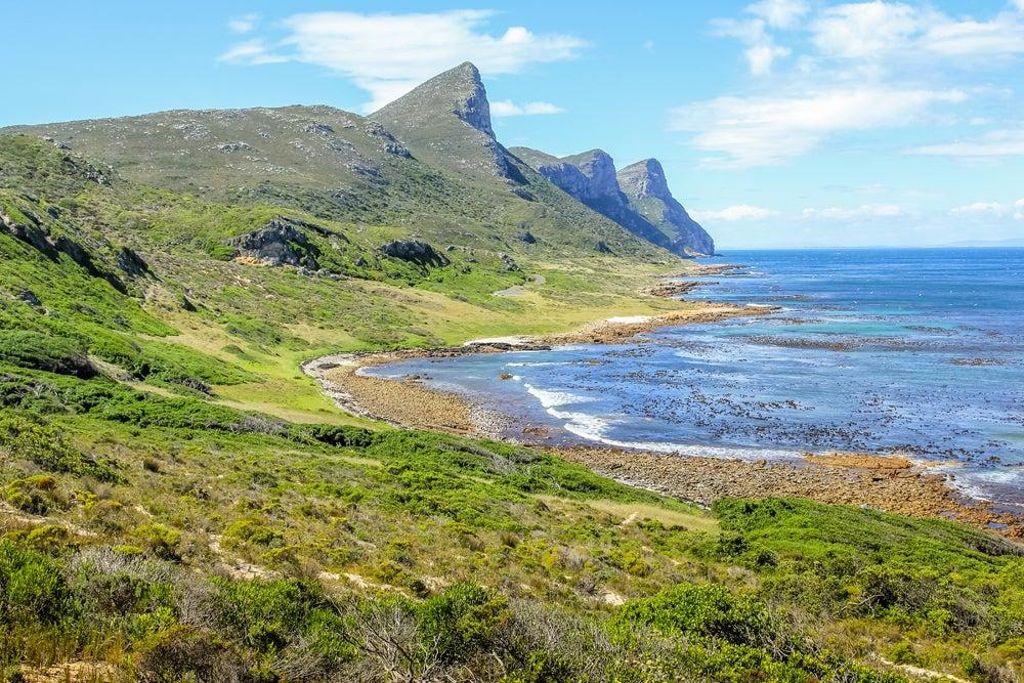
False Bay, a natural inlet between the Indian and Atlantic Oceans in South Africa, is the location depicted in the documentary, a bay filled with kelp forests. Much of False Bay is located within the Marine Protected Area of Table Mountain National Park.
WHERE TO FIND THESE MARINE FORESTS IN SPAIN

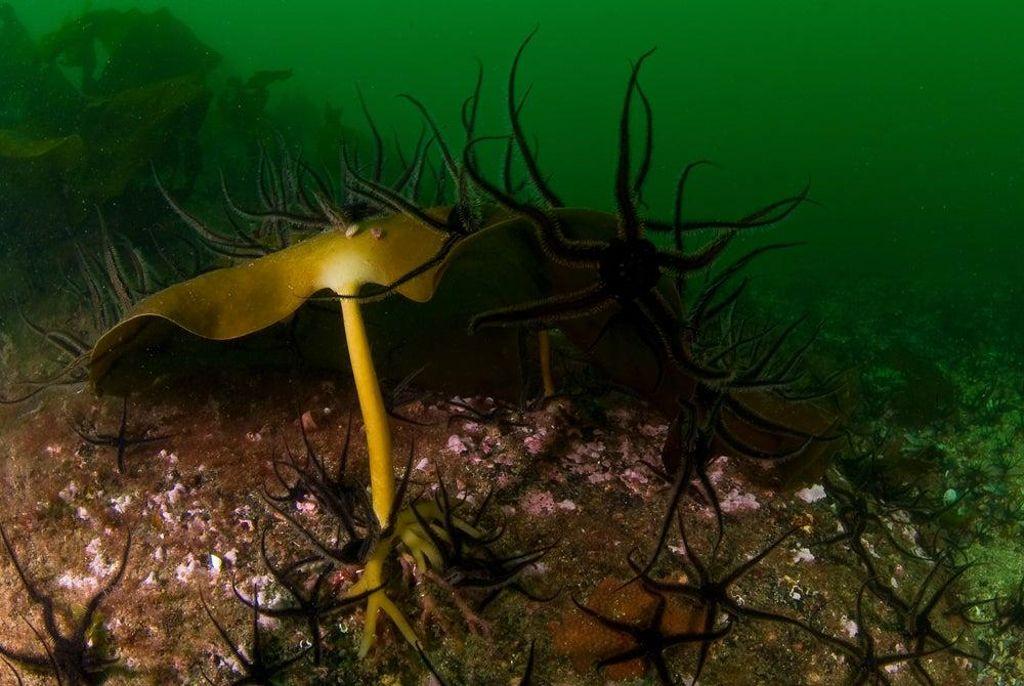
The northern coast of Spain also has kelp forests, which are considered the last marine forests of the Iberian Peninsula, along the coast of Galicia and some areas of the Bay of Biscay. As noted by the Spanish Institute of Oceanography, these marine forests of laminar algae are equivalent to terrestrial forests, and like them, in recent decades they have suffered regression and disappearance along the Spanish coastline due to various biotic and oceanographic factors, as well as the effects of climate change. If they disappear, marine biodiversity disappears as well.
However, there is currently no updated map of these marine forests' distribution in northern Spain. But the Spanish Institute of Oceanography (IEO) is working to create one. Researchers from the IEO, the University of A Coruña, and Rey Juan Carlos University have launched the #BosquesMarinos2030 program, which aims to encourage collaboration from divers, fishermen, and anyone interested in the marine environment who can provide information about the location and status of these species. There are four projects dedicated to the study of kelp in Galicia and the Bay of Biscay within this citizen science initiative.
THE DIVERSIMAR PROJECT

One of them is the project Diversimar (Network for the Observation of Marine and Fisheries Biodiversity of Galicia and the Bay of Biscay), co-funded by the Biodiversity Foundation of the Ministry of Ecological Transition and the Demographic Challenge. This project has a catalog of species of fauna and flora that inhabit the waters of Galicia and the Bay of Biscay, as well as interactive maps and downloadable PDFs with identification guides. Both serve to help people identify them in a simple and visual way (a section for kelp identification will also be added soon).
Lastly, there is a citizen participation program, where anyone can collaborate with Diversimar by sending photos of their sightings through social media or filling out a contact form on the website (in which you need to include when you saw or captured it, the geographical location where you found it, its size, and any other relevant information). This way, society can get involved in the study and conservation of these essential marine forests.
OTHER PROJECTS
The other three projects dedicated to the study of kelp in Galicia and the Bay of Biscay are:
- The monitoring program of kelp within the ESMARES project dedicated to the evaluation of Marine Strategies led by Lara Arroyo and Alberto Serrano from IEO in Santander.
- The HERBIKELP project led by Cristina Piñeiro-Corbeira of the University of A Coruña for the study of impacts, consequences, and adaptive management measures for laminar forests.
- The SAVEKELPS project led by Brezo Martínez Díaz-Caneja of Rey Juan Carlos University, which studies the climate vulnerability of kelp forests.
AND MORE:
-South Africa from the Water
- The Paris of 'Lupin': a tour of the locations from the series that is a hit on Netflix
-'Artemis Fowl': the new Disney+ series that reveals the natural beauty of Ireland