

When he was young, King Ludwig II of Bavaria spent his afternoons contemplating the medieval ruins located near the family residence. Hohenschwangau Castle, built by the king's father on an ancient medieval fortress, is depicted in the young prince's diaries, referenced as a fantasy that goes beyond mere whimsy. Nicknamed the "Mad King," his obsession with a past that never existed led him to create Neuschwanstein years later.
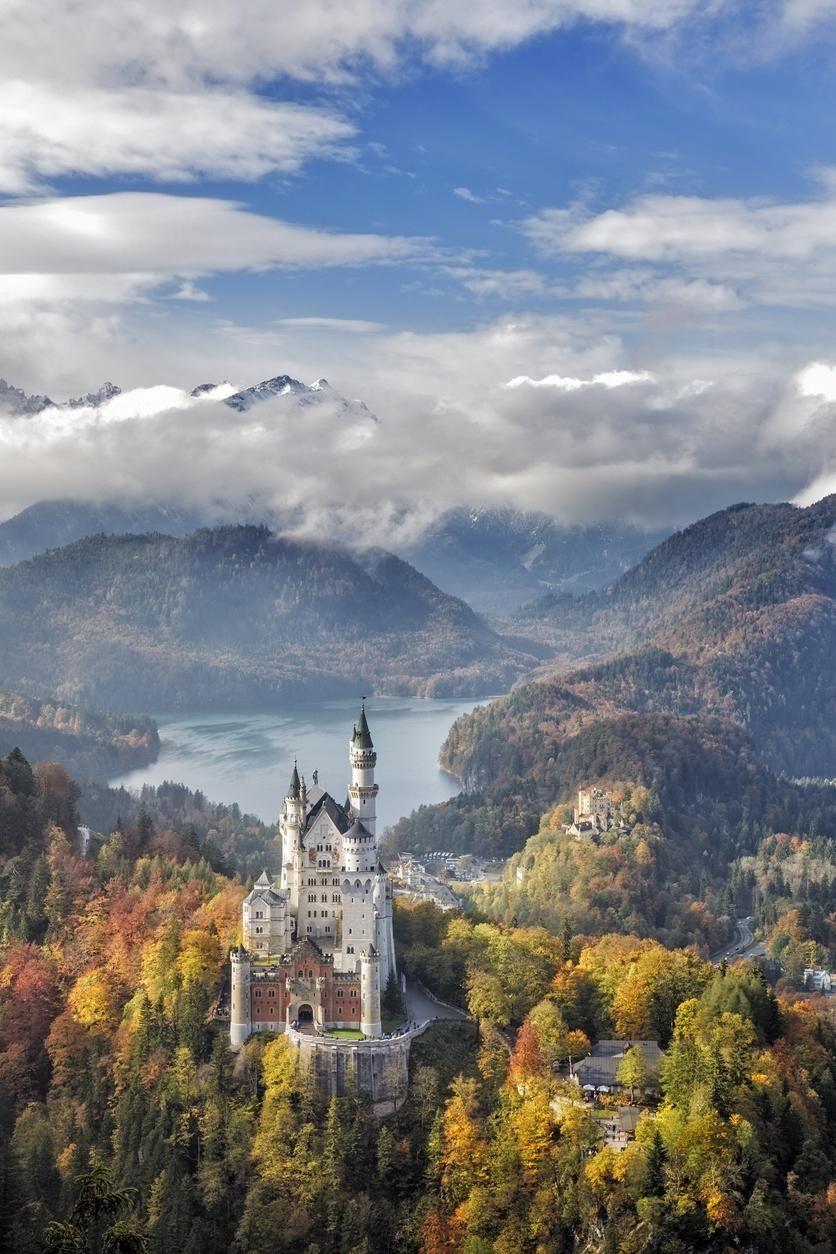
For many, it is one of the most beautiful castles in Germany, and rightly so. Built in the 19th century, this monumental work on top of a hill was designed to blend with the German landscape and incorporated various architectural styles into its design, while its hallways were decorated with representations of classic legends such as Tristan and Isolde and even the famous Spanish King Ferdinand the Catholic. The result was monumental, rococo, and eccentric, as well as one of the most famous and recognizable landmarks in Germany, attracting tens of thousands of tourists every year.
In early January, UNESCO announced its recognition as a World Heritage site, a distinction that until now was typically granted to works that were representative of their time. In fact, according to ethnologist Christoph Brumann, quoted by Europa Press, the castle was considered a "second-tier monument," as it is not a genuine medieval building, but rather a romantic and personal representation of a historical period. Including it changes things, as it blurs the boundaries of what can be considered protected heritage and what cannot.
The Dream Castle of a Mad King

The construction of the work was never completed. Due to the constant changes to the original plans that the king imposed, both the budget and the plans expanded in a way that seemed endless. Thus, what began as a certain project ended up becoming the Throne Room and a visiting room turned into the Arab Room. It was not a conventional castle, nor practical, nor designed for anything other than the king's own whim, who would live alone in the place with his servants, as it lacked space to accommodate the court. Despite everything, the young monarch ended up spending a total of 173 days at Neuschwanstein.

After the expropriation of the site, mostly due to the debts accumulated by the monarch among this and other constructions, the castle was transformed into a museum within weeks. A role that, after many ups and downs and its near disappearance as a consequence of World War II, continues to fulfill today.
While at the end of the 19th century it was allowed to walk freely through the facilities, the rapid deterioration of furniture and other decorative elements led to guided routes being outlined and restricted, in a corridor narrowed by the overload of ostentatious tables, ornate couches, and various crafts, most of which had purely decorative functions. Despite appearances, Ludwig II's vision of Germany's medieval past gave rise to one of the most stunning architectural works. It was precisely his overflowing imagination that conceived a castle that, until then, only existed in fantasy novels.
Neuschwanstein Protected: How to Get on the UNESCO List
In order for any statue, temple, fortress, castle, palace, or structure to be considered, there must first be a proposal from the state that administers it. Thus, each country publishes an inventory of properties that may be eligible for heritage status. Following this, the creation of a comprehensive proposal begins, including all documents required by UNESCO, which will be submitted to the World Heritage Center, and if it passes the first filter, it will enter a year-and-a-half process during which the inclusion of the selected monument will be evaluated. The final word will always lie with the World Heritage Committee, which meets only once a year in a session where the inclusion or exclusion of monuments that have passed all filters is discussed.
And this is where the question of the castle comes into question. For a monument to be selected, it must demonstrate that it possesses exceptional human value and includes some of the essential criteria to finally be included on the list. According to the portal of the Ministry of Culture, they would be as follows:
- A work of art of human creative genius
- Important interchange of influences in areas such as architecture, monumental arts, urban planning, or landscape creation.
- Unique or exceptional testimony to a cultural tradition or civilization.
- Representative example of a type of construction or architectural, technological, landscaping, or historical ensemble.
- An eminent example of the relationship between humans and their natural environment.
- Direct or material relationship with events, traditions, ideas, beliefs, or artistic creations of outstanding universal significance.
- Representing phenomena or areas of unique natural beauty and aesthetic value.
- Outstanding examples of significant phases of Earth's history, geological processes, or significant geomorphic elements.
- Representative examples of ecological and biological processes in the evolution of ecosystems and species communities.
- Key habitats for the conservation of biodiversity, especially of endangered species with outstanding universal value.
In the case of Neuschwanstein, it is not a monument representative of a time or culture, nor is it a notable historical moment for the history of humanity. However, it is a monumental work of great cultural value for Germany, representative of its heritage, and unique, as there haven't been many examples of reinterpretation of medieval architecture of this magnitude.
It could be seen as a representation of German romanticism of the time, a movement of appreciation for cultural classics and the natural environment that characterized this historical period in the country. Undoubtedly, a magical place present in all travel itineraries through southern Germany and a significant shift in the way the world interacts with its history from now on.