
2024 Will Be the Year to Best See the Northern Lights: Where You Should Go to See Them
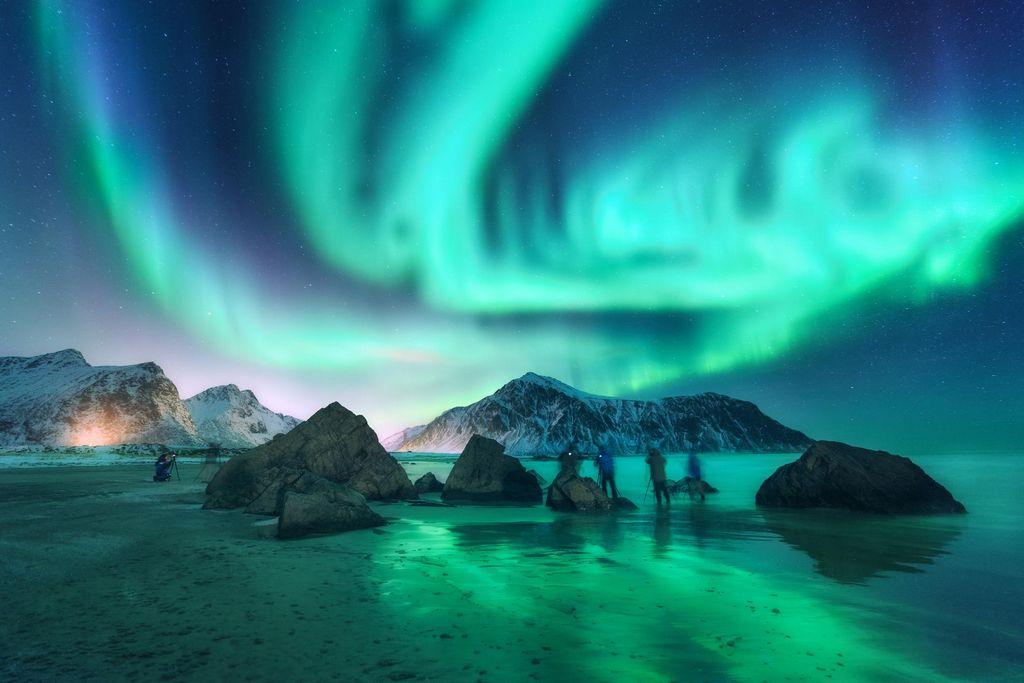
The Northern Lights are luminescent events that typically occur in polar regions during the night sky. These phenomena manifest as unique landscapes that occur for brief periods when several natural factors combine simultaneously.
All over the world, numerous travelers yearn for the chance to witness a Northern Light at least once in their lives. However, the odds can be quite low, as accurately forecasting the precise location and moment to observe one can be a challenging task.
How Are Northern Lights Formed?
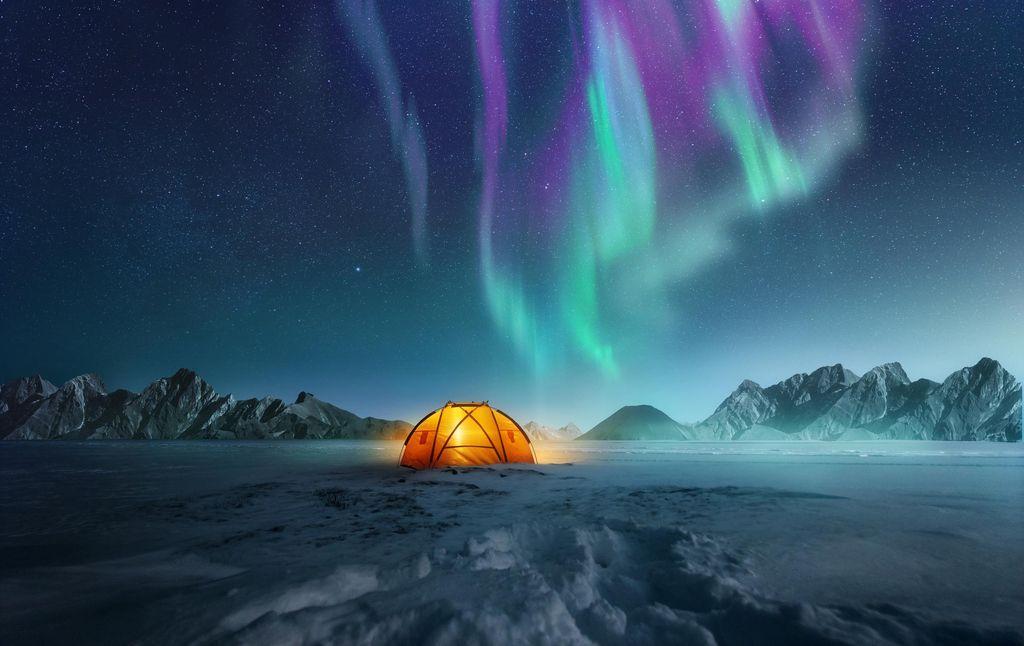
Auroras are more frequent in polar areas, that is, in regions surrounding the geographical poles. When this phenomenon occurs in the northern hemisphere, it is called the Northern Lights, which is the commonly known term, while in the southern hemisphere the term Southern Lights is used. However, they can also be observed at lower latitudes, as has occurred in England.
The manifestation of these impressive light displays is conditioned by various factors, such as geomagnetic conditions and the season of the year. Nevertheless, the predominant factor influencing their appearance is solar activity.
Auroras are generated due to the interaction between charged particles from the Sun-known as ions-and the Earth's atmosphere. When these particles collide, they create charged currents that move towards the poles. These ions collide with other atoms of gases, such as oxygen and nitrogen, providing them with additional energy. The release of this energy manifests in the form of light, leading to this grand natural event.
Why Will 2024 Be a Great Year to See Northern Lights?

The Sun's activity follows an 11-year cycle, known as the solar cycle. At the end of each period, a phase of high energy begins. During that time, distinctive features such as sunspots, solar flares, and coronal mass ejections intensify, marking the peak of the cycle. Coronal mass ejections, manifested as solar storms, reach the Earth, initiating the process of forming a Northern Light.
The upward trend began in 2019 and is expected to peak in 2024 and 2025. Although it is not possible to predict with certainty the specific solar ejections that will occur in 2024, scientists anticipate that it will be a year marked by notable and potentially turbulent activity.
Best Places to See the Northern Lights in 2024
Auroras have been recorded on most planets in the solar system, except for Mercury, Venus, and Mars. On our planet, these events occur in specific areas, and in 2024, there will be destinations with higher chances of witnessing them. If you are planning to see them, it is recommended to do so from September to April, as the nights are long or, in some very northern places, practically endless.
- Norway: Tromsø, Alta, and Svalbard.
- South Iceland: Skógafoss, Jökulsárlón, and Reykjanesviti.
- Canada: Northwest Territories, Yukon, and Canadian Rockies.
- Alaska: Fairbanks and Denali.
- Sweden: Kiruna.
- Finland: Revontuli, Nellim, and Kakslauttanen.
- Russia: Murmansk, Teriberka, and Arkhangelsk.
- Scotland: Orkney and Shetland.