
The Destination

Picos de Europa is now one of the most visited protected natural spaces on our continent. Although it has celebrated a century as a National Park, this mountain range was formed 65 million years ago almost dipping its feet in the Cantabrian Sea, when several tectonic plates violently collided (the whims of our planet).
Along with the action of glaciers, they sculpted the unique shapes of its peaks, valleys, and hollows. Picos de Europa covers nearly 70,000 hectares and bites into the edges of three autonomous communities: Cantabria, Castile and León, and the Principality of Asturias.
The "Mount"

I settle back into the seat of the Cupra Ateca and input my next destination, Fuente Dé, into the navigation system. I have an hour and a half of winding roads ahead, and the truth is that I have no complaints, on the contrary: this car, despite its appearance, has a sporty feel inside, hugs the asphalt as if it were much lower and smaller, and driving it at a brisk pace is a safe and, above all, very enjoyable experience.
A Couple of Thrilling Experiences

Finally, I arrive at Fuente Dé: a small village from which a cable car ascends a height of 753 meters (almost a kilometer, to be clear) and in just five minutes I'm at 1,823 meters. From there, the view of Picos de Europa is something that cannot be described: take note if you have a tendency to Stendhal syndrome.
After descending again, I take the wheel and drive to Potes, a town situated right where four valleys intersect and where the Quiviesa and Deva rivers meet. The climate in Potes is surprising, precisely because of its peculiar location: one suddenly feels close to the Mediterranean.
I enter my next stop into the navigation system: Caín, another hour and a half of winding roads, lush landscapes, and enjoyable driving. The Cares Route passes through there, a delight for hiking lovers: it follows a path carved into the rock, through an impressive gorge.
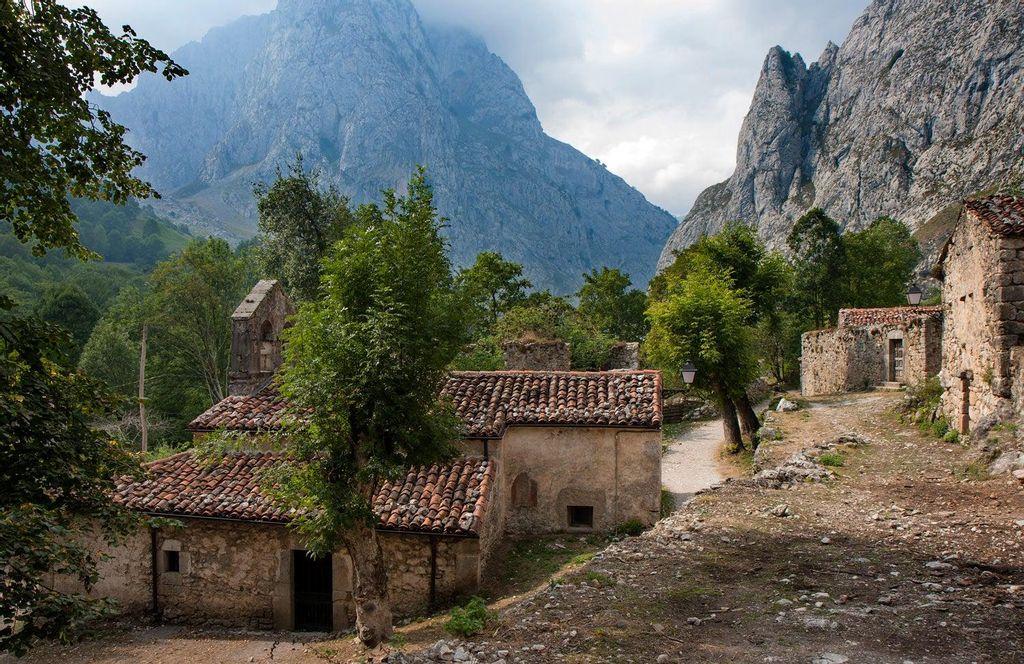
And from there, to Bulnes. Here I leave the car parked because it is the only village in Europe that can only be accessed by funicular, through a tunnel over two kilometers long. Although it goes much slower than the Cupra Ateca, I must say that the experience is just as thrilling: especially if you are afraid of heights.
There are two reasons to visit this village if you go to Picos de Europa: its undeniable beauty, and the fabada served at Casa Guillermina.
And I will add a third reason: from here, there is an unbeatable view of the Naranjo de Bulnes. It's dusk, and indeed, the rock turns orange. The best postcard to engrave in my mind, and the best way to conclude my journey through Picos de Europa.