
A Pilot Answers Two of the Most Common Concerns of Nervous Passengers


The fear of flying is a common fear for many passengers, and often questions arise about situations that seem uncontrollable, such as flying through a storm or landing in very adverse weather conditions. To address these concerns, an experienced pilot explains how they handle these scenarios in the cockpit, always ensuring the safety of the flight.
Do planes avoid storms mid-flight?
Yes, airplanes are equipped with weather radars that allow them to avoid dangerous storms, especially those involving electrical activity or hail. These radars have an antenna located at the front of the aircraft, which scans the airspace ahead and detects areas with convective activity, indicating the presence of storms. These systems not only identify rainfall but also highlight areas where thunderstorms or hail are likely to be present, elements that can be dangerous for the aircraft.
When the radar indicates a potentially dangerous area, the pilot takes immediate action. The captain chooses an alternative route, diverting from the storm to avoid flying through areas with strong electrical activity or severe turbulence. This process also involves coordination with Air Traffic Control (ATC), who confirm that the new route is safe and feasible. This ability to detect storms in advance allows pilots to make proactive decisions, ensuring that the flight remains as smooth and safe as possible.
How do planes land when there is no visibility?
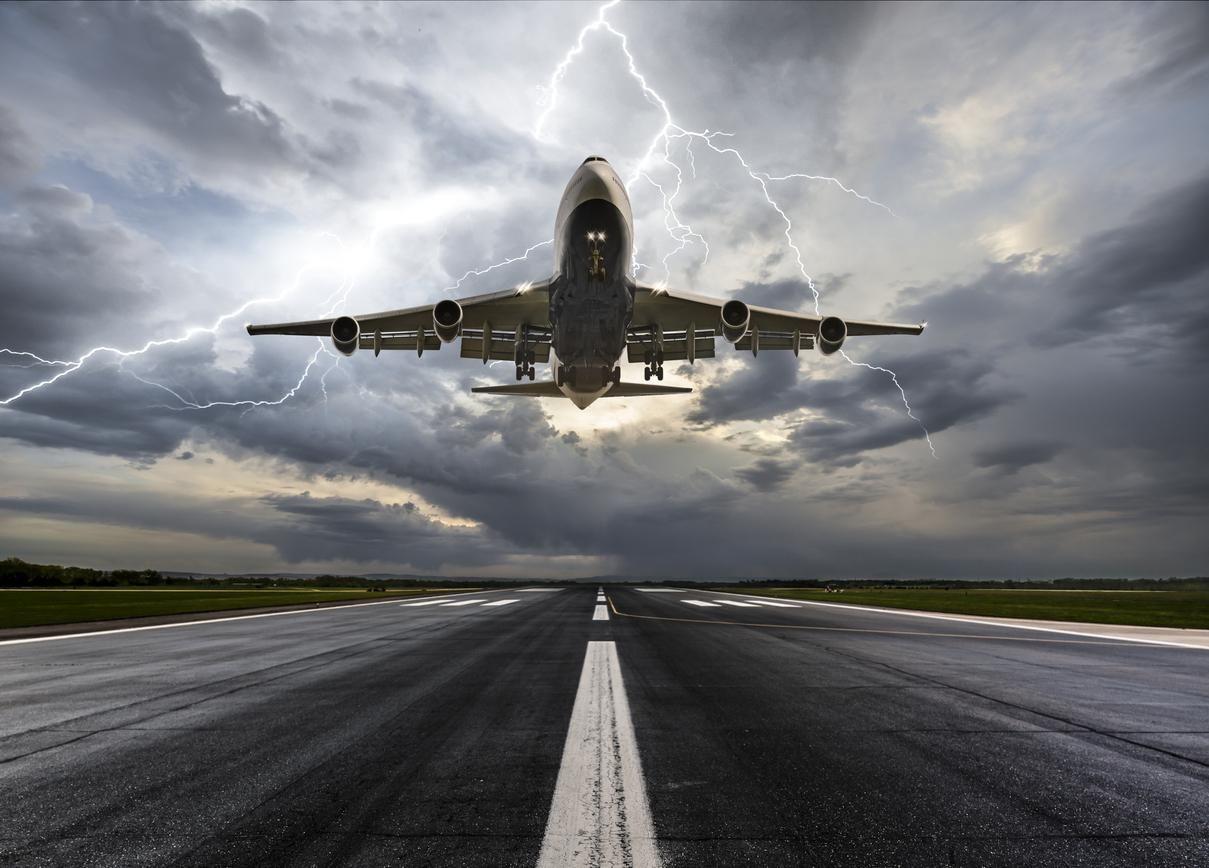
One of the most challenging situations for passengers, but surprisingly routine for pilots, is landing in low or no visibility conditions. In cases of dense fog or storms that completely obstruct the view, pilots rely on high-precision approach systems that enable the aircraft to safely descend to the runway without the need for the pilots to see outside.
These systems, known as ILS (Instrument Landing System), automatically guide the aircraft toward the runway. In fact, in extreme cases, airplanes are designed to perform an automatic landing, where the onboard system takes control of the controls during the approach and landing, without direct intervention from the pilots. This system is controlled by the aircraft instruments and the airport infrastructure, ensuring that the plane follows a path perfectly aligned with the runway, even when the pilot cannot see.
Although automatic landings may sound surprising, they are extremely safe and designed to operate in adverse weather conditions. Pilots constantly monitor the process, ready to intervene if necessary, although in most cases the system operates flawlessly, allowing for a smooth and uneventful landing.