
The Replica of the Alhambra in Saudi Arabia
The Alhambra and Its Replica in Saudi Arabia


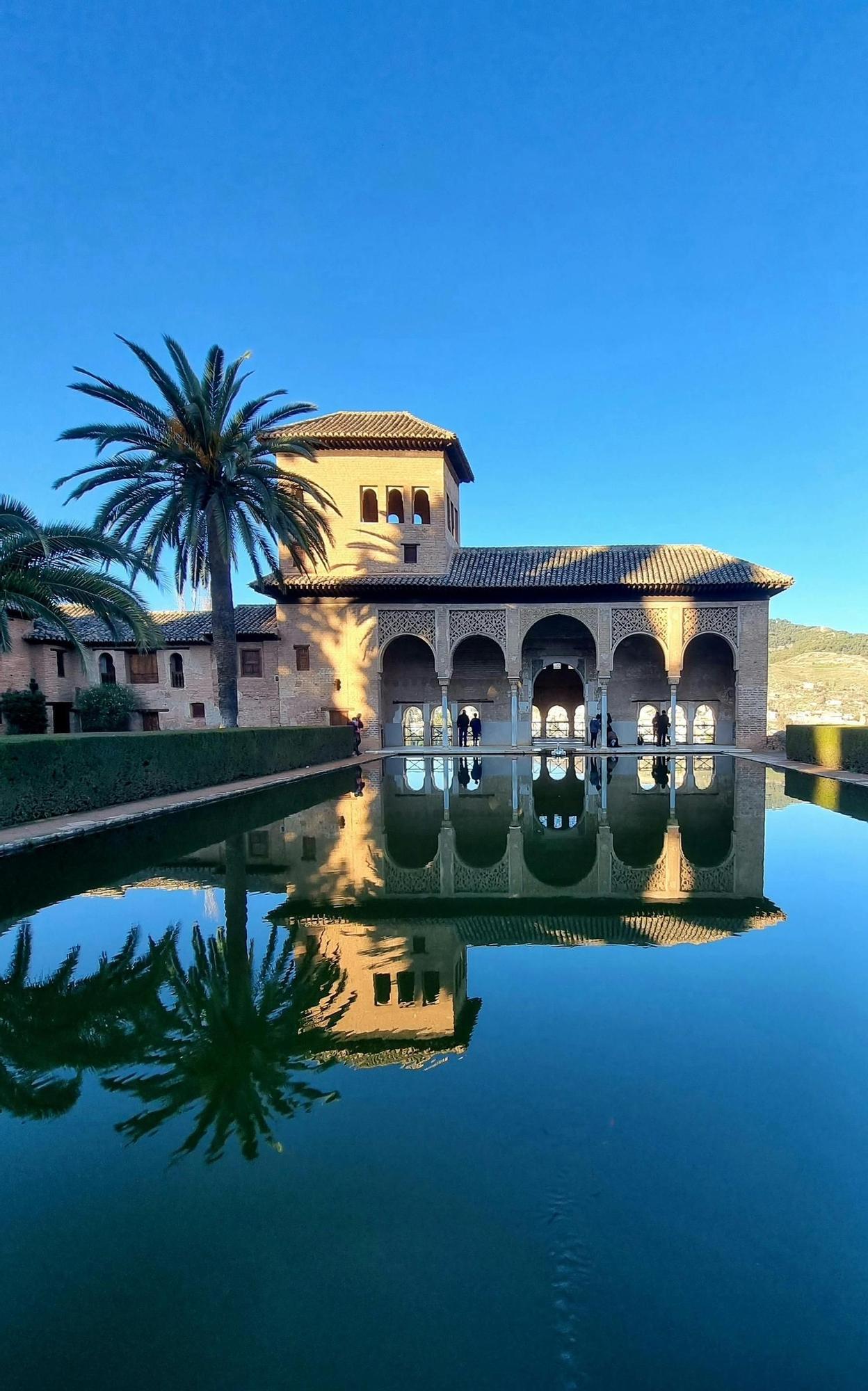
When you visit Granada, after climbing slopes and stairs to discover the Carmenes or the Paseo de los Tristes in 40 degrees Celsius (104°F) in the shade, the city can turn into an inhospitable stop. However, when you reach the top of the hill and see the Alhambra in the distance as if it were painted on the horizon, you realize the exhaustion is worth it to admire such a masterpiece.
Prince Abdelaziz bin Fahd is the youngest son and the favorite of the late King Fahd of Saudi Arabia. The descendant of the royal family has a great love for Spain, as demonstrated by his frequent visits to the Mar-Mar palace in Marbella, which is owned by his family circle. However, the prince has an obsession with the Alhambra, and he takes advantage of his visits to Spain to worship the great work.
It is rumored that the prince tried to stay in the Alhambra, but his request was denied. He then offered a substantial amount of money to build a small palace around it, but his request was also denied. It seems that acquiring property in (or attempting to) Granada is the new hobby of rich men from Saudi Arabia, as Emir Tamim bin Hamad Al-Thani bought a Carmen in the city for 17 million dollars. Since the prince could not establish himself in the Alhambra in any way, he decided to establish the Alhambra in his territory. His own version now stands in the desert of Riyadh, Saudi Arabia, and it was a gift from King Fahd. The site covers 10.6 hectares and attempts to replicate every detail of the iconic building that looms over Granada from the top of Sierra Nevada.
The construction of the replica of the Alhambra from Granada using white marble from Macael for the Saudi Royal Family took place between 1998 and 1999. This project included more than 500 columns, 13 fountains, including the Fountain of the Lions, and 2,400 m² of pavement with the exact measurements of the original monument. Despite the diversity in the sizes of the slabs, the work was completed within 7 months.
The monument features the Fountain of the Lions, comprised of twelve lions, each unique in size and detail, along with a basin that is 262 cm in diameter and 49 cm thick, carved from a single piece. The company Camar, responsible for this work, highlights that 'the ancient Arabs in Spain needed 7 centuries to build it, Camar took 7 months to create a piece of paradise in the middle of the desert.'
Although the physical structure has been reconstructed, the natural environment of the Alhambra is impossible to replicate under the desert's climatic conditions. Still... do you think you could distinguish the replica from the original?