
Seychelles, the Most Dreamed Islands
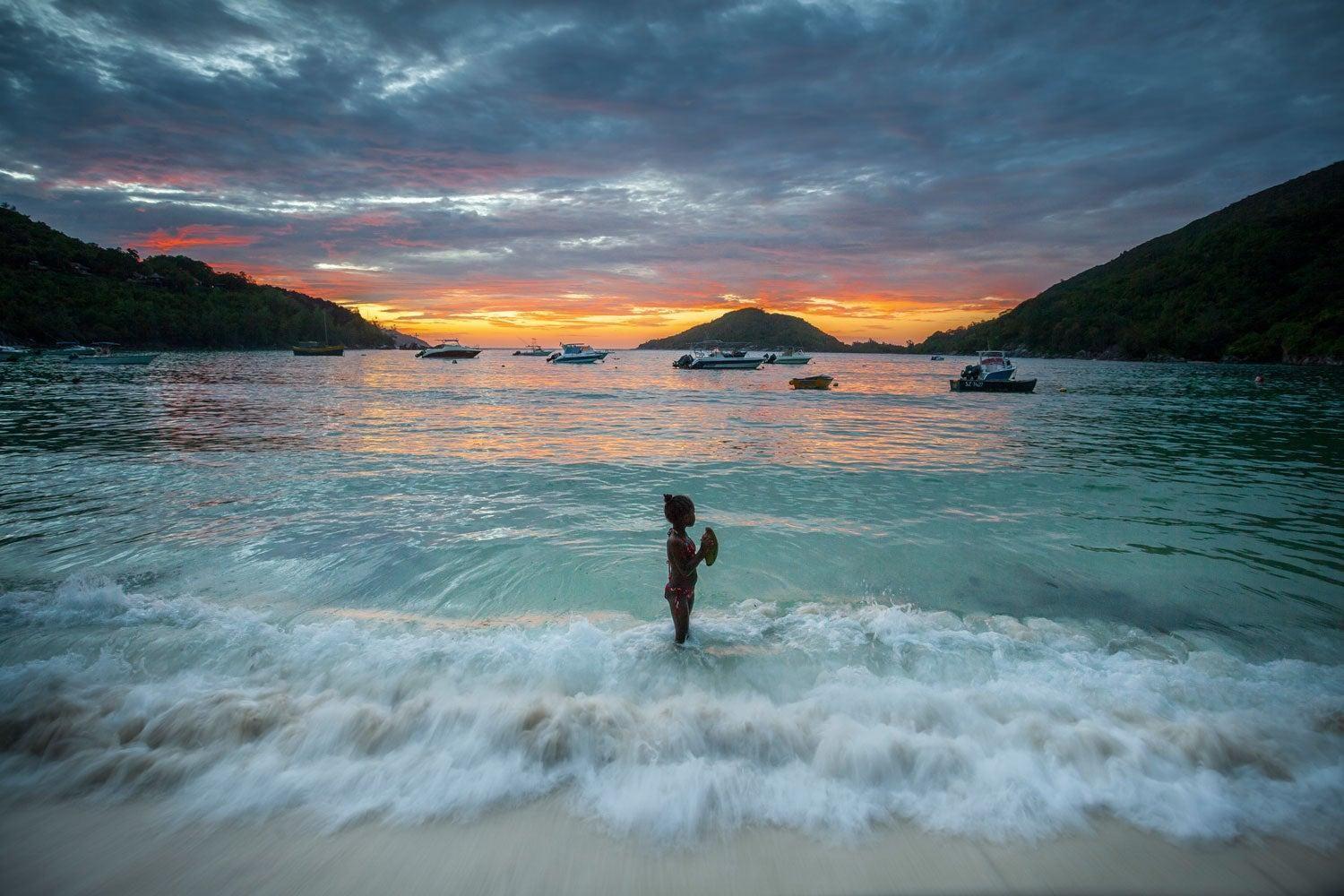
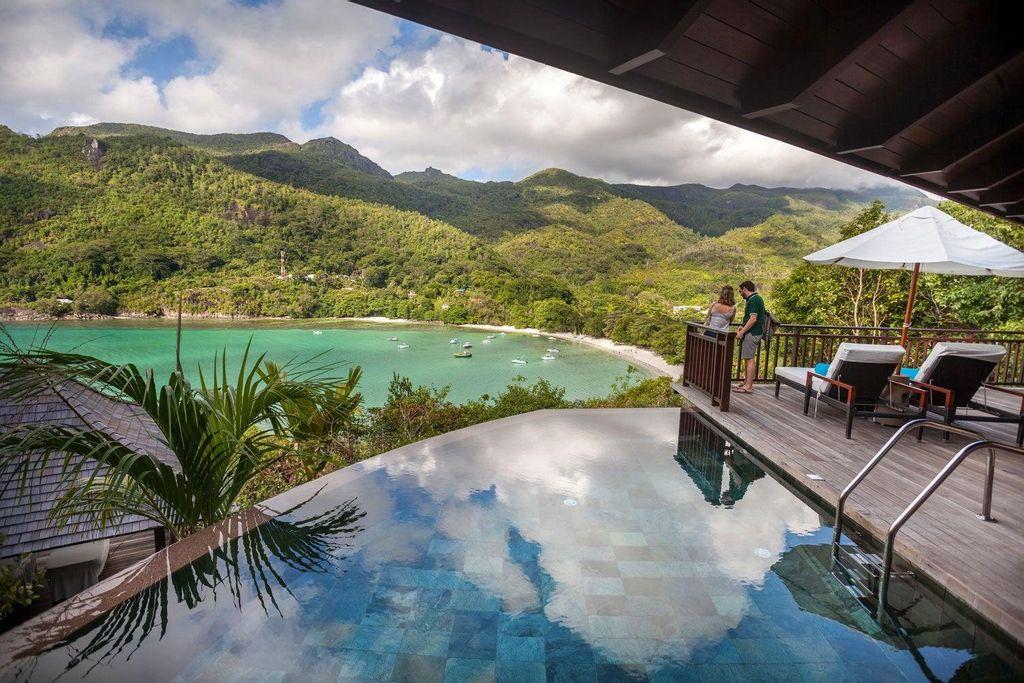
Pronounced in a French accent, mixed with the Creole inflections of its islanders, this archipelago in the middle of the Indian Ocean sounds even more like a paradise. It's no surprise that some of its best beaches have been featured in commercials that have circled the globe, though it is somewhat surprising that, years ago, the Seychelles were chosen as the location for the reality show "Survivor." Because here, let it be clear from the start, you're not coming to suffer. This is something that many newlyweds, including Prince William and Kate Middleton, know well as they travel halfway around the world to experience a honeymoon among its tropical jungles, pristine beaches, or luxurious hotels. And with no surprises! Aside from the occasional shark along the coasts, much to the delight of divers who explore its waters with up to forty meters of visibility, there's little to fear.
Due to its compact size, slightly smaller than Ibiza if you were to compare the entire area of all its islands, there is no hint of dangerous animals. To ensure that nothing disturbs the peace of those who choose them, their latitudes lie outside the cyclone belt, malaria prophylaxis is not even necessary, security is practically at zero risk, temperatures rarely dip below a spring-like twenty degrees Celsius or rise above thirty, and it would even be rare for monsoon rains to drop more than a good shower which, once gone, would allow you to continue enjoying the sun. It's a pity it's expensive because, on top of all its virtues, although the flight is long, you won't have to deal with jet lag, as there's only a three-hour difference from Spain.
There are exactly 115 verdant islands, just below the equator; most are coral and flat as a plate, while the larger ones are granitic and more rugged. In fact, they are the only granite islands floating in any ocean, with only about thirty being inhabited. Some, like Denis Island, Ronde, or Frégate, boast private hideaways where guests of their lone hotel have the entire island to themselves. Others, such as Bird Island, host bird-infested sanctuaries that would leave even Hitchcock in the dust, while in the remote Aldabra Atoll, accessible only to a very limited number of privileged individuals with special permits and exclusively by boat, the rulers are its thousands of giant tortoises, capable of exceeding a meter in length and weighing over 200 kilos. But the islands that absolutely no one misses when thinking of the Seychelles are Mahé, its younger sister Praslin, and the tiny, even more rural La Digue. This essential trio is more than enough for a hedonistic getaway of a week to ten days, or more if you're well-budgeted.

Aside from the treasures still being sought, little trace was left by the pirates who, seeking to ambush the ships trading between India and Africa, hid in this garden by the sea discovered by Arab mariners and rediscovered by the Portuguese of Vasco da Gama, surprisingly uninhabited until well into the eighteenth century. Many of the vanilla, cinnamon, or sugarcane plantations that once governed the archipelago's economy no longer operate as such, even though many of the colonial mansions built inland have been repurposed for other uses. Today, with fishing allowed, the business is tourism. Although far from overcrowded, nearly 250,000 visitors drop by each year; almost three times the population of this toy country colonized by the French - hence most of its names - and independent from the British in the past decade of the 70s. Everyone lands on the main island of Mahé, as it's where the only international airport functions, inaugurated in 1971 by Queen Elizabeth, marking the start of the prosperous universe of travel that has placed the Seychelles in second place in Africa for human development. However, it would be a mistake to regard Mahé as merely a stopover. On its northeast coast lies the sole city - Victoria - that can merit such a name in the entire archipelago, with good restaurants, an Indian temple, and a Catholic cathedral to attend to its mixed population, a lively market full of colors to familiarize oneself with the flavors of this tropical paradise, and even an iconic mini replica of London's Big Ben. Erected over a century ago, it stands as a somewhat surreal reminder of the queen in whose honor this relatively large town, among the smallest capitals in the world, was named, with about 30,000 residents including the surroundings and only a couple of traffic lights to manage the flow.
Taking local buses will take longer, but renting a buggy or a mini-moke without a roof - for about €100 per day - will allow you to leisurely circle this little island, which doesn't reach thirty kilometers long and only eight at its widest part, in under three hours. That is, of course, if one were to negligently go without stopping long enough at perfect beaches like those of Beau Vallon, Anse Intendance, or countless others like Anse à la Mouche, nor would one venture into the lush paths of Morne National Park to admire from its peak, almost a thousand meters up, vistas that more than compensate for the sweat.
Also, from Mahé, it would be wise to leave the total relaxation of its best hotels - and the sunbed facing the sea, windsurfing, snorkeling, or the plentiful massages and yoga sessions available in these territories - for a few hours to set sail in a boat to explore the coral reefs of the Sainte Anne Marine Park and other nearby islands. However, especially to Praslin and La Digue, it's better to dedicate more than just a quick day trip.
The coco de mer, that perplexing seed with erotic feminine shapes that can weigh up to forty kilos, serves as the symbol of Praslin, the second largest granite island that rises about an hour by catamaran from Mahé or approximately fifteen minutes by picturesque plane. However, it is worth approaching this island for a refreshing dip in breathtaking beaches, such as Anse Lazio or the semi-hidden Anse Georgette, and especially to delve into its natural reserve, the Vallée de Mai, the true jewel of the crown. A UNESCO World Heritage site due to the near-pristine state of its forests, among its gigantic palms, you can admire among countless other endemics, those strange and mischievous double coconuts that only grow here and on the neighboring Curieuse Island. Several very easy-to-navigate trails meander through the thick foliage of this emerald jungle, untouched until the 1930s, where birdwatchers delight in searching for rarities like the black parrot while others are taken aback by the primal force of these landscapes that have changed little in millions of years.
Again, it would be advisable to rent a vehicle to thoroughly explore this Garden of Eden - as the forbidden fruit of the legendary cocos de mer found abundantly in Praslin is considered - much more isolated than Mahé. Additionally, there won't be another chance, as with the last essential island, no car will do. On La Digue, aside from a handful of taxis and an old ambulance, the only means of transport are bicycles and ox carts waiting at the dock for the ferries - there is no airport here - to carry visitors' luggage to their hotels. As the distances cannot be extensive in this hideaway of merely ten square kilometers, strolling from one end to the other often ends up being a good option. However, once you've settled your business with the sleepy town of Creole houses in La Passe, there isn't too much to visit. But even the most oblivious traveler does not come here to see monuments. Or at least, monuments conceived by man. The ones on La Digue are the exclusive work of nature and reach their greatest glory at the photogenic beach of Anse Source d'Argent, whose bulbous granite blocks, enormous and polished after millenniums of enduring winds and waves, are incomparable.
Although entry is now required to behold such a wonder, it's no plan to skimp on a few euros to experience this Jurassic snapshot, whose almost theatrical confederation of rocks, palm trees, and turquoise sea seems a Photoshop trap. It is certainly not the only breathtaking cove on La Digue, but when witnessing its prehistoric beauty, so well-executed it seems like a set, it is understood why it consistently ranks amongst the most stunning beaches in the world.

In the distant past, the Seychelles islands were part of the supercontinent Gondwana, from which, seemingly from the relatively close island of Madagascar, not only Africa, India, and even Australia and Antarctica detached. This past February, the discovery under its waters of further remnants from the lost continent made headlines worldwide, of which these stone formations, shifting from pink to silver depending on the light, would be, like the other granite islands in the archipelago, a remnant of tectonic upheavals that occurred just millions of years ago, hard to pinpoint. They may be the oldest rock outcrops on Earth. A geological rarity to add to this cherished portion of what - yes, although the word is overused - can only be described as paradise.
If it is true that the Vallée de Mai was the Garden of Eden, the first couple to sin in the Seychelles could only have been Adam and Eve. Sure, the legend does not go into such detail, but given the number of couples that choose these islands, one might think they started a trend. Their famous coco de mer also lends itself to easy jokes, with their voluptuous curves almost feminine, which are actually merely - neither more nor less! - the largest seeds produced by the plant kingdom. Celebrated for their supposed aphrodisiac powers when currents would carry one to the shores of India or Malaysia, it was once believed they could sprout from some strange tree at the ocean's bottom. Today, they are the symbol of this archipelago where even turtles come to reproduce. Encountering a green or loggerhead turtle while swimming in its waters is quite a sight, but witnessing their nesting on film-worthy beaches, from which, months later, the hatchlings will find their way back to the sea, is even more remarkable. Apparently, and this is no legend, the females that reach adulthood will also return to lay their eggs on the very beach that witnessed their birth.