
The White Whale by Mariano López
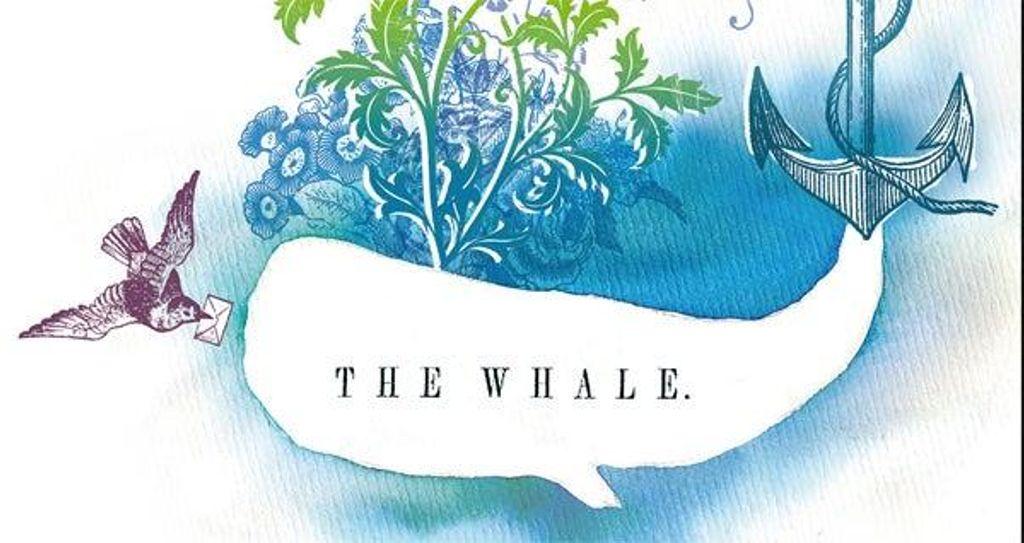
A white whale has been spotted in the waters off Australia. It was seen 90 nautical miles from a reef, north of Cairns. It was swimming with three other humpback whales, grey and common, standing out due to its unusual white color, a unique genetic mutation of its species. It was photographed and identified as the same animal that was sighted last year somewhere in the Pacific and perhaps two seasons ago along the same route off Cairns. It even has a name. It is called Migaloo, which in the language of the Indigenous Australians means "white fellow." A foundation dedicated to whale protection in Hawaii asked a group of Indigenous Australians to name the white whale and questioned them about the significance they attribute to albino individuals. The Indigenous Australians suggested the name Migaloo and confirmed that in their culture, albino animals are valued as embodiments of a spiritual world. Migaloo is a spirit that sails. But it is not Moby Dick.
Herman Melville signed on with the whaler Charles and Henry, where he sailed for six months during a time when long voyages, shipwrecks, heroic sailors, and whale hunting were common themes in literature and painting, representing mankind's daring and helplessness against the forces of nature. Despite his nautical experience, it is evident that almost everything Melville knew about whales he learned from books, in the New York library. Bram Stoker, the author of Dracula, never traveled to Transylvania and never saw a wolf or a vampire. Andrew Delblanco, in his magnificent and recent biography of the genius, Melville, argues that the creator of Moby Dick drew Ahab the avenger, the terrible white whale, the Pequod and all its crew from Mary Shelley's Frankenstein, the tragic heroes of Virgil and Shakespeare, the apocalyptic nature of Goethe, and the seas of the Odyssey. The wandering Ishmael, the cannibal harpooner Queequeg, or the disciplined Starbuck seem like Greek sailors, veterans of the Trojan campaign, continuing their navigation because they are drawn to the greatest adventure: the journey to Hades, the game with death, to go, return, and tell the tale, the ultimate way -and perhaps the only one- to truly feel alive. Melville was a genius who knew of monsters, but not much about whales. He was not a great traveler, but he has taken many of us on the Pequod across the planet's farthest seas.
Bruce Chatwin was indeed a traveler, and it could be said that he followed closely behind the whales' foam. One of his masterful books -The Songlines- is dedicated to the Indigenous Australians and the invisible lines of peace and tranquility by which the whales seem to guide their journeys. Chatwin recounts in this book how one morning he woke up nearly blind. "You have been looking at paintings too closely. Why not exchange them for broader horizons?" said a specialist. Chatwin took the advice and went to Sudan, where he became fascinated with the nomads. For him, as for the Indigenous Australians, the appearance of Migaloo should be interpreted as a symbol, perhaps a song, and surely a call. From some wiser dimension, someone is telling us that we are looking at the paintings too closely. We must travel, dream. Now.