
Tamsui, the curious city in Taiwan where Spanish is spoken


The great Spanish Empire was expanding during the 16th and 17th centuries: a large part of both Americas, the Philippines, areas of Africa... However, although history speaks of victory after victory, there were also room for defeats and disappointments. Among them was the failed attempt to conquer the Silk Road, where the ancient Beautiful Island, now Taiwan, was located. The Spanish troops remained there for 16 years, a brief nightmare that left memories in some places like Tamsui, where there are still people who speak Spanish.

The first Spanish fleet that arrived on the island came from the Philippines in May 1626. The Dutch occupied the south of the country, threatening the trade relations of the Spanish colony of Manila and the Chinese merchants. The north, on the other hand, was under Spanish control, where cities began to be founded and forts constructed. That was when the city of San Salvador, now Tamsui, and the Fort of Santo Domingo were established, which was torn down twice - once by the indigenous people and once by the settlers themselves when they abandoned the post.
The Spanish were losing strength on all fronts: the Dutch attacked by sea, they ran out of food supplies, the indigenous people revolted against them, diseases wreaked havoc... In 1630, after the first naval attack, the indigenous population destroyed the fort and killed half of its defenders. It was rebuilt, but soon, just eight years later, the Hispanics would abandon San Salvador. However, the final withdrawal from the Beautiful Island did not occur until 1642, after a new attack by the Dutch.
A city of over 200,000 inhabitants

In northern Taiwan, in addition to speaking Spanish, trading was conducted using the currency of the real as a symbol of Spanish expansion. The legacy left here was extensive, and it can still be appreciated in Tamsui. That Fort Santo Domingo, which suffered two collapses in less than a decade, stands today as the most characteristic monument of the city, although very different from the original. In fact, it resembles much more what the Dutch colonists built on its foundations in 1644. From a distance, one can see the many flags that wave in front of its facade, among which are the Spanish and Dutch flags - among others.
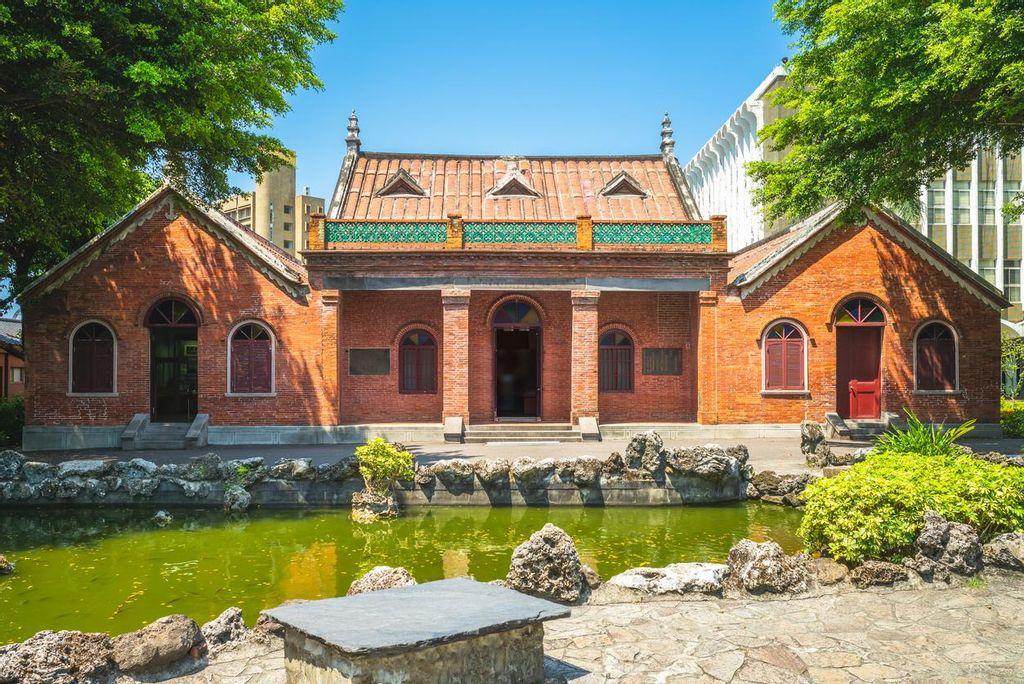
These were not the only influences that left a mark on the city. Canada also did so a couple of centuries later, through the Presbyterian missionary George Leslie Mackay. He founded Aletheia University in 1882, the oldest higher education institution in the country; Hobe Mackay Hospital, the first Western hospital in Taiwan; and the Presbyterian church of Tamsui.
Shops, restaurants, cafes, and cultural spaces fill Tamsui Old Street, the liveliest and perhaps busiest street in the city. The Fisherman's Wharf is also a major symbol of Tamsui, although much more modern: the Lover's Bridge, inaugurated in 2003. The ancient city of San Salvador continues to grow and modernize. Currently, it has more than 200,000 inhabitants, some of whom have Spanish as their native language and names that corroborate this.