
The Cave of the Apocalypse, the Most Mysterious Place in Greece

The most important spiritual center of the Greek island of Patmos is the Cave of the Apocalypse, which is also one of the holiest sites in Europe (and the world, after Jerusalem). The reason? This is where John, exiled to the island for spreading the word of God in the early days of the Christian era, wrote his Book of Revelations, the Apocalypse. It is believed that the cracks visible in the ceiling are where the voice of God originated.

Today, the Cave of the Apocalypse, located halfway between Chora and Skala, is not only a religious destination but also a nature spot, as many visitors seek to hike in the area and admire the beautiful landscapes visible from the cave, with the entire Dodecanese archipelago at their feet. However, it should be noted that the terrain of Patmos is very uneven, with steep hills, volcanic ground, and winding alleys... A delight for adventurous hikers.
Inside the Cave
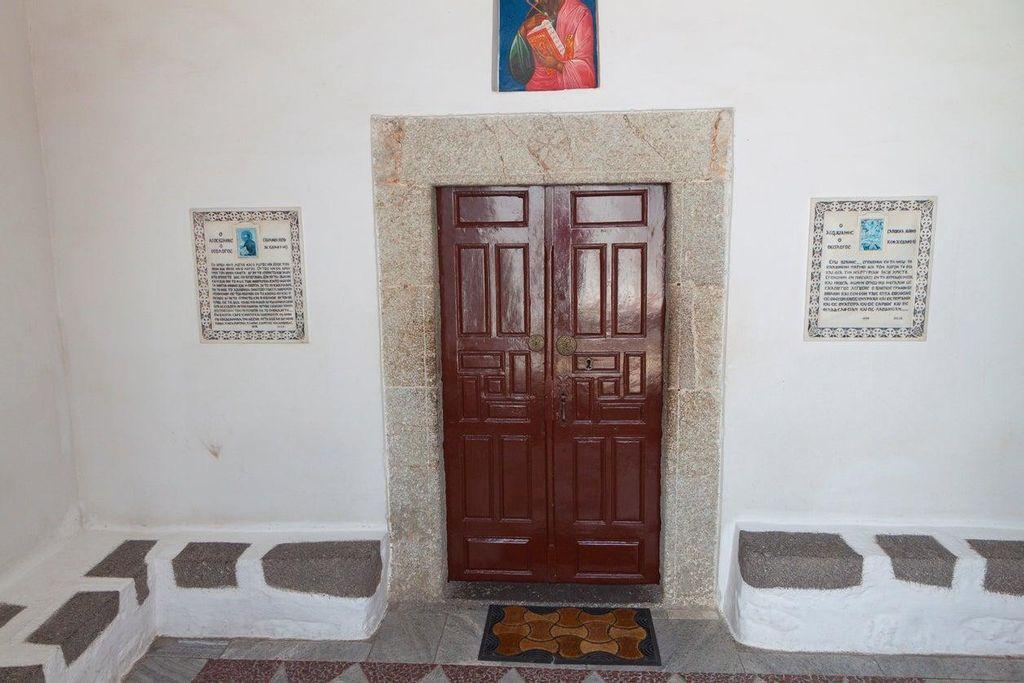
After crossing several rooms of the building housing the cave, the traveler encounters the Church of St. Anne and the cave itself, located in the same hall and separated by a stone vault. Before entering the cave, an inscription:

Measuring about 21.65 feet long and 18.04 feet wide, the cave is adorned with several lamps, one of which is situated above a stone that John used as a pillow. There are more traces of John in the chamber: a handprint and an impression in the stone where he rested his head, which are marked and framed.

It is the Monastery of St. John the Theologian, founded in 1088, that gave rise to the medieval town of Chora, one of the most beautiful and best-preserved towns in the Aegean Sea. With its whitewashed houses shining in the sun, its narrow stone alleys, and hidden restaurants and shops... Chora has also become a great tourist destination. In addition to the monastery, it features dozens of small churches from the 15th to 17th centuries, built with local stone and roofs made of cypress wood, seaweed, earth, and astivi, a type of shrub that grows on the island of Patmos.
The museum-sacristy of the Monastery is the largest in the entire Aegean, and the library holds true treasures, such as about 1,200 manuscript codices, over 13,000 documents, and more than 4,500 incunables. Furthermore, the monastery is a pilgrimage site, the heart of the island, and has been a center for teaching within the Greek Orthodox Church.