
The Frescoes by Michelangelo in the Sistine Chapel Celebrate 500 Years
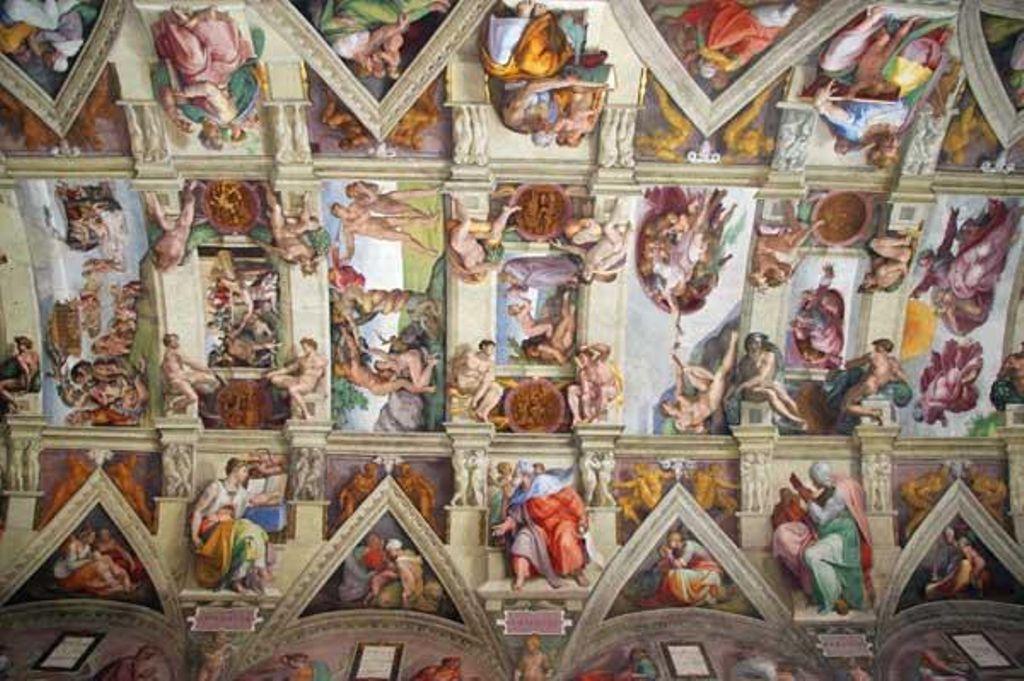
500 years ago, Michelangelo Buonarroti, known as The Divine among his contemporaries, completed one of the masterpieces of Western painting: the frescoes of the Sistine Chapel's ceiling. This work earned the artist the admiration of the Romans and three thousand ducats, which were the payment he received from Pope Julius II. It was four years of work, complicated by the difficulties of painting on scaffolding, more than 20 meters high, and lying down. In his latest film, To Rome with Love, Woody Allen jokes about this situation when a character, enthralled by a painting on the ceiling, exclaims: 'I can't imagine working for so long lying on my back.' To which Penélope Cruz, portraying a high-class escort, responds with a terse 'I can.' The history of this work is full of anecdotes.
An essential book to delve into this fascinating creation is Lives of the Most Excellent Painters, Sculptors, and Architects (1550) by Giorgio Vasari, a classic essential for understanding Renaissance art.
This story begins in 1503 when the newly appointed Julius II commissioned Michelangelo to construct his future tomb. Despite being only 29 years old at the time, the artist from Caprese had an excellent reputation due to his Pietà and, not less importantly, a significant standing with the Holy Father. When Michelangelo arrived in Rome to take charge of the project, Julius II tasked him with the renovation of St. Peter's Church, the place where the tomb would be housed. However, after disagreements with the Pope, Michelangelo hurriedly left for Florence, abandoning the commission. Months later, The Divine received a letter from the Vatican demanding - the detail is important - that he return to Rome. Fearing the Pope's wrath, Michelangelo contemplated exile to Constantinople, where Sultan Beyazid wanted him to design a grand bridge over the Golden Horn (this subject is highly recommended in the novel Tell Them of Battles, Kings, and Elephants by Mathias Enard). However, he ultimately chose to meet with Julius II. Despite his fears, the reconciliation was complete, but Michelangelo did not resume his previous projects. Bramante, who had a natural aversion to Michelangelo, convinced the Pope to abandon the idea of building his tomb during his lifetime, considering it a bad omen, and instead commissioned him to paint the ceiling of the Sistine Chapel, thinking that the author of David did not master the fresco technique and would fail at this task. Time has shown that Bramante was an excellent architect but a dreadful conspirator.
Elevating the Teachings of the Old Testament
The initial idea of Julius II was for Michelangelo to portray the 12 apostles on the ceiling. However, he ultimately opted for various scenes from the Old Testament, accompanied by sibyls and prophets predicting the arrival of Christ. Undoubtedly, the scene of the Creation of Adam, which occupies the central part, is the most iconic image of the frescoes. The other illustrated themes are the Creation of Light, the Creation of Plants and Stars, the Creation of the World, the Creation of Eve, Original Sin and the Expulsion from Paradise, the Sacrifice of Noah, the Great Flood, and the Drunkenness of Noah.