
Best Things to Do:
The Last Journey of Javier Reverte
Journalist, writer, novelist, philosopher... Javier Reverte (Madrid, 1944), with his agile and precise pen, has expressed the power of words like no one else. He was the deputy director of the now-defunct and iconic newspaper Pueblo, but soon he set off to explore the world, becoming the best travel writer this country has ever known. He was a correspondent in London, Paris, and Lisbon, and a special correspondent in almost any country one can think of. He also worked as an article writer, political columnist, interviewer, editorialist, head desk editor, and reporter for TVE's program En portada. But his greatest joy was arriving in a country and discovering it from within, which he accomplished through a multitude of books like his already iconic African Trilogy, In Wild Seas, Heart of Ulysses, The River of Light, Sing Ireland, or A Chinese Summer, among many others.
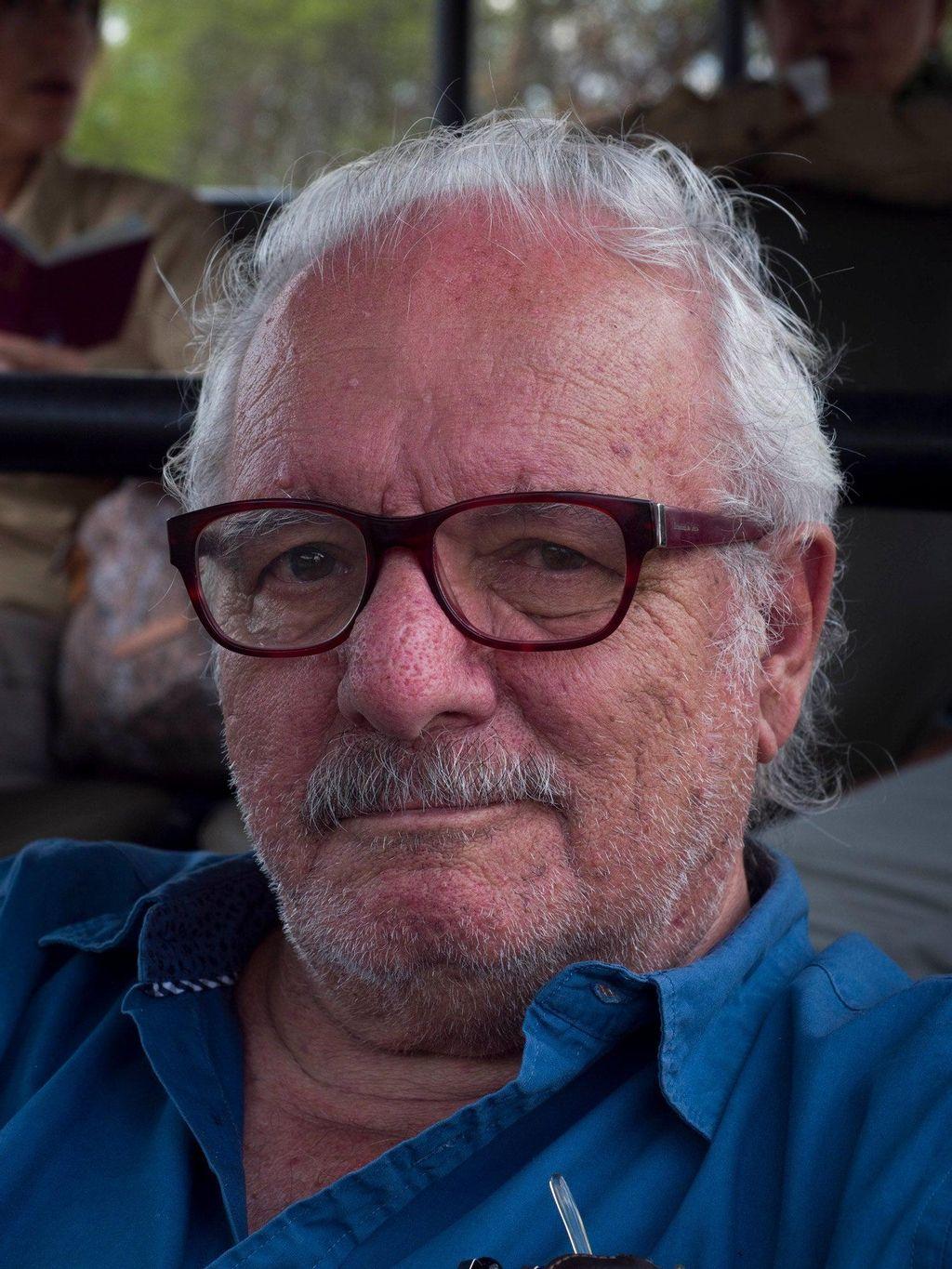
He has also shared his desire to explore the world as a columnist in VIAJAR since 1999, more than two decades in which he has always been faithful to his monthly appointment. We say goodbye as he would have liked: reading (or rather, listening to) his last article for this publication, a true ode to travel as an antidote for everything, even for these uncertain times we live in today.
Photos by Tino Soriano, during the first VIAJAR Expedition to South Africa
Traveling in the Times of Covid. By Javier Reverte
Traveling in the times of Covid. By Javier Reverte If traveling the world is a vital necessity, it is clear that life has changed with the arrival of the pandemic and the closing of many borders around the globe. The world is not completely shut down, but it is closer than ever to a lockdown in recent years. I have had the fortune to escape a bit in recent times, and some friends of mine call it recklessness. I see no boldness in this, as everywhere is experiencing the same thing as in Spain, and it doesn't matter where you isolate, whether it be Navalcarnero or Tananarive. Everywhere they measure your temperature upon entry, offer you a squirt of hand sanitizer, and masks are mandatory. We seem like Japanese people from the seventies.
Life has changed, I say; but not because of masks and sanitizers. The issue runs deeper. We are getting used to staying put. Between the pandemic and new technologies, it seems as if someone has made the decision for us not to leave our homes much at all. Telecommuting is becoming the norm, socializing at the bars with friends is on the verge of disappearing, attending sporting events is not possible, and soon there will be those who invent ways to make love via 'WhatsApp.' Big film productions are yielding to the power of television series, cinemas are closing because everything can be watched at home, even most shoots take place indoors, and the grand spaces have disappeared from the screens. Imagining a cinema like that of John Ford and his Monument Valley is no longer possible. And not only because the Apaches and Navajos are becoming extinct, but also because we have obliterated the immense sky of the West.
What do we have left? Traveling. But then Covid-19 arrived and raised the first great barriers, as if it were the premonition of a world desired by people like Donald Trump. Will we resist, or will we give in to a huge fence encompassing all imaginable borders?
Men have traveled to eat, out of necessity for survival, to trade, to evangelize, to discover, to conquer... And now we did it, above all, for the most beautiful reason: to know. Must we renounce this? Dante's Ulysses did not accept such an end. In the 'Inferno,' he tells his men: 'Do not deny yourselves the experience of going to the unknown region...; you were not born for a life of animals, but to gain knowledge and virtue.'
Traveling is not merely a pleasure, but something deeper: a duty. I cannot imagine a world where we hardly leave our homes, let alone our homeland, consuming the detritus of delivery food, without a bar surrounded by friends, without card games, without going fishing, ballooning like a balloon on donuts and hamburgers, making love via 'WhatsApp,' and without planes waiting for me on airport runways or trains at stations or ships in ports. And where is the street air, and where is the mountain wind, and where is the roar of the waves...?
Traveling makes us not only wiser but better. Because it helps us understand our own weaknesses and correct them through the example of others. And above all, it imparts the supreme of teachings: that we are not alone and that our world is diverse, rich, radically steeped in difference; that everyone has something to teach us, and we must extend understanding and help to all; that human beings are one single race.