
- 1. The Travels of Picasso: Between France and Spain
- 2. Mougins
- 3. Vauvenargues
- 4. Cannes
- 5. Antibes
- 6. Avignon
- 7. Paris
- 8. Spain
The Travels of Picasso: Between France and Spain

Pablo Picasso was born dead. He wasn't breathing, so the midwife chose to focus on the grieving mother. His uncle, Dr. Salvador Ruiz, was in the delivery room and decided to intervene. He leaned over the newborn and exhaled the intense smoke of his cigar into Picasso's nose. The baby revived and started to cry. This may be an apocryphal anecdote, but the beginning of a genius's life must match his legend.
If there is one thing that characterized the Malaga native, regarded as the most important artist of the 20th century, it was his passion for life. Moreover, despite the fact that April marks the 50th anniversary of his death, Picasso remains very much alive. This is evident in the numerous exhibitions dedicated to him that have been prepared for this commemorative year. A total of 42 -at the time of closing this edition- that are geographically distributed as follows: Spain (16), France (12), the United States (7), Germany (2), Switzerland (2), Monaco (1), Romania (1), and Belgium (1). Those interested in visiting them will find all the information on the website: celebracionpicasso.es. But there is another way to celebrate Picasso this special year. It involves following the artist's footsteps through the cities that shaped his character and work. Below, we visit some of the Picasso-inspired locations.
Mougins


Just 15 minutes by car from Cannes, this picturesque French town located on a hill became a regular meeting point for artists in the early 20th century. This was primarily due to surrealist painter Francis Picabia buying a house in the area. From then on, artists like Fernand Léger, Jean Cocteau, Isadora Duncan, Man Ray... and Pablo Picasso could be seen wandering the streets. The Malaga native settled there permanently in 1961, purchasing a country house next to the Notre Dame de Vie chapel on the outskirts of the town. He passed away there in 1973. Previously, the house was owned by the Guinness family, a wealthy Irish family linked to the eponymous brewery. Winston Churchill, a friend of the clan, stayed there during the 1930s and practiced one of his favorite hobbies: painting.
The house, in Provençal style, was a wedding gift from Picasso to his last wife, Jacqueline Roque, who was 47 years younger. On October 15, 1986, Jacqueline committed suicide in that house. The property spans 800 square meters, distributed across 35 rooms, and is nestled in nature. Currently, the chapel is open for visits, where there is a small exhibition of everyday photographs of the artist.
The streets of the village boast numerous elements that proudly recall Picasso's presence. One can imagine the artist strolling down the narrow Rue des Orfèvres, where galleries and artisan workshops abound. Additionally, a large sculpture of Picasso's head can be found on Avenue Jean-Charles Mallet. An ideal spot for Instagram enthusiasts.
Vauvenargues

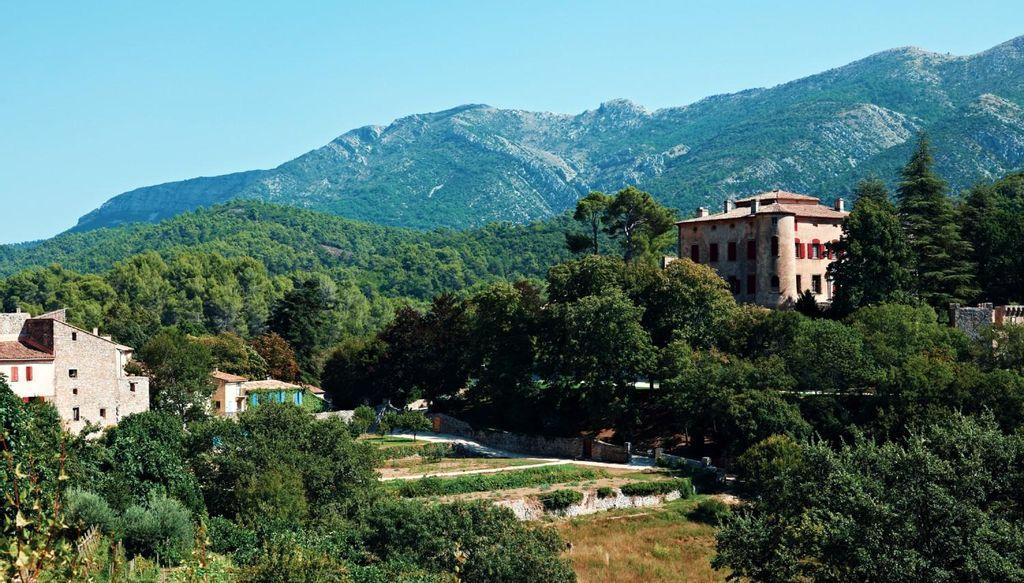
The region known as Bouches-du-Rhône, in the southeast of France, is an area that Picasso knew well. The most popular city in the region is Marseille, an important port city and the second largest in the country after Paris. However, the artist preferred a quieter place to work, so he chose the small town of Vauvenargues to reside for a time. In 1958, Picasso bought the Château de Vauvenargues, built in the 14th century, located near the Sainte-Victoire mountain. This landscape is of great importance to the evolution of modern painting, as Cézanne (1839-1906) painted it obsessively, developing an artistic language intended to break away from the legacy of Impressionism. A few years later, Picasso would definitively banish this legacy. Although Picasso passed away in Mougins, his remains rest in Vauvenargues. Unfortunately, the castle is now privately owned and cannot be visited. However, it is possible to enjoy the landscapes where modern art was born.
Cannes
Biographers say that Picasso lived the best years of his life in this glamorous town on the French Riviera. In 1955, he bought a belle époque mansion named La Californie. The house is located in the highest area of Cannes and has direct views over the tourist bay of Golfe-Juan and Antibes. Surrounded by a large garden with palm trees and eucalyptus, what Picasso loved most about this house were its high ceilings and abundant light. The artist created a large studio on the ground floor where his works and other sources of inspiration were accumulated -from African masks to toys of his children.
It is interesting to observe the painting The Bay of Cannes (1958) and appreciate the passage of time on La Croisette. Although it has humble maritime origins, today's tourists associate this promenade with the movie stars of the international festival. It is worth noting that the winners of the festival's top prize receive a Palme d'Or (Golden Palm). And one of the best restaurants in the city is called, of course, La Palme d'Or, a two-Michelin-star establishment led by chef Christian Sinicropi, also located on La Croisette. Picasso was undoubtedly one of the first painters to transcend the confined world of art to become a popular icon. Today, chefs have achieved a similar status, and like modern artists, they utilize intellectualization and abstraction to create their work.
Antibes

Perched against the cliff where the Mediterranean crashes below stands the Grimaldi Castle. An ancient Roman fort and residence of bishops in the Middle Ages, the castle has been inhabited since 1385 by the Monegasque family that gave it its name. In 1925, it became the Grimaldi Museum and Romuald Dor de la Souchère was its first curator. In 1946, De la Souchère offered Picasso, who frequently visited the French Riviera, the chance to use one of the museum's rooms as a studio. He happily accepted. In Antibes, he could enjoy some of the things he loved most: the sea, food, and friends. During this period, he created numerous paintings and drawings, which became part of the museum's collection. In 1966, it was renamed the Picasso Museum. Today, it is a must-visit for lovers of the artist.
During this year of commemorations, the Antibes museum is hosting the exhibition Picasso 1969-1973: The End of the Beginning (until June 25). Focused on the last years of the Malaga native, it exemplifies his inexhaustible creative capacity. At ninety years old, Picasso demonstrated through his work that painting is, above all, a matter of desire. Large format canvases with vivid colors that affirm his thirst for life: "When they say I am too old to do something, I try to do it right away."
Avignon
Although one of Picasso's most popular paintings is named Les Demoiselles d'Avignon (1907), the Malaga native painted it while living in Paris. Just under a decade later, during World War I (1914-1918), Picasso settled in Avignon, one of the main cities of his beloved French Riviera. In addition to the inherent charms of this area, one should not forget the proximity to Spain, just over 400 kilometers away. An emotional and tremendously symbolic closeness, as Picasso refused to set foot on Spanish soil until democracy was restored after the Civil War. He never did.
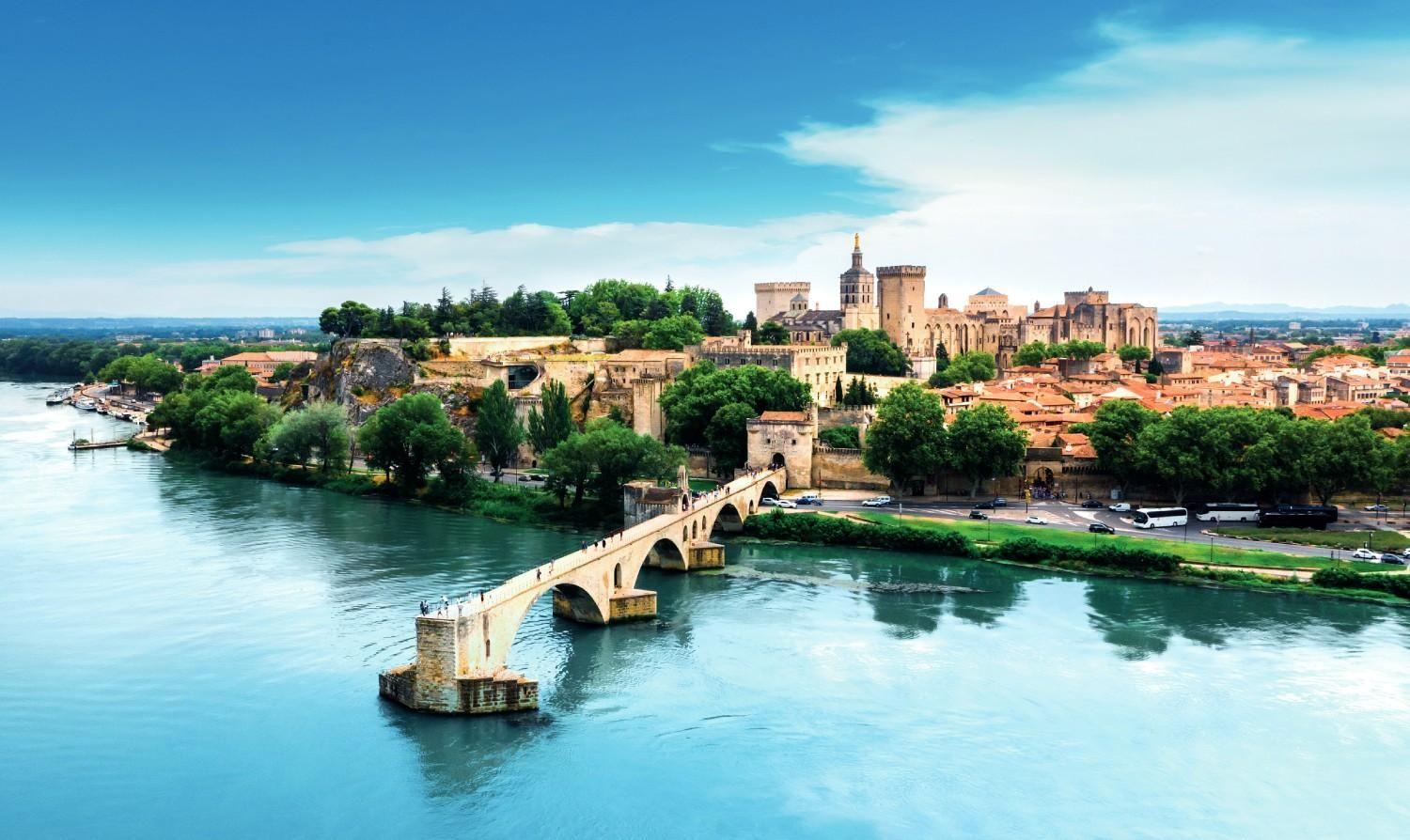
Today, Avignon is the perfect starting point to delve into two of the most attractive regions in southern France: Provence and the French Riviera. The most iconic image of the city is its impressive bridge, a medieval construction (1171-1185) used by merchants on their way to Spain and Italy. Today only part of it remains standing, but it is enough to appreciate the magnitude of the original work. Another must-visit in Avignon is its Palace of the Popes (1335-1352), considered one of the most important Gothic-style buildings in Europe. In the 14th century, it was home to nine Popes, coinciding with the transfer of the papal seat from Rome, which turned Avignon into the capital of Christianity.
Paris
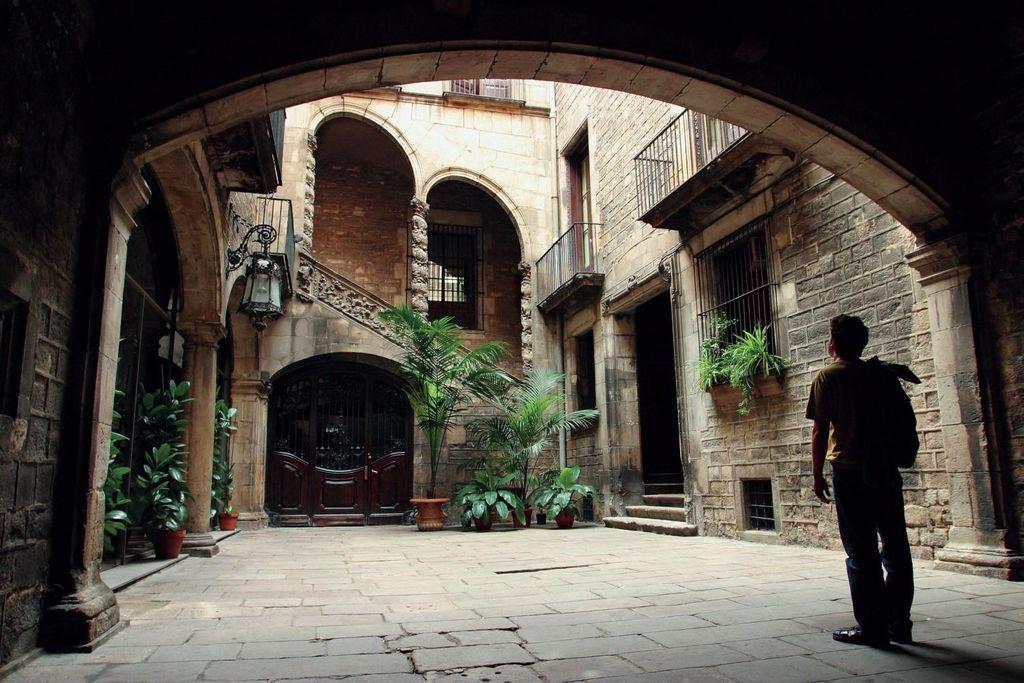
In 1904, when Picasso settled in the French capital, he chose Montmartre, a popular neighborhood among the international bohemia. In fact, Picasso's first home was a building known as Bateau-Lavoir, a commune of artists where he crossed paths with Modigliani, Brancusi, and Juan Gris, among others. There, Les Demoiselles d'Avignon was exhibited publicly for the first time. Although it remains inactive today, it is possible to visit it by appointment. At the beginning of the 20th century, Paris was a hotbed of ideas where modern art was forged. And the cauldrons in which those groundbreaking ideas were brewed were the cafés, meeting points for conspiracies and exchanges of thoughts. The cafés most frequented by Picasso and company were in the Saint-Germain-des-Prés neighborhood. Fortunately, two of the most popular establishments are still open: Les Deux Magots and Café de Flore.
Paris is one of the main epicenters of Picasso commemorations. The Musée National Picasso displays, until August 6, the exhibition ¡The Collection Takes Color!, which combines the museum's masterpieces with works from other modern and contemporary artists. Additionally, starting October 17, Le Petit Palais presents The Paris of Moderns: 1905-1925, which traces these crucial years for the future of modern art. The exhibition begins with the scandal of the Fauvist artists at the Salon d'Automne in 1905 and concludes with the Exposition des Arts Décoratifs et Industriels in 1925. A key period that is recreated through fashion, cinema, photography, painting, sculpture, drawing, dance, design, architecture, and industry.
Spain
Picasso was born in Malaga into a middle-class family -his paternal grandfather owned a glove factory-. According to his birth certificate, his full name was Pablo Diego José Francisco de Paula Juan Nepomuceno Cipriano de la Santísima Trinidad Ruiz Picasso. His father, José Ruiz Blasco, was a bon vivant who, at 37, started working as a professor at the School of Fine Arts in Malaga. Five years later, he married María Picasso López, a young woman from a modest background. Due to José's professional changes, the family first moved to A Coruña and then to Barcelona. At the age of 16, Picasso spent a brief period in Madrid to study at the San Fernando Academy. Although he lived most of his life in France, Spain was always very present in Picasso's mind and heart.
Throughout 2023, numerous exhibitions across our country explore different aspects of the life and work of the Malaga artist. To give a taste, one can highlight an exhibition in each of the cities connected with the artist: Museo de Belas Artes da Coruña. Picasso White in the Blue Memory (03-23-2023/06-25-2023); Museo Picasso de Málaga. Picasso. Matter and Body (05-09-2023/09-10-2023); El Prado. Picasso-The Greco (06-13-2023/09-17-2023); and Museo Picasso Barcelona. Miro-Picasso (10-19-2023/02-25-2024). Despite the time that has passed since his death, Picasso remains a great mystery. Sensitive, ruthless, communist, individualist, generous, selfish... The complex personality of this genius is summed up in an anecdote that the artist himself often recalled: "When I was a child, my mother told me: 'If you choose to be a soldier, you will be a general; if you choose to be a priest, you will be Pope'. I was a painter and became Picasso."