
The Most Dangerous Places in the World

To have an exciting trip, it is not necessary to go to the most dangerous place on Earth. Challenging oneself, moving around the world at the mercy of inertia in a rush of adrenaline, is a situation many travelers have found themselves in at some point in their lives. This is very common among war reporters, for example, who, with a sense of immortality, venture into one desolate area after another until they realize they can't handle it anymore or until they lose themselves in their own adventure.
In the case of ordinary mortals, those of us who hop on a plane every now and then to spend a few days away, it may seem like we are out of danger. But be careful, because few things are more addictive than life-changing experiences, those that happen on a safari in Nairobi or during an alpine trek in Bhutan. And you will always want more, believing that there are no limits when, let's face it, we all need one.
In any case, truly dangerous places are usually quite remote locations on the planet, distant from each other, and with nothing in common except the fact that they are not recommended for a family vacation. Identifying them is easy, although there usually isn't a triangular sign with a skull included, because no matter where you ask, everyone will tell you the same: don't go there.
Since it's always good to leave home with homework done, we at Viajar have created, for a change, a list of places that, under no circumstances, we recommend visiting. But remember that if you are going to take risks in your travels, you should get travel insurance.
The Most Dangerous Beach in the World

On the coasts of Queensland, Australia, there is an island that looks tropical. This is Fraser, the largest sand island in the world, stretching over 120 kilometers off the Australian coast. It may seem very attractive, and indeed it is, as it is not only near the Great Barrier Reef, but also boasts idyllic beaches of endless sand, inviting swimmers to spend a day sunbathing.
If you decide to go, there are two words you need to keep in mind: saltwater crocodile. This species of reptile is very aggressive and, along with sharks and stingrays, can be found on the local shores. Do not go alone, since the wild dingoes that inhabit the island tend to leave larger groups alone but are less shy with solitary tourists. And if you try to escape, you could get stuck in the quicksand formed by the accumulation of water across the terrain.
The Skeleton Coast
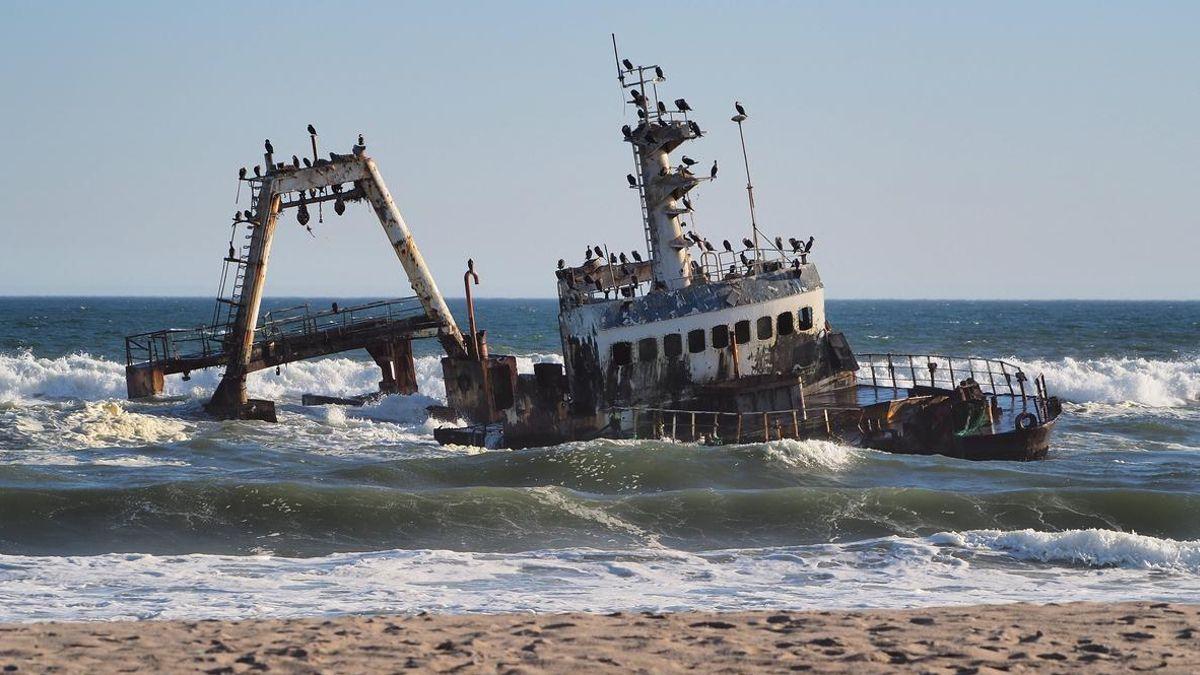
This location has been the subject of many wildlife documentaries, but not for its lush flora and fauna. Instead, quite the opposite. The unique position of this stretch of coast in Namibia, where winds blowing in from the interior of the continent prevent precipitation, results in extreme aridity that makes survival very difficult. Additionally, the constant surf along the beaches makes it nearly impossible to depart from the coasts in a boat.
The only possible way to escape from this place was to walk hundreds of kilometers across the desert, where, remember, the extreme conditions mean that the few animals found there are considered worthy of study. One of its most surprising curiosities is the large number of shipwreck remains that can be found on its shores, the result of the dense fog that forms, combined with strong winds and waves, resulting in a fatal destination for navigators.
Death Valley

Legend has it that this place was a miner's route during the gold rush on their journey to California. The vast flatland seemed a good alternative to the rugged terrain found in the Mojave Desert, making it the obvious choice. In those times, it was not known that this was the hottest place on Earth. At 86 meters below sea level, this place does not have currents that recycle air, causing the heat to accumulate on its flatland, reaching temperatures of up to 50 degrees Celsius.
Although it was once a death trap, it remains dangerous terrain to cross today. With an area of 7,800 km², a breakdown can be lethal for the driver, forcing them to exit the vehicle and face the scorching heat, and potentially, a fatal outcome.
Queimada Grande Island

Located off the coast of São Paulo state, it is the worst nightmare for anyone with ophidiophobia, as it contains the highest concentration of snakes per square meter on the planet. It is also considered a protected area, so the Brazilian Navy strictly prohibits anyone from entering the area, except for occasional scientific incursions, as it is an important snake sanctuary worldwide and a site of scientific interest.
It is the natural habitat of Bothrops insularis or the Golden Lancehead Viper, one of the most dangerous vipers on the planet which, due to the absence of predators, has reproduced to completely colonize the area. However, this could change, as this unique snake species faces extinction risks due to potential fires and the threat of inbreeding.
K2: The Deadliest Mountain

It is not the tallest mountain in the world, but any mountaineering enthusiast knows that K2 is a challenge that even the most experienced hold in respect. Throughout history, only 246 people have succeeded in summiting it, a very low number considering that Mount Everest, at 8,849 meters tall, has had 2,238 climbers reach its peak. Part of the Karakoram range, in the western part of the Himalayan system, the peak remains one of the impossible dreams of thousands of professionals and amateurs who understand the risks of this journey.
And it's no wonder, as the mortality rate increases during the ascent. According to the mortality rate on the mountain, a way of measuring the danger of routes based on the number of people who die on an expedition, there was a 2.84% failure rate in the Himalayas in 2022, which is not negligible. On the other hand, on K2, 28% of all who have attempted to climb it have been frozen on its walls.