
Tutankhamun's Mask, the Secrets of the World's Most Valuable Artifact

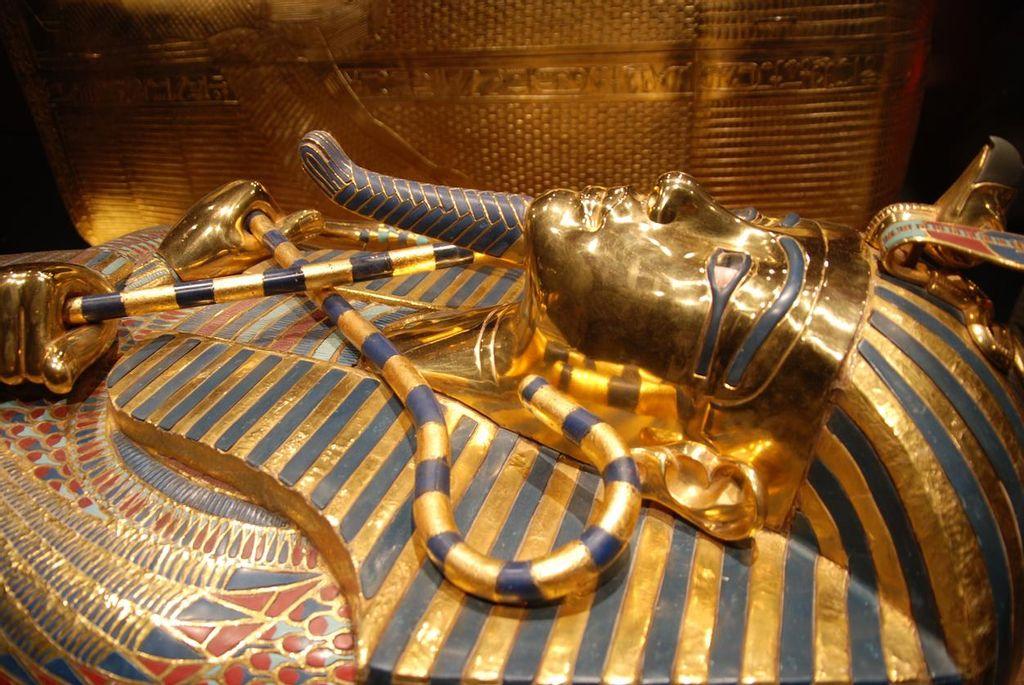
The most iconic object that Egypt possesses is possibly the funerary mask of Tutankhamun. This object, which covered the shoulders and face of the Egyptian pharaoh, is a unique piece of art in the world. Weighing eleven kilograms and measuring just 54 centimeters tall, it is considered one of the most valuable objects in the world. Some experts have clarified that its historical and artistic value is so high that assigning a number to it is practically impossible, as any figure assigned could be an underestimate.

This piece is filled with symbolism. On one hand, it is made of gold, the material that was believed to be the flesh of the gods according to ancient Egyptian beliefs. On the other hand, it is also composed of lapis lazuli, a stone of intense blue, the color that represents the hair of deities. Additionally, it is embedded with quartz, obsidian, and glass paste, mainly in its eyes.

The forehead is adorned with the ureaus, the cobra Uadyet, and the vulture goddess Nekhbet, protector goddesses of royalty in Egyptian mythology. The mask also features the characteristic braided beard of kings and a wide usekh collar around the neck, made of twelve strands of beads crafted from colored glass paste. This is secured around the neck with a type of shoulder piece shaped like a falcon's head.

While it is true that the funerary masks of Egyptian pharaohs were supposed to resemble their owners, the image of Tutankhamun might not relate to this at all. Some researchers believe that this piece was reused, previously belonging to the funerary goods of Princess Meritaton, Tutankhamun's half-sister.

Upon closer inspection, one can see that the mask is made up of several assembled parts, and that the face has a slightly different color from the rest. Therefore, researchers suggest that this element was taken apart and replaced with another with masculine traits. However, this object has recently undergone an X-ray study, which has confirmed that all parts of the mask have exactly the same composition.
Nevertheless, there are skeptics regarding this matter. The name Tutankhamun can be read on the edge of the mask, very close to the left shoulder, but it seems to have been written over an old inscription. This has been the subject of dispute among the many researchers who have tried to uncover the secrets of this mask over the years. While some think it was written over the name of Nefertari, others believe the original name was that of Meritaton.
Restoration

Since its discovery, this mask has been the main attraction of the Egyptian Museum in Cairo, and in the past it gained significant attention due to an unfortunate incident. In 2014, during the cleaning of the display case that encloses the object, the mask fell and the chin became accidentally detached. The person responsible for the breakage, out of nervousness, tried to repair it with school glue, which caused even greater damage to the object. Fortunately, the Egyptian authorities decided to invest in a proper restoration to repair all the damage caused.
In 2018, a team of German experts took care of the restoration in collaboration with the Egyptian authorities. Nearly 110,000 euros were spent in total, both for a proper repair of the chin and for removing the blemishes in the painting that had occurred. In fact, thanks to this process, a gold tube was found inside the chin, which was used to attach the piece to the mask. The material used to join both parts was beeswax, as the restorers opted to use a natural product over any synthetic one. Now, the mask is ready to be the main attraction of the New Egyptian Museum.