
- 1. UNESCO World Heritage Sites
- 2. Historic Center of Rome (Italy)
- 3. Rio de Janeiro (Brazil)
- 4. Venice and its Lagoon (Italy)
- 5. Kiev (Ukraine)
- 6. Historic Center of Florence (Italy)
- 7. Historic Center of Prague (Czech Republic)
- 8. Budapest (Hungary)
- 9. Brasilia (Brazil)
- 10. Historic Center of St. Petersburg (Russia)
- 11. Historic Center of Quito (Ecuador)
- 12. New and Old Town of Edinburgh (Scotland)
- 13. Historic Center of Lyon (France)
- 14. Verona (Italy)
- 15. Rabat (Morocco)
- 16. Yosemite National Park (United States)
- 17. Grand Canyon National Park (United States)
- 18. Old Havana and its Fortifications (Cuba)
- 19. Bali (Indonesia)
- 20. Notre-Dame Cathedral in Paris (France)
- 21. Works of Antoni Gaudí in Barcelona (Spain)
UNESCO World Heritage Sites
As tourism is increasingly being revitalized, social media serves as a perfect source of inspiration for planning our next destinations. The photos we see on networks like Instagram help us discover new places, learn about trendy destinations, and of course, dream about future travels.
That's why we have created a list of the most popular UNESCO World Heritage Sites ranked by how many times they have been tagged on Instagram. This way, users of the social network have decided that these are the 20 most "Instagrammable" places, and Spain could not be absent from this list:
Historic Center of Rome (Italy)
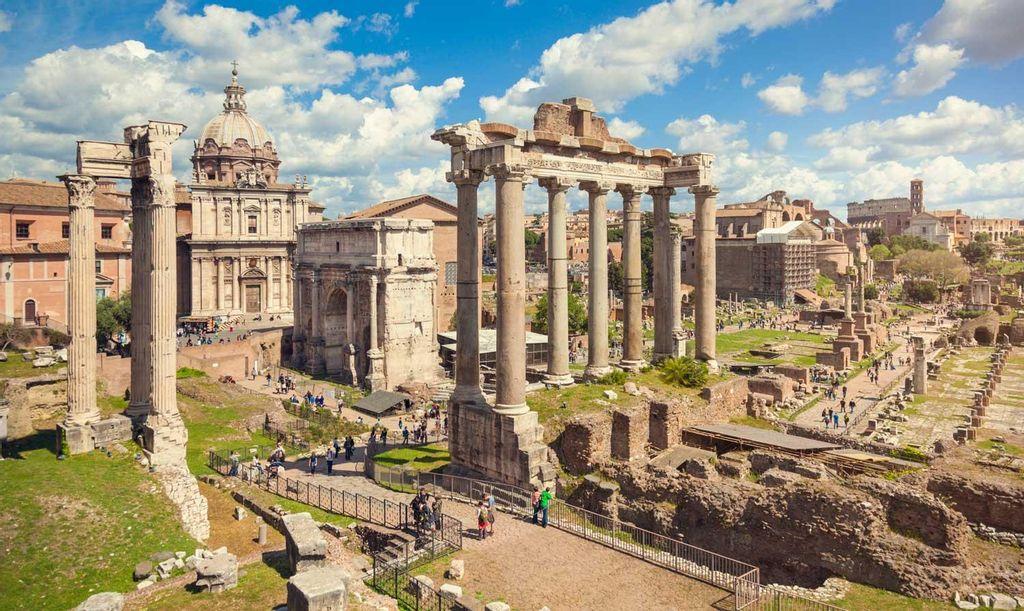
The list is topped, as it should be, by the beautiful historic center of the city of Rome. The UNESCO World Heritage site extends to the walls of Urban VIII and includes some of the main monuments of antiquity such as the Forums, the Mausoleum of Augustus, the Mausoleum of Hadrian, the Pantheon, the Column of Trajan, and the Column of Marcus Aurelius, as well as public and religious buildings from papal Rome.
Rio de Janeiro (Brazil)

Rio de Janeiro was the first city declared a World Heritage Site for being an exceptional urban settlement. It encompasses key elements such as the peaks of the mountains of Tijuca National Park, the summit of Corcovado with its famous Christ the Redeemer statue, the hills surrounding Guanabara Bay, and the extensive landscapes of Copacabana Bay.
Venice and its Lagoon (Italy)
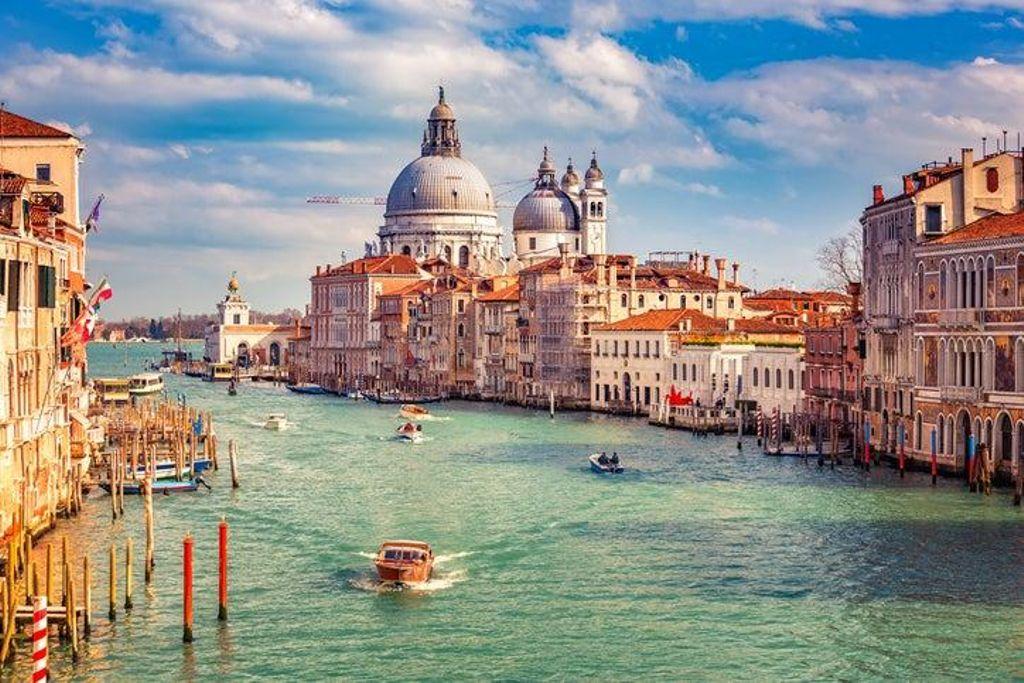
Founded in the 5th century, Venice is a masterpiece of architecture where we find works by the greatest artists of all time, such as Giorgione, Titian, Veronese, and Tintoretto. The city is built on 118 small islands and seems to float on the waters of the lagoon.
Kiev (Ukraine)

On one side, the UNESCO World Heritage site encompasses St. Sophia Cathedral and its ensemble of monastic buildings, which is one of the main representations of architectural and monumental art from the early 11th century. On the other side, we find the Cave Monastery of Kiev, a prominent spiritual and cultural center.
Historic Center of Florence (Italy)

In Florence, the city symbolizing the Renaissance, 600 years of art by geniuses such as Giotto, Brunelleschi, Botticelli, and Michelangelo have left their mark on the 13th-century cathedral, the churches of Santa Maria del Fiore and Santa Croce, the Palazzo degli Uffizi, and the Pitti Palace, among other monuments.
Historic Center of Prague (Czech Republic)

The UNESCO World Heritage site includes the Historic Center of Prague and the Průhonice Park. In these places, we can find key points such as the Hradčany Castle, St. Vitus Cathedral, Charles Bridge, and multiple churches and palaces.
Budapest (Hungary)

The urban landscape of Budapest illustrates one of the periods of splendor in the history of the Hungarian capital. It retains remnants of monuments such as those from the Roman city of Aquincum and the Gothic Buda Castle.
Brasilia (Brazil)

Brasilia is a landmark in the history of urban planning. Every element, from the design of residential and administrative districts to the symmetry of the buildings, is in harmony with the overall layout of the city. For example, the public buildings amaze with their innovative and creative appearance.
Historic Center of St. Petersburg (Russia)

St. Petersburg rises with its numerous canals and over 400 bridges. Furthermore, its architectural heritage reconciles Baroque and Neoclassical styles, as seen in the Admiralty, the Winter Palace, the Marble Palace, and the Hermitage.
Historic Center of Quito (Ecuador)

Founded in the 16th century on the ruins of an ancient Inca city at an altitude of 2,850 meters, the capital of Ecuador boasts the best-preserved historic center in all of Latin America. Here, we can find the monasteries of San Francisco and Santo Domingo, as well as the church and college of the Society of Jesus.
New and Old Town of Edinburgh (Scotland)

Edinburgh has two distinct areas: the Old Town, dominated by a medieval fortress, and the New Town in Neoclassical style. The harmony between the two historical areas is what gives the city its unique character.
Historic Center of Lyon (France)

The city of Lyon was founded in the 1st century BC by the Romans. It highlights everything from the Roman remnants of the ancient Lugdunum to the medieval streets on the slopes of Fourvière and Renaissance homes in Vieux, as well as the slopes of Croix-Rousse.
Verona (Italy)

The historic city of Verona has preserved a considerable number of monuments from Greco-Roman antiquity, the Middle Ages, and the Renaissance, such as the Porta Borsari, the Arco dei Gavi, Ponte Pietra, the Roman theater, the Piazza delle Erbe, and the Piazza dei Signori.
Rabat (Morocco)
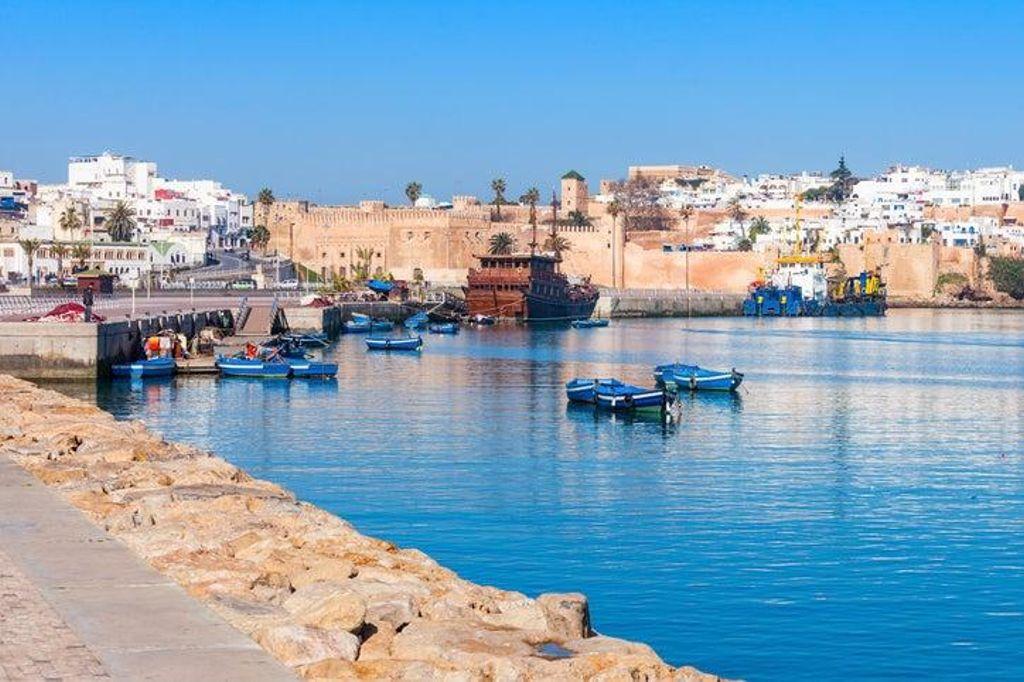
The city of Rabat represents a symbiosis between Arab-Muslim culture and Western modernism. The UNESCO World Heritage site includes both the "new city," where we find the Royal Palace and Jardin d'Essais, and some older areas of the urban core dating back to the 12th century.
Yosemite National Park (United States)

Yosemite National Park is located in the heart of California, characterized by its hanging valleys, countless waterfalls, cirque lakes, polished domes, moraines, and U-shaped valleys. In this park, we find all forms of granite relief carved by glaciations, along with extremely varied animal and plant species.
Grand Canyon National Park (United States)

The massive canyon sculpted by the Colorado River traverses this park located in the state of Arizona, which, at 1,500 meters deep, is the most spectacular gorge in the world. Its horizontal strata capture the geological history of the past two billion years.
Old Havana and its Fortifications (Cuba)
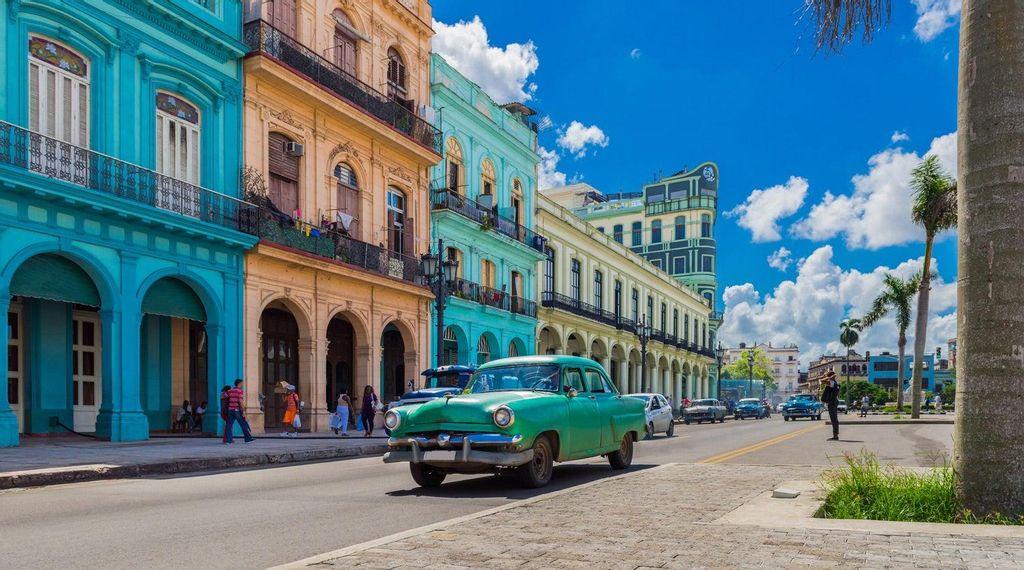
Founded in 1519, the historic center of Old Havana preserves a mix of Baroque and Neoclassical monuments, as well as a homogeneous collection of houses with arcades, balconies, wrought iron railings, and patios.
Bali (Indonesia)

The cultural landscape of Bali spans an area of more than 19,500 hectares and includes five rice cultivation terraces with their corresponding water temples, as well as the Royal Temple of Pura Taman Ayun.
Notre-Dame Cathedral in Paris (France)

The Notre-Dame Cathedral is a masterpiece of Gothic art that showcases mastery over new architectural techniques acquired throughout the 13th century and achieves harmony between architecture and sculpture.
Works of Antoni Gaudí in Barcelona (Spain)
Spain enters this list thanks to the works of Gaudí in Barcelona. These include seven buildings designed by the architect in the city or its surroundings: Park Güell, Güell Palace, Casa Milà, Casa Vicens, Gaudí's work on the Nativity facade and the crypt of the Sagrada Familia, Casa Batlló, and the crypt of the Colonia Güell. They are the expression of an eclectic and highly personal style that made an exceptional contribution to the evolution of architecture in the late 19th and early 20th centuries.