
'Watermelon Snow', the Strange Phenomenon of Pink Snow... That Smells Like Fruit!


Winter is approaching and with it, the first snowfalls that leave behind images of pristine beauty. An image that, in certain parts of the world, becomes a postcard of pink hues.
This happens in places like the Sierra Nevada in California or the Colorado mountains, where the snow starts to take on pinkish tones that have been dubbed 'watermelon snow.'
To our eyes, this effect is extremely beautiful and hypnotic, but the reality is that its consequences can be extremely dangerous. This 'watermelon snow' has sparked interest among scientists around the world for centuries.
It wasn't until the 19th century that Robert Brown, a botanist of the time, studied this phenomenon in depth and determined its cause: its color comes from algae of the type Chlamydomonas nivalis.
How Does 'Watermelon Snow' Origin?

Interestingly, this snow is not named for its color reminiscent of the quintessential summer fruit, but because it has a slight odor and taste of watermelon. However... the general recommendation regarding this type of reddish snow is that it should never be ingested, as it could be harmful to our bodies.
The plant organism Chlamydomonas nivalis, which gives color to this snow, is actually typically green, but it contains a special red pigment called carotenoid that acts as a protective barrier for the algae's chlorophyll, being vital for its survival.
It is this pigment, precisely, that dyes the surrounding area a darker color, resulting in an extremely beautiful red snowfield to our eyes, but dangerous for our planet.
In fact, this pigment functions like melanin in the human body: it is a method of protection against ultraviolet radiation that allows the algae to receive the rays they need for nourishment and photosynthesis.
A Beautiful... But Dangerous Snow
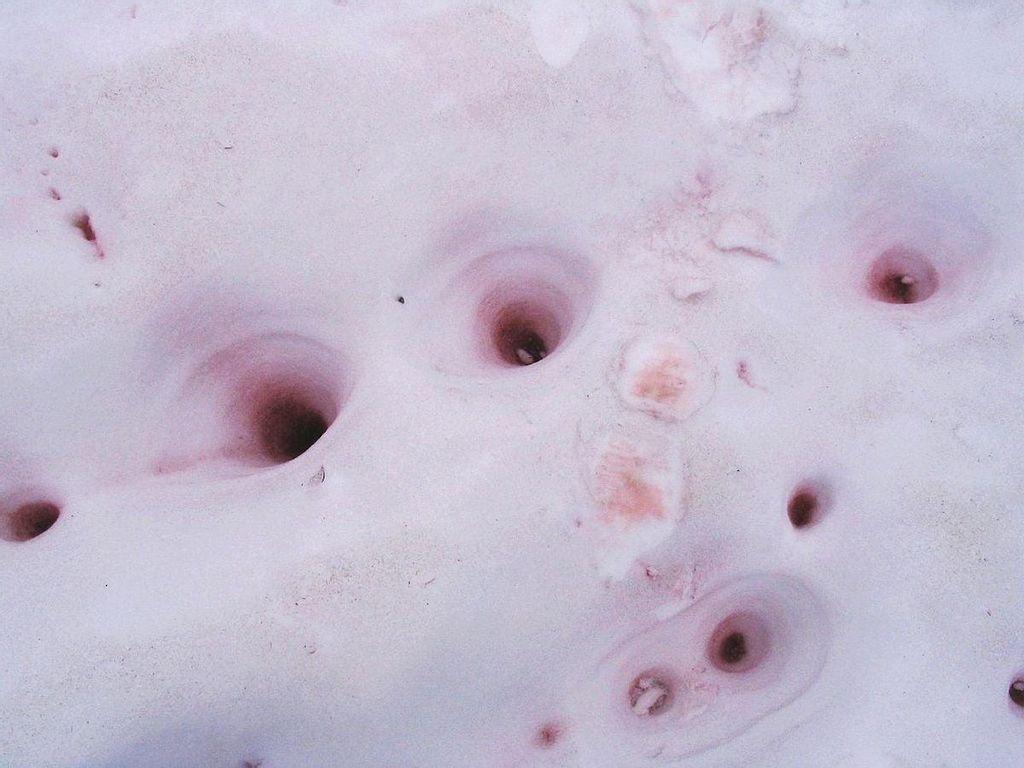
These algae may seem harmless, but nothing could be further from the truth. These plant organisms have a mechanism that allows them to know when temperatures rise to take advantage of the few solar rays available.
It is at that moment that these algae begin to reproduce rapidly, with scientific estimates stating that millions of these algae can appear per square centimeter.
And you might ask... what is the problem? The excessive reproduction of these algae is extremely harmful to the environment, as they have a significant impact on global warming, primarily caused by astaxanthin.
Astaxanthin, a natural antioxidant, protects these algae from sunlight by retaining all heat within. This causes the snow to warm and melt more quickly, occasionally leading to the rapid decomposition of glaciers.