
Without a Return Ticket

At what point do we realize that there are certain driving forces in life that pump that effervescent essence that urges us to seek our particular Ithaca? At what moment do we decide to tie ourselves to it forever or, conversely, leave it behind in search of other paths?
"A real or imaginary evocation that the arts in general, music, cinema, and reading in particular, sports, the mountains, the sea, good food and better drink, travel, the lessons of Epicurus of Samos, or who knows what inspiring springs... propel us towards a new vital horizon. But if that moment crosses our path, if that cocktail of natural anxiolytics without oral route takes hold of us, we must dare to make the leap without looking at how tense our fears' net is."
Designing Freedom
Some do it, and some don't. The journalist, traveler, and now writer in intern mode, as he puts it, Baltasar Montaño devised a plan to stop working halfway through his life to dedicate the other half to living while traveling in almost complete freedom. The fruit of his first milestone, temporarily interrupted by Covid, is now collected in Without a Return Ticket, a travel book in which, between each destination and adventure, he unpacks his way of living and traveling without limits of time, his change of model upon stopping work at a relatively young age, and the reflections and lessons he draws from the countries and people with whom he merges.
Montaño did the math in his thirties, divided 80-90 years in half, and planned to stop working in his forties to travel fully with physical and intellectual faculties without waiting for the golden retirement. Coming from a humble family and with no economic supports other than his work, he specialized in economics, did very well as a journalist, invested in the simplest things (a good rental property), saved a lot during his good years as a writer for Expansión, El Mundo, and Vozpópuli, and adapted his life to some simple consumption criteria that allow him to live without working to travel without a return ticket, without hardship but without excess.
Lightly Packed
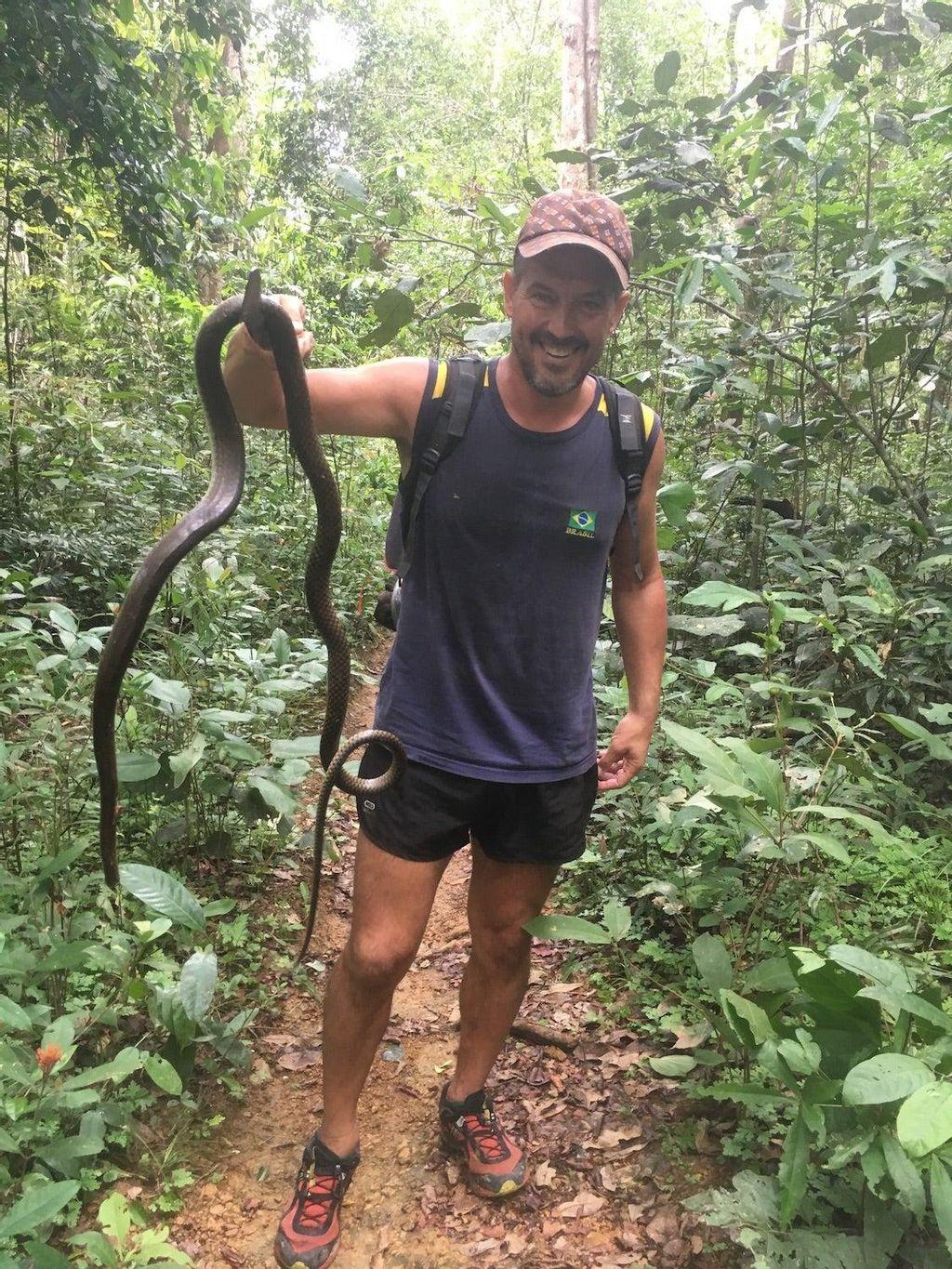
"Your backpack and your journey are worth as much for what you carry as for what you are capable of parting with. You learn to forgo what is not strictly necessary, you advance with little weight and renew your wardrobe not for fashion or whim, but for wear and tear. You become very practical, perhaps austere; you go to the sewing kit if a rip appears and visit the laundry, more or less, every ten days." In this line, the new philosophy of life of one who defines himself as a small bourgeois who wanted to hop off the system halfway to enjoy the other half without ties or responsibilities is molded.
Baltasar started traveling a bit late because he had to work hard in the hospitality sector to finance his degree and a Master's in Economic Journalism. Summers, Christmas, Holy Week, and other parts of the year were dedicated to serving beers, cocktails, and drinks at a bar in Madrid, until he could make a living as a journalist. His professional trajectory allowed him a good economic position, and from age 26 he began to travel a lot for work and pleasure. His sabbatical year in Australia and New Zealand spurred his plan to stop working. He returned to Spain to embark on the Vozpópuli project, but already with a clear goal: he wanted to celebrate his 45th birthday in Colombia, now under his new life parameters.
Eternal Latin America
In 2016 he landed in Bogotá, just when the peace agreement with the guerrilla had just been signed. He traveled the entire country from the islands of San Andrés and Providencia to the Putumayo and the Amazonian Leticia, in the three months allowed as a tourist with a European passport. He jumped to the Chilean Tierra del Fuego to get ahead of the Antarctic chill and hike the Torres del Paine trail. From Cape Horn, he zigzagged through the Chilean and Argentine Patagonia.
He called at his eternal Buenos Aires, where he says he knows when he arrives but never when he leaves. He traveled through Uruguay, dedicating a month and a half to Northern Argentina and its pre-Andean highlands. He said goodbye to Route 40 in Quiaca to cross into Bolivia, where he climbed two six-thousanders and traveled a complete circular route to end at the Salar de Uyuni, crossing into the Atacama Desert. He navigated Lake Titicaca and prepared for the assault on the great Amazon. He set off in Pucallpa, over 6,000 kilometers upstream from its mouth in Belém do Pará, on his hammock slung on the deck of a freighter. For more than three months, he navigated the entire Amazon on all kinds of boats, with incursions into the jungles of Leticia, Iquitos, and Manaus, in what for him has been the most impactful adventure he has ever experienced.
Without a Return Ticket, published by Círculo de Tiza, captures the impact of this journey on his life and how he is increasingly clear that he does not intend to look back: "the Amazon is a diluted and vaporous concept, without strokes or Cartesian lines, that does not understand borders; it is essentially a way of life, an ethereal and elusive space, an ungraspable and dense green blanket over which a chocolate-colored snake of 7,062 kilometers crawls. When you enter the Amazon, you enter as one and exit as another (...). That is when you release many of your anchors and certainties, which by the very weight of their years and their fallibility sink inexorably into the opaque bed of the river, and you understand that your delusions of immortality, like those of Ulysses, were just a ruse, a gamble, and you climb to the bow of your own life with the freedom of the unpredictable. You have won many battles, lost others, but now you go naked, free of filters, with no weight in your backpack, with no established direction and without looking to the future."
Southeast Asia
After a year in Latin America, he decided to return to Spain with the idea of continuing his journey through Southeast Asia. Thus he arrived in Thailand en route to Myanmar, where he claimed to be a wine producer to obtain the visa and avoid being pursued as a journalist. The wonderful people of this country and how the Army devastates their lives while filling its coffers with profits from the trafficking of precious metals, opium for heroin, and chemical precursors for methamphetamine are well documented in the book.
Laos and Cambodia captivated him for their authenticity, for the tourist beauties of Luang Prabang and Angkor, but also for the struggle of their people to rise from poverty and leave behind their sad history of wars, bombings, and genocides.
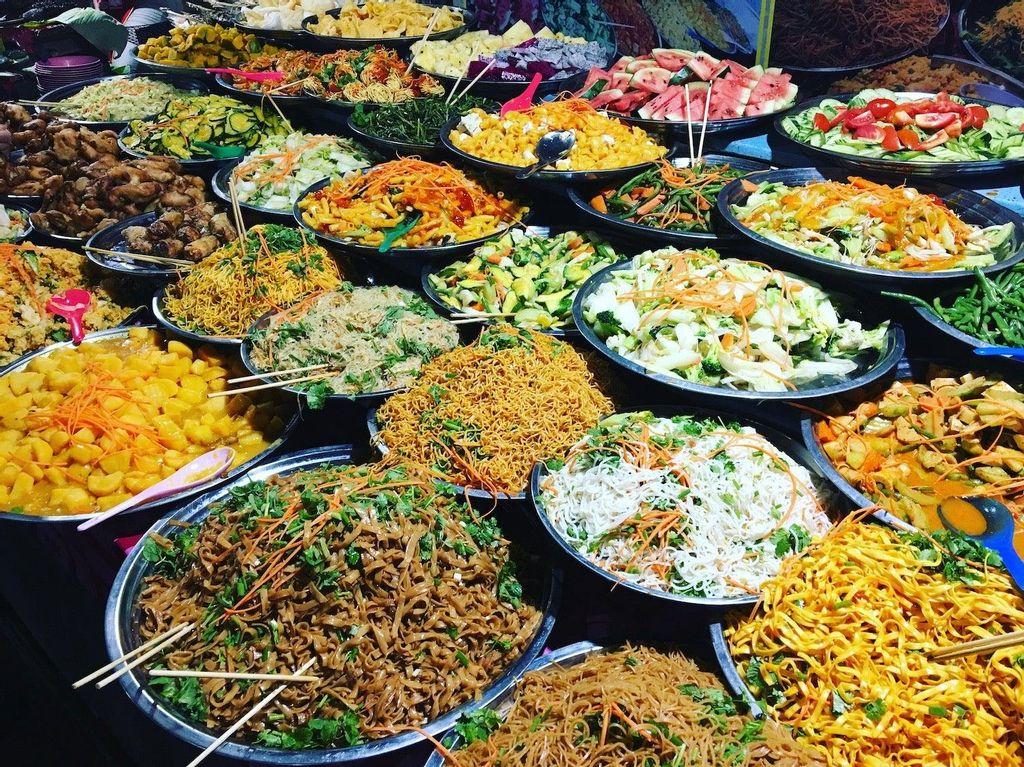
For Vietnam, he reserved a more motorized adventure. He bought a 120 Honda Win in Hanoi to traverse all of Vietnam for three months. He recounts in the book that he was amazed by its gastronomy, the kindness of its inhabitants, and the feeling of stepping on and rolling over land laden with death after so many wars. He sold his motorcycle in Saigon and returned to Spain to launch himself into Mexico. After six months traveling from east to west through the North American country, Covid imposed its global dictatorship, and he opted to take refuge in his country and his hometown, Puebla de Sancho Pérez (Badajoz). Círculo de Tiza proposed that he write his first book, a task that as an intern he has crafted from his family home in Extremadura, from the camper van with which he travels across the Iberian Peninsula and Portugal to challenge the pandemic, and from a small apartment in the Lavapiés neighborhood in Madrid.
Africa, Next Destination
The book reflects his personal vision of the world and life, his "decided commitment to travel alone and without buying a SIM card to avoid that unhealthy addiction to the tempered glass screen and to be able to blend in with the people of each place, able to ask in the street where the town square is without looking at Google Maps," he states in conversation with Viajar.
His "bow" now points to Africa, "the continent of our backyard that no one pays attention to and which I now want to tackle, committing myself to it at the end of the book and inviting readers to follow him on 'elblogdebalta.wordpress.com'.
"Poetry is not only stroke and word, it is also the unwritten by the poet. It is the black carnations floating in the waters of the Strait, the sharp watchtower of the Atlas that is discernible from Tarifa, the silence of the Sahel and its dry and divisive cut, the crystal emerald eyes of the Berbers, the dances and drums that nurture the rhythms of the world, the undulating lines of the reddish dunes of the Kalahari, the powerful features of blackness, the dignified and authentic gaze of those who have nothing, the white rice in a bowl and the shine of diamonds that were never displayed, the inverted cycle of the legends of the baobab, the Herculean sun that never surrenders and precedes the torrents that flood the Serengeti, and that Okavango delta that will never kiss the sea due to its equidistance to both oceans."