
- 1. 10 World Heritage Sites So Amazing They Seem Unbelievable
- 2. Gondwana Rainforest, Australia
- 3. Okavango Delta, Botswana
- 4. Mausoleum of the Qin Shi Huang Dynasty in China
- 5. Temple of Abu Simbel in Egypt
- 6. Lion Court in the Nasrid Palaces of the Alhambra, Spain
- 7. A lake in the Pantanal, Brazil
- 8. Totems in SGang Gwaay, Canada
- 9. Iguazu Falls, Argentina-Brazil
- 10. Kakatiya Rudreshwara (Ramappa) Temple, India
- 11. Canal du Midi, France
10 World Heritage Sites So Amazing They Seem Unbelievable
Since 1972, UNESCO (United Nations Educational, Scientific and Cultural Organization) has designated protected sites due to their "outstanding value," designating them as world heritage. Year after year, new enclaves are added to the list. They are found all over the world and come in various forms: natural sites, entire cities and towns, churches, streets, beaches, works of art... To date, there are 1,052 inscribed places, with the countries having the most being Italy, China, and Germany. On the other hand, North America, despite being a vast region, has only 44 declared sites. Some of the most impressive are included in this list.
Gondwana Rainforest, Australia

This area includes several protected zones, although it is primarily located along the steep escarpment of eastern Australia. The volcanic environment and the immense number of endangered animal species make it a special place that must be preserved in the best possible way. The name given to it comes from when there was a single continent, Pangaea, whose southern region was called Gondwana over 500 million years ago.
Okavango Delta, Botswana

In the heart of a heritage desert - in Africa, there are 11 countries without any heritage - landscapes like this one in the Okavango Delta, Botswana, appear. Its waters do not flow into the sea as is usually the case, but rather into the desert. During floods, its area increases from 15,000 to 22,000 square kilometers, and it is always teeming with various wild animals that can be observed from a distance.
Mausoleum of the Qin Shi Huang Dynasty in China

About 30 kilometers east of the city of Xi'an, a mausoleum was found that had been buried and forgotten for 2,000 years. It took nearly 40 years to build, and it is believed that around 700,000 workers were involved. Thus, a mausoleum for the emperor Qin Shi Huang was created, covering 2.13 square kilometers, complete with an army of 8,000 terracotta warriors, 520 horses, and 130 chariots distributed across three pits. The emperor's tomb has yet to be discovered.
Temple of Abu Simbel in Egypt

The monuments found in Nubia are all protected by UNESCO, from Abu Simbel to Philae. It is an exceptional archaeological area with temples such as those of Ramses II or the sanctuary of Isis. It is considered a true open-air museum of Ancient Egypt, built around 1284 B.C. The aim was to exalt the figure of the pharaoh and honor three gods of Ancient Egypt (Amun, Ra, and Ptah). This particular temple remained hidden for centuries, but was finally discovered in 1813.
Lion Court in the Nasrid Palaces of the Alhambra, Spain
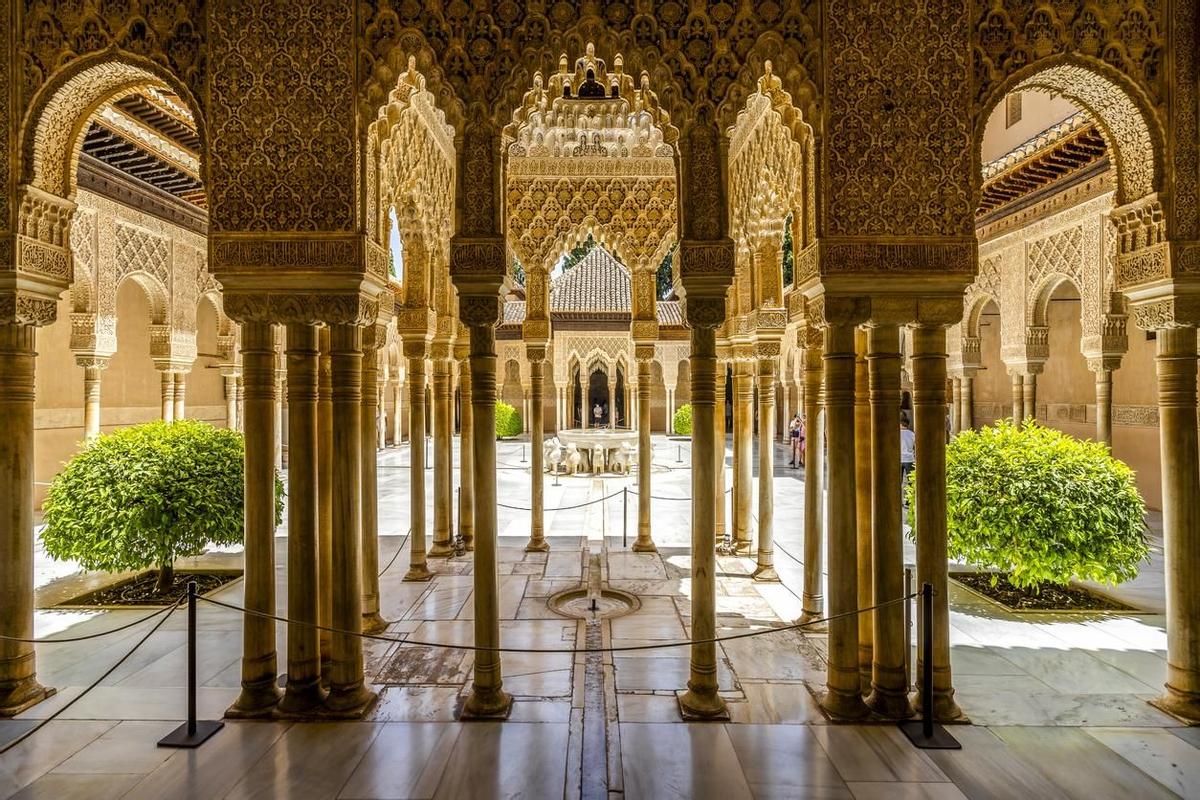
The Alhambra, the Generalife, and the Albaicín of Granada have been considered UNESCO World Heritage since 1984. Many centuries earlier, in the mid-13th century, it was built as the first palace of the Nasrid kingdom, becoming a citadel with a military zone and a palatial city in the following centuries. The Alhambra - initially called Alhamar - is surrounded by gardens known as Generalife. These fortifications extended across the Albaicín, where the Ziritas had their castles and palaces, of which nothing remains today.
A lake in the Pantanal, Brazil

Although wetlands cover just over 6% of the Earth's surface, the Pantanal spans nearly 20 million hectares, making it the largest on the planet and covering parts of Brazil, Bolivia, and Paraguay. This area alone represents 3% of all wetlands in the world. Nevertheless, only 5% is protected, while the rest is privately owned and used for cattle grazing.
Totems in SGang Gwaay, Canada
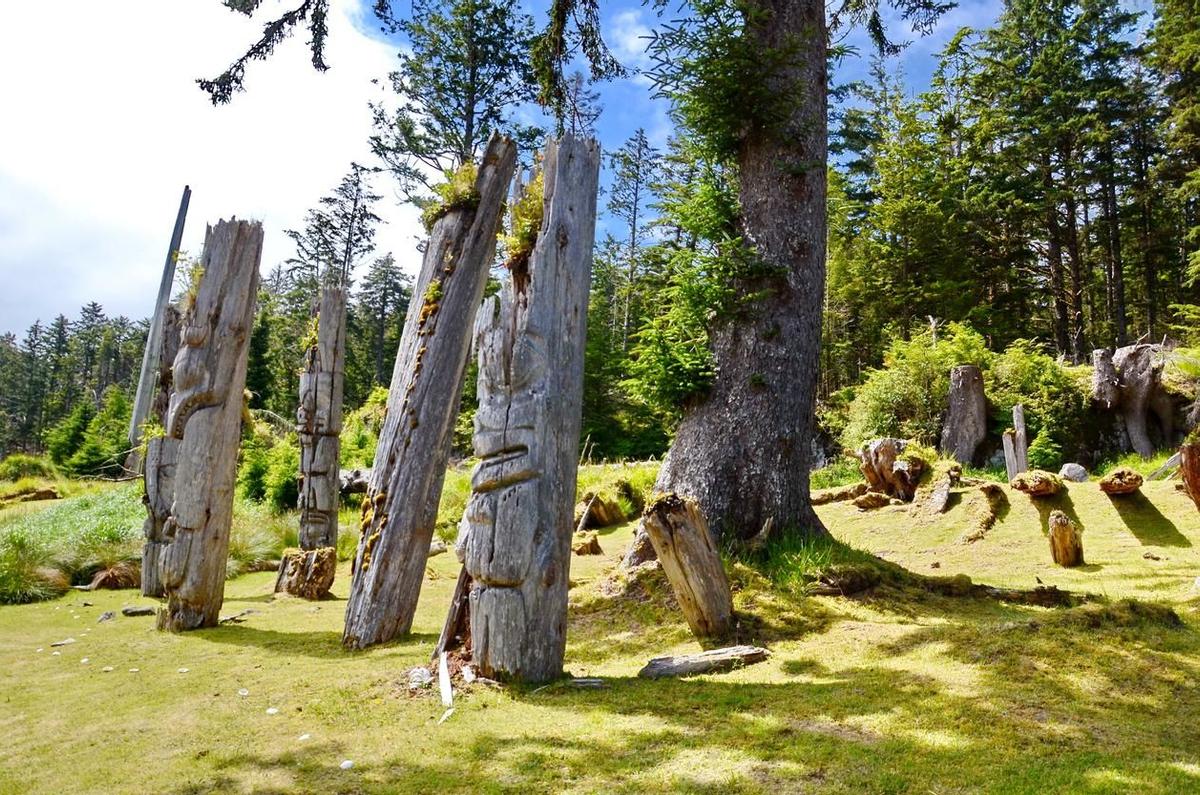
The village of Ninstints leaves a mark of life from the Haida people in the forest: funerary and commemorative totems. These sculptures carved into tree trunks are the only ones that remain in North America. According to archaeologists, they have existed for over 13,000 years. For a Haida, a totem is both art and nature, and they expect that, after time, it will return to be consumed and belong to the land again. This is why they are also so difficult to preserve, and there are only 32 here.
Iguazu Falls, Argentina-Brazil
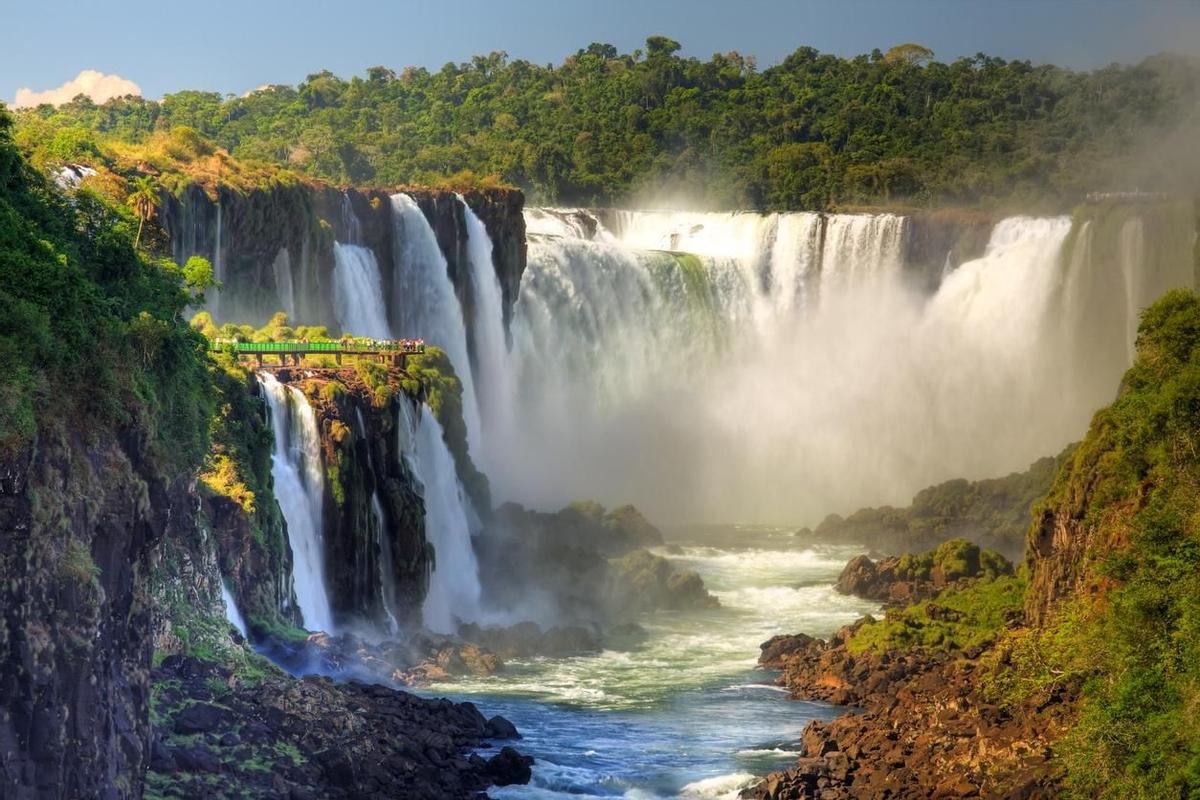
The entire park is protected by UNESCO, although at its heart lies the most well-known and perhaps impressive feature: Iguazu Falls. At 80 meters high and 2,700 meters wide, it acts as a border between Argentina and Brazil. The surrounding rainforest contains more than 2,000 species of vascular plants and regional fauna - howler monkeys, jaguars, caimans... - as well as other endangered species such as the otter or the giant anteater.
Kakatiya Rudreshwara (Ramappa) Temple, India
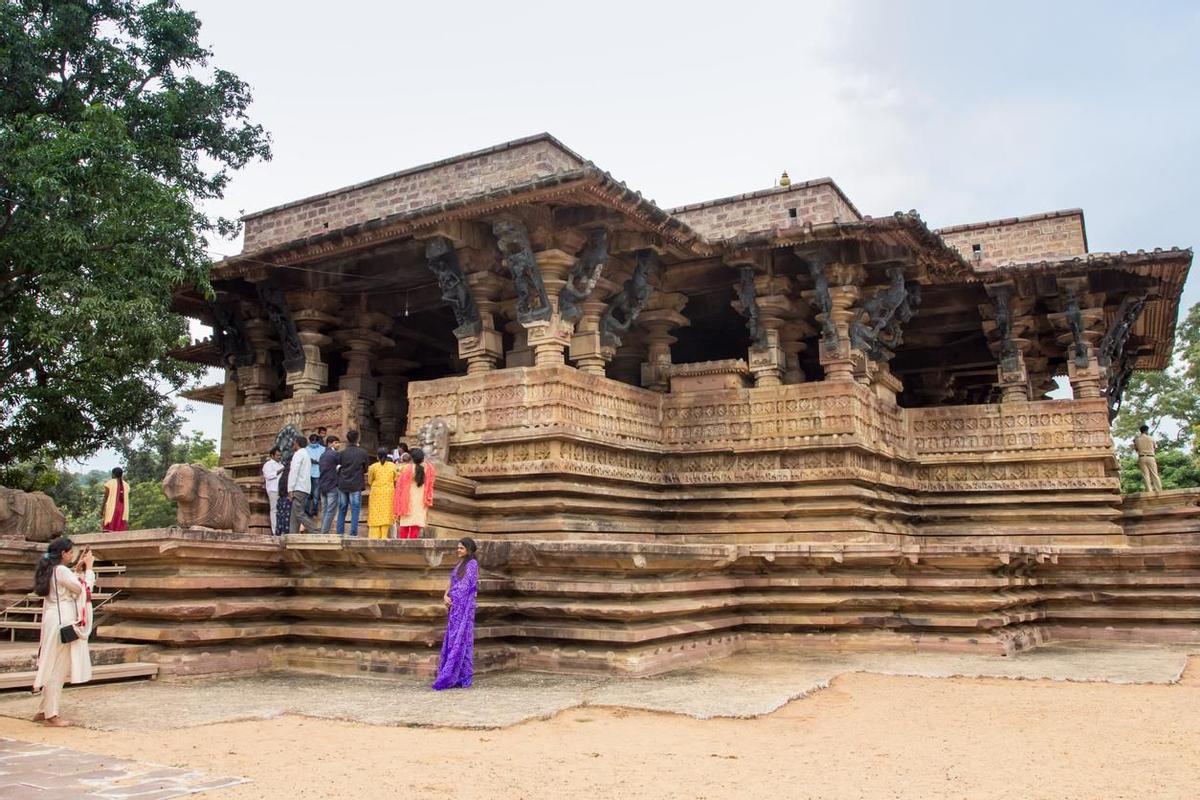
This is the most important temple dedicated to the god Shiva, built in a walled complex during the Kakatiya dynasty (12th to 14th centuries). Its sculptures are of spectacular artistic quality, representing scenes of regional dances and elements of the culture of that time. It is in perfect harmony with the environment, as it follows the parameters expressed in the dharmic texts, which assert that temples should be part of the landscape that surrounds them.
Canal du Midi, France

The Canal du Midi or Midi Canal connects the two coasts of southern France, something that had been desired since the time of Nero but was only achieved by Louis XIV. It consists of 214 kilometers of canal and almost 6.5 million cubic meters of water. You can travel along it by boat, on foot, or by bicycle, enjoying the more than 60,000 trees that line the path, making you forget the time you live in.