
Alexandria, land of poets and conquerors

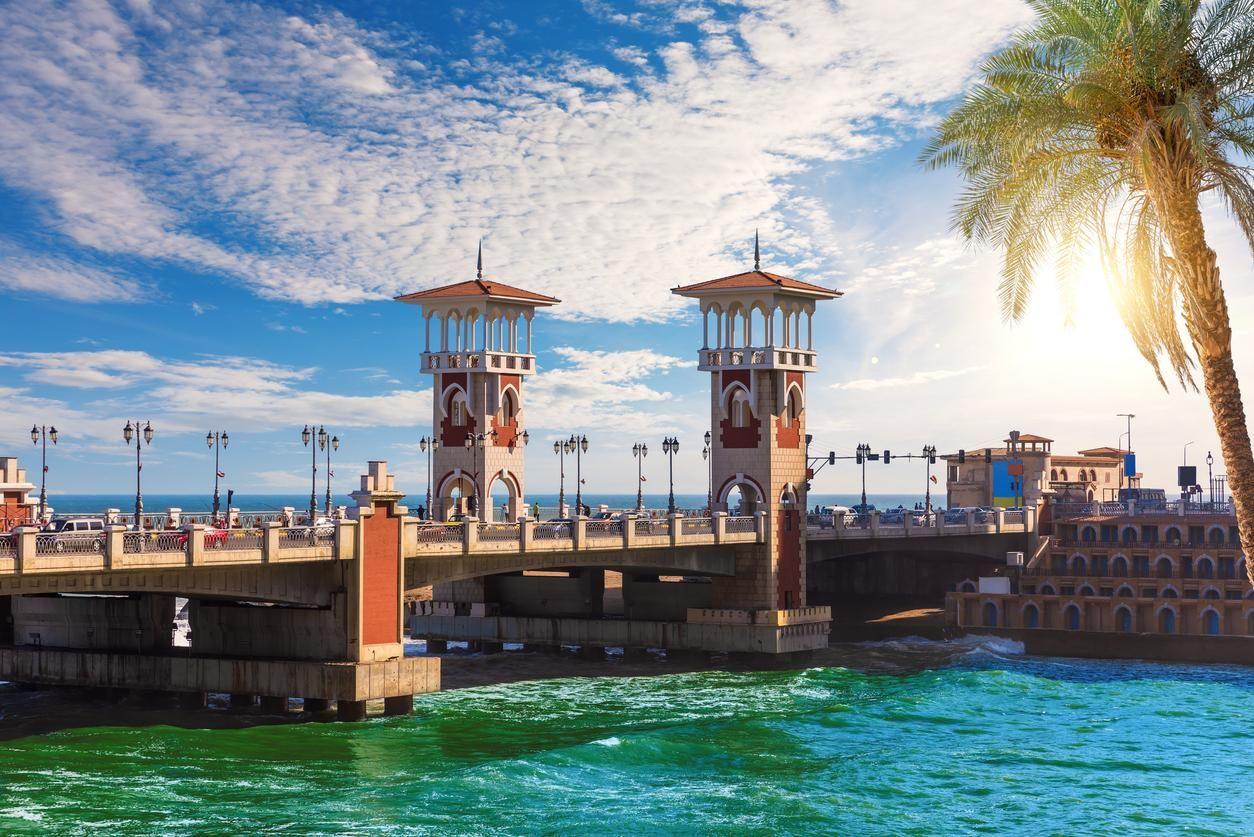
Alexandria, located in northern Egypt on the eastern Mediterranean, is named after a pharaoh, a king, a conqueror. This is the first Alexandria among the over 50 founded by Alexander the Great in his relentless campaign eastward. It is said that the city was more Greek than Greece itself, "a calculated marvel of marble, gleaming." Amr, the Muslim conqueror of Egypt in the 7th century, sent this dispatch to the caliph of Arabia when he conquered the city: "I have taken a city of which I can only say contains 4,000 palaces, 4,000 baths, 400 theaters, 1,200 greengrocers, and 40,000 Jews." Alexandria was a cultural and civilizational hub, and although most of the city sank into the sea in the 8th century, losing much of its grandeur and bustle, strolling through the land of Cleopatra or Cavafy remains rewarding in itself.

The waterfront of Alexandria evokes Havana. But it is so much longer. The Cuban waterfront is eight kilometers long; Alexandria's is 20 kilometers. These shores of Alexandria, which have kissed the sea for thousands of years, are lined with tall buildings-French, Italian, British. All face the sea, attentive, knowing that dangers and virtues came from that direction. From here, the great lighthouse of Alexandria, standing 120 meters tall, could also be seen, fundamental for the city's defense. And the port, named "Eunostos," meaning "the good return". It evokes a feeling that shines here, nostalgia, in Latin nostos-"return" algia-"pain".

Before Alexander the Great arrived, Alexandria was a little fishing village. He left to continue his battles and never saw the city in its glory. He only returned to be buried in some undiscovered corner of this city. His body was initially taken to Memphis, the first capital of Ancient Egypt, but the high priest refused to receive it: "Do not place him here (...) for wherever his body lies, the city will be disturbed, troubled by wars and battles." So they took him, wrapped in gold, up the Nile to the shores of Alexandria.

And finally, Cavafy, the poet beloved by many travelers, speaks of Ithaca and returning, you know. He was born here, and you can still visit his house, a 19th-century mansion. "As you set out for Ithaca/ hope your road is a long one/ full of adventure, full of discovery," begins the famous poem. And it ends: "When you arrive, your destination is what you are really seeking/ But don't rush the journey at all."
Alexandria is possibly one of the most literary cities in the world. For its ability to evoke other times. You do not see that grandeur while walking through its streets today, but it is suspected, it is breathed, like the smell of salt in this eastern corner of the Mediterranean, our inner sea, between coastlines, between lands, within us, as we are so much water and salt. And we return to it time and again, to our origin.