
Best Things to Do:
Lion City, the Mystery of the Underwater City of China that Occupies More than 60 Football Fields
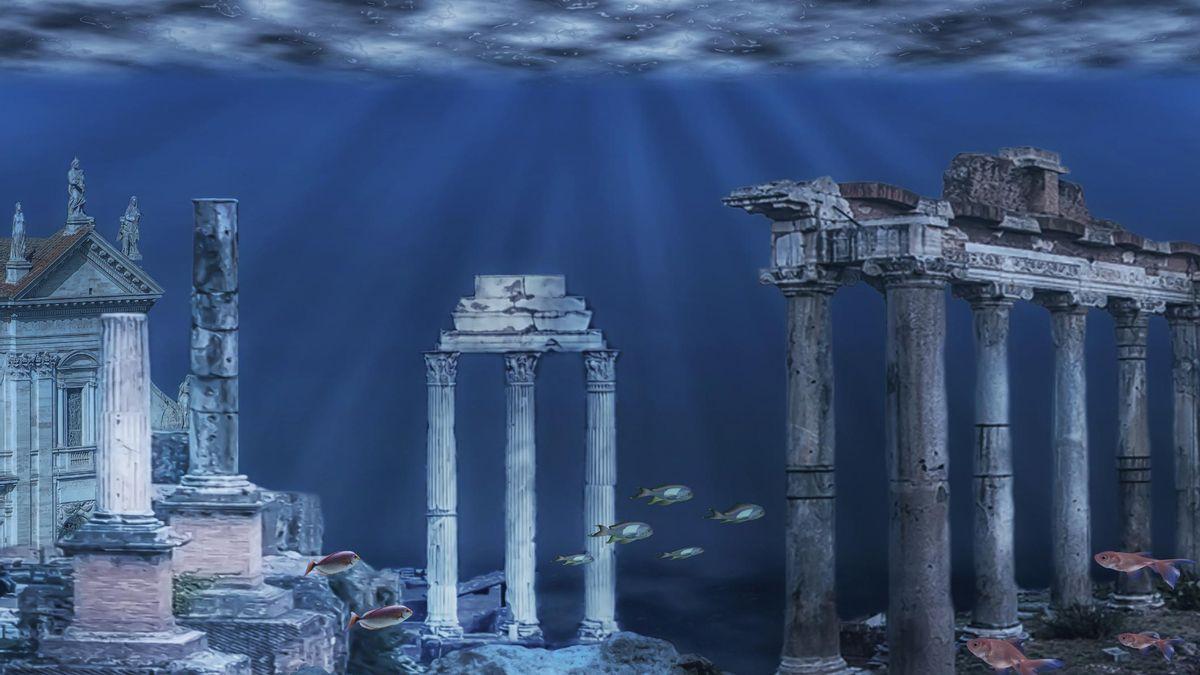
Cities are much more than just places to visit, buildings to admire, and restaurants to dine in. A city is a reflection of the passage of time, of how a population has evolved, which has not always been there. Sometimes, remnants of the past fall into oblivion or are buried under new constructions. Travelers are eager to discover them all: Madrid, Prague, Beijing, Tokyo, New York... but at times they forget about the cities that once existed and eventually disappeared.
Some were real, like the village of La Isabela in Guadalajara, which was submerged under the Buendía reservoir in 1995, or Talavera la Vieja in Cáceres, which was drowned by the Tagus River. Others, however, are just a legend - until proven otherwise - like the eternal Atlantis, an underwater city where hundreds of beings are said to have lived, making it the most powerful empire in the world. Something akin to a Chinese Atlantis lies beneath Qiandao Lake, known as 'Thousand Islands'. But this one is very real.
An Impressive Heritage
Lion City spans nearly 60 football fields and was home to about 5,400 people at its peak, back when it was a metropolis around the year 620 AD. It is surrounded by a six-meter-high wall, with thirteen towers, six major avenues, schools, and temples that can still be seen approximately 26 to 40 meters underwater. Also known as Shi Cheng, this ancient city was buried following the construction of a dam over 60 years ago, in 1959.
Around 208 AD, the Han dynasty founded this city in the current Zhejiang region. From then until the year of its disappearance, it served as a vital hub for the county of Sui'an, but in 1957, the government decided to build a hydroelectric dam to provide electricity to other large cities. Erecting it would mean flooding the valley of the five lion mountains and, therefore, Shi Cheng. The stable water temperature has allowed it to remain almost intact, but time is an enemy to everything and everyone.
Rediscovered in the 21st Century

For years it was completely forgotten, but in 2001, when its neighbors still vividly remembered how their city had been, explorations began to uncover the archaeological remnants. In addition to the wall over 1,500 years old, dragon-shaped figures, buildings adorned with mythological characters, engravings of the laws of different dynasties, books, and works of art were found... It soon acquired the nickname Lion City due to the influence of the aforementioned mountain.
With this designation, much easier to remember for those unfamiliar with the Chinese language, it has surprised explorers from around the world who have sought to discover it. It is said that, when submerging it, accessibility was considered so that it could become a tourist attraction. Indeed, it is, as visitors can learn about it from within. Although not much can be appreciated by the naked eye anymore, the creation of the dam gave rise to a large artificial lake filled with small islands, which are the best example of the iceberg law, or as 'The Little Prince' said: "what is essential is invisible to the eye."