
- 1. Andalusia
- 2. Aragon
- 3. Balearic Islands
- 4. Canary Islands
- 5. Cantabria
- 6. Castilla-La Mancha
- 7. Castile and León
- 8. Catalonia
- 9. Community of Madrid
- 10. Community of Navarre
- 11. Valencian Community
- 12. Extremadura
- 13. Galicia
- 14. Basque Country
- 15. Principality of Asturias
- 16. Region of Murcia
- 17. La Rioja
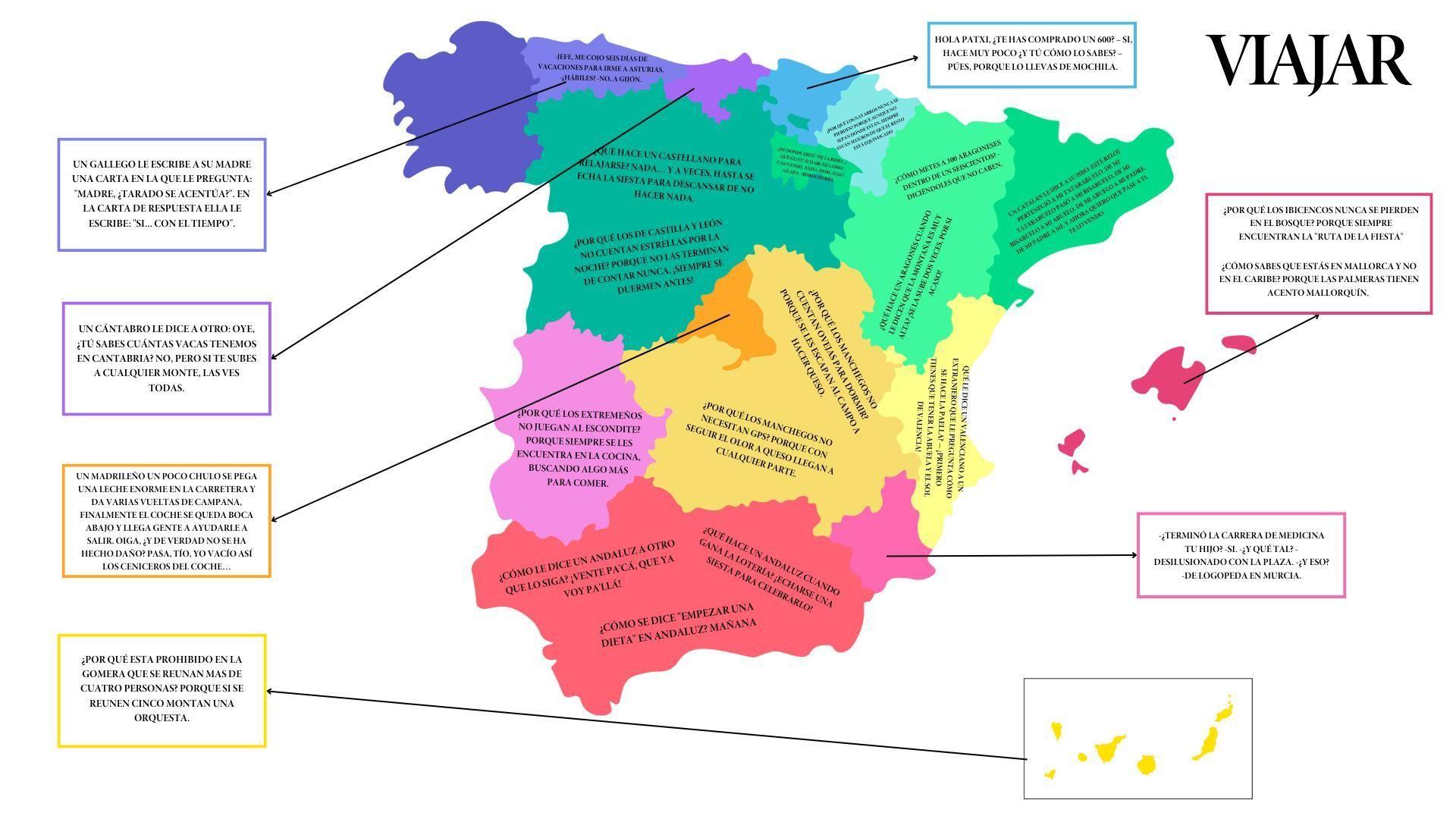
In these times we live in, humor is in danger. Everything bothers us, and we feel offended when, for example, any kind of cliché or stereotype determined by our birthplace falls upon us. We apologize in advance if someone is offended. It is not our intention; in fact, the editorial team of VIAJAR Magazine (and its team of collaborators) is a kind of national UN where everyone comes from a different part of Spain, and joking is part of our daily routine. A few weeks ago, we published The map with the typical sayings of each Autonomous Community of Spain to demonstrate the wealth and ingenuity we have, and now we're back at it...
According to the Royal Spanish Academy, a stereotype is an adjective 'belonging to or relating to a specific place'. It is, therefore, a stereotyped idea and (note, we will use capital letters for emphasis) LITTLE TO NO SIGNIFICANT. A cliché, a commonplace, a characteristic that 'gets out of hand' and ends up losing its value for being so used or too well known. Years ago, our collaborator Javier Reverte wrote the article Typical stereotypes that is worth reading, and you can read it here. In short, nothing that should offend us. And as laughter (and travel, of course) are the things that really matter in this world (not forgetting health), here we leave you the map with the most popular jokes and stereotypes from each Autonomous Community of Spain.
Andalusia

We will base ourselves on the maximum 'cliché' to define Andalusians. They are often described as cheerful, warm, and outgoing people, and it is said that they have a great sense of humor, enjoy partying and dancing, especially flamenco, and are very passionate about their culture. People often see them as generous, with a great love for life and a relaxed and carefree attitude. Just one thing... don't mess with their siesta.
- These are two Andalusians from Jaén talking: - I got involved with a Sevillian girl and she took me to that place to dance with stomped feet. - Flamenco tablao?
- - No, no, she speaks Spanish, it's strange but Spanish.
- How does one Andalusian tell another to follow him? Come here, I'm already going there!
- What does an Andalusian do when he wins the lottery? Take a nap to celebrate!
Aragon
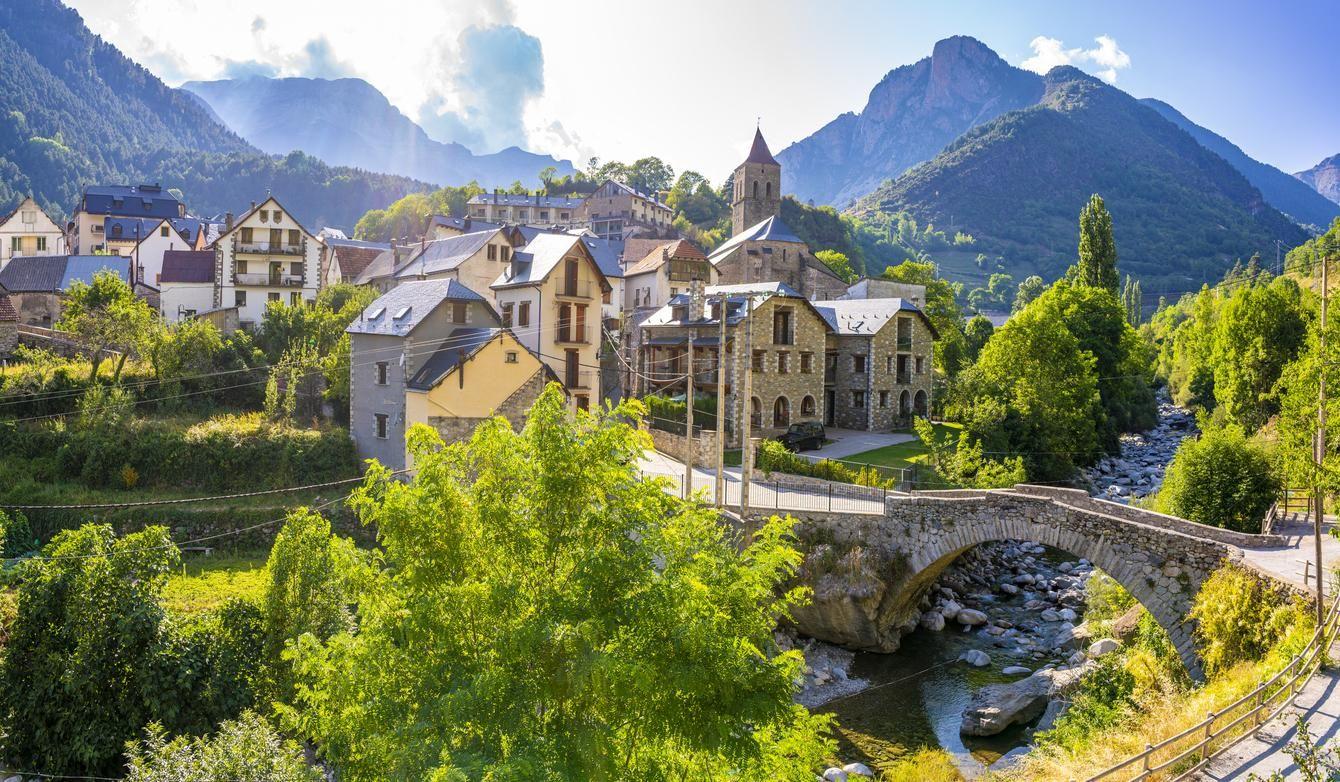
Aragonese people are often depicted as reserved, serious, and somewhat austere individuals, but also very hardworking and tenacious. They are described as practical and possessing a strong sense of regional pride. The cliché image also describes them as fiercely independent and self-sufficient, as if they are deeply connected to their roots and traditions. They are also associated with great perseverance, influenced by the mountainous landscape and the history of the region.
- What does an Aragonese do when told that the mountain is very high? He climbs it twice, just in case!
- You know, I stopped lifting weights and started dating a girl from Zaragoza. - And what does that have to do with anything? - Better skill than strength.
- How do you fit 300 Aragonese into a 600? - By telling them they don't fit.
- An Aragonese went to the station and approached the ticket window: - May I have a ticket? - Where to, buddy? - Here, I haven't told my wife and I'm going to tell you.
Balearic Islands

In the cliché sense, Balearic people are seen as relaxed, friendly, and carefree individuals. They are associated with a tranquil lifestyle and a deep connection to the sea and nature. The typical image includes enjoying good weather, beaches, and a more laid-back pace of life compared to large cities.
- Why do people from Ibiza never get lost in the woods? Because they always find the 'party route'.
- What does a Mallorcan do when the tide goes up? Goes up to the Serra de Tramuntana to wait for it to go down.
- How do you know you're in Mallorca and not in the Caribbean? Because the palm trees have a Mallorcan accent.
- What do you call a lost Menorcan? A tourist, because Menorcans never get lost on their island.
Canary Islands
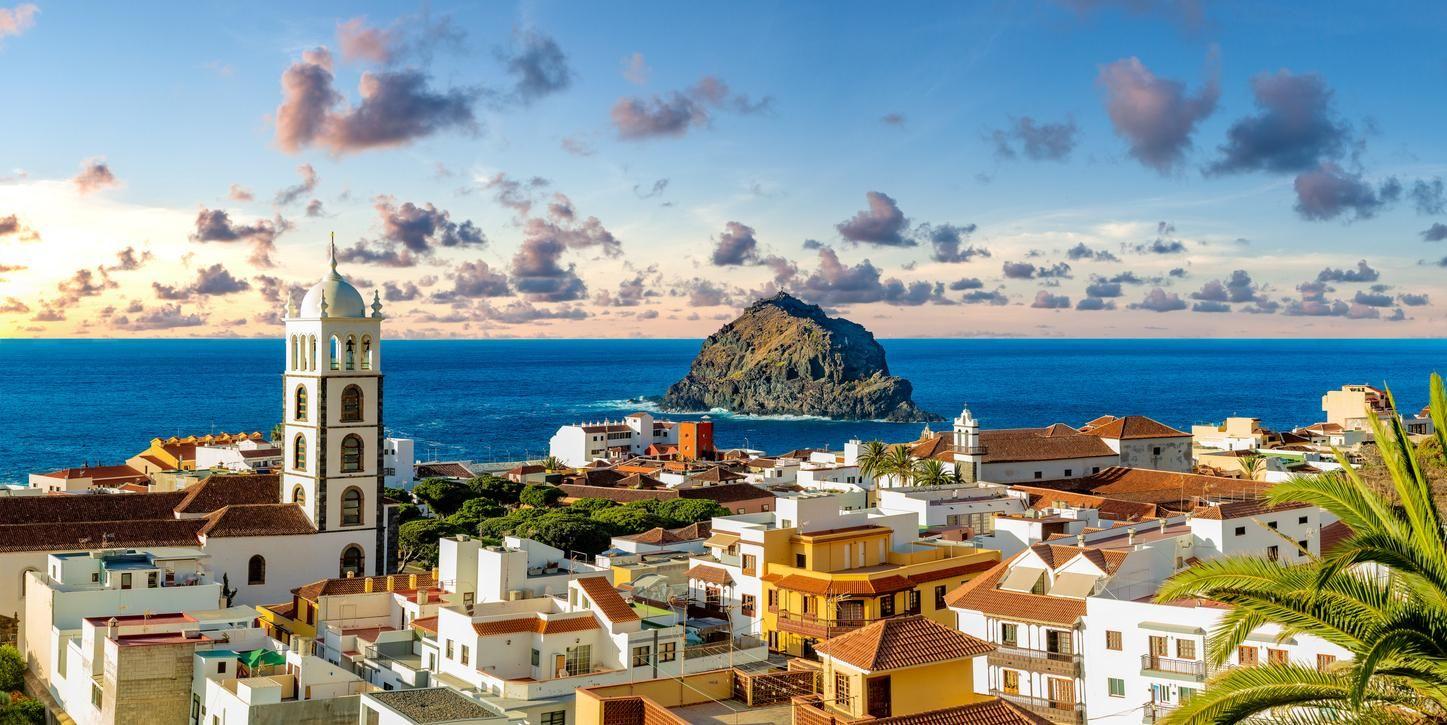
Canarians are often described as cheerful, outgoing, and very hospitable people. They are associated with a relaxed and positive attitude, partly thanks to the warm, sunny climate of the islands. The cliché image may also include a certain ease in conversation and a predisposition to enjoy life and the company of others.
They are often seen as lovers of music and parties, with a great connection to their local culture and traditions, such as the famous carnival in the islands. They are also perceived as very connected to nature and the sea, enjoying outdoor activities and appreciating the beauty of their surroundings.
- What do you call a rainy day in the Canary Islands? A miracle!
- Why is it forbidden in La Gomera for more than four people to gather? Because if five gather, they form an orchestra.
- What does a Canarian do when he is cold? Opens the window to let in the warmth.
- What is the ultimate irony for a Canarian going to the mountains? Carrying sand from the beach in his backpack.
Cantabria
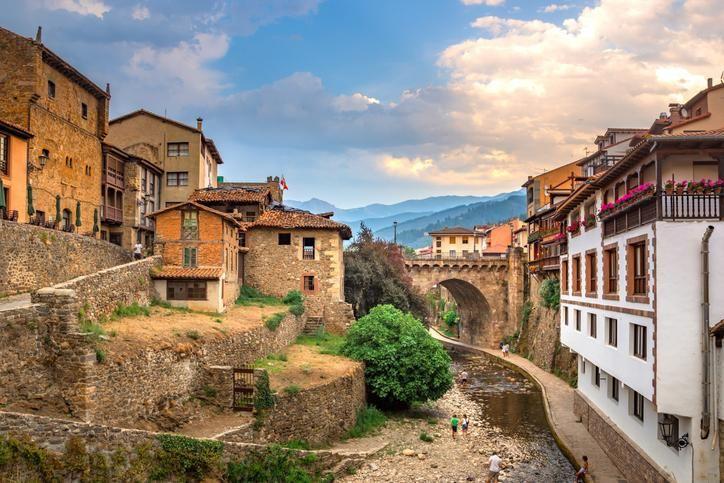
Cantabrians are more from the countryside than from the mountains, stoically enduring constant rain and enjoying dishes like cocido montañés, quesada, or sobao. Additionally, Cantabria is often associated with rural life, cows, and milk production, reflecting its strong livestock tradition.
- A Cantabrian at the doctor's office: Doctor, doctor, my whole body hurts. Have you tried a little sobao? Of course! But it only takes away my hunger.
- One Cantabrian tells another: Hey, do you know how many cows we have in Cantabria? No, but if you climb any mountain, you can see them all.
Castilla-La Mancha
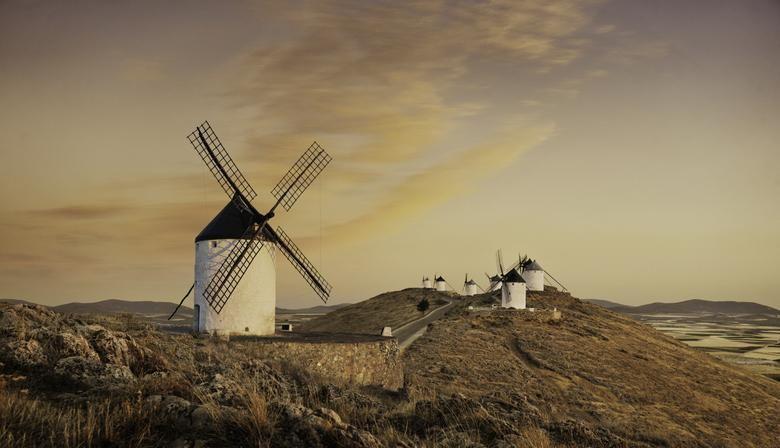
Manchegos are solitary, tough, and deliberate people. All of them, without exception (you know we're playing on stereotypes and irony), love cheese and wine. And, watch out, because those from Puertollano and Tomelloso are considered like those from Lepe, but in La Mancha.
- A man parking in Puerta del Sol is approached by a police officer who says: You can't park here, to which the man responds: You don't know who I am, I'm a councilor from Cuenca. The police officer replies: That's nothing in Madrid. Then the councilor adds: Neither in Cuenca.
- Why don't Manchegos count sheep to sleep? Because they escape to the countryside to make cheese.
- Why don't Manchegos need GPS? Because by following the smell of cheese, they reach anywhere.
Castile and León
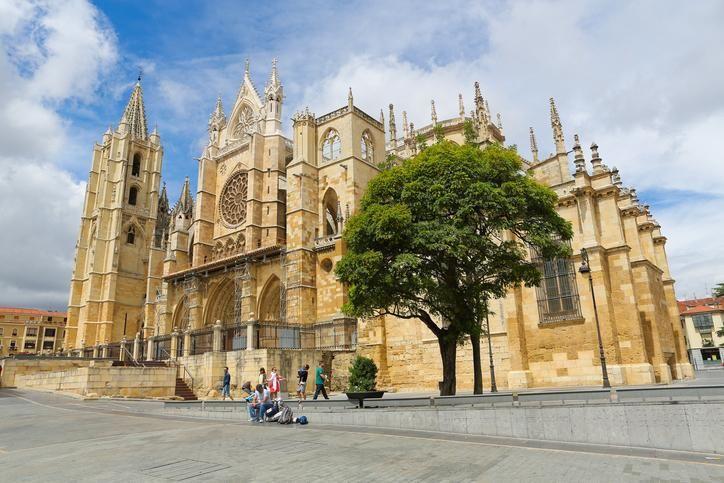
There are many stereotypes about Castile and León. Moreover, each province has its own. From the outside, they are labeled as dry, simple, provincial, and conservative. Their climate has made them resilient people, in love with nature and good customs, such as gathering around a good soup dish.
- What is the preferred dessert in Castile and León? A good nap after roasted lamb!
- What does a Castilian do to relax? Nothing... and sometimes, even takes a nap to rest from doing nothing.
- Why don't people from Castile and León count stars at night? Because they never finish counting them, they always fall asleep first!
Catalonia
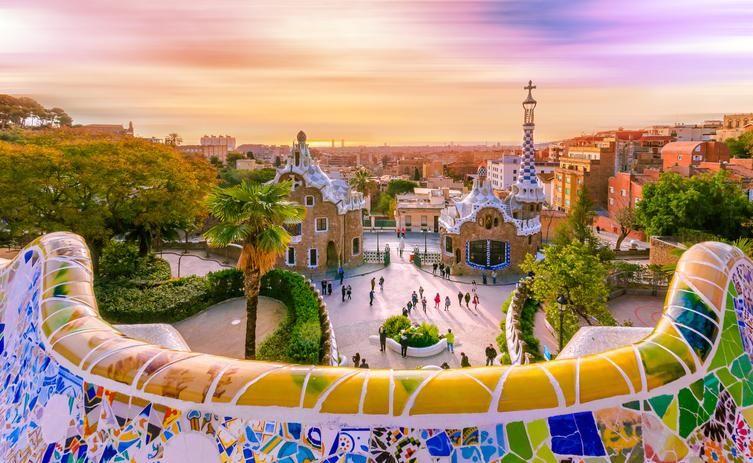
Catalans don't stop dancing the sardana at all hours. Calçots are the basis of their diet and, to save a euro, they are capable of walking to the moon just to avoid paying for a space trip. This also applies to taking the bus or metro. They are stingy to the max, and when you ask them in Spanish, they always look at you poorly and respond in Catalan. Stereotypes, stereotypes, and stereotypes that do not truly reflect the character of a people.
- A Catalan tells his son: this watch belonged to my great-grandfather. From my great-grandfather it went to my grandfather, from my grandfather to my father, from my father to me, and now I want it to pass to you. I'll sell it to you.
- One day, a Catalan father calls his son to tell him: Jordi, can you go see the neighbor and ask if he can lend us a hammer to drive in a nail? Jordi rushes to the neighbor's apartment and comes back empty-handed. Dad, the neighbor Anselm won't lend us the hammer because he says it might get worn out. Wow, son, some people are so stingy. Come on, take out ours.
Community of Madrid
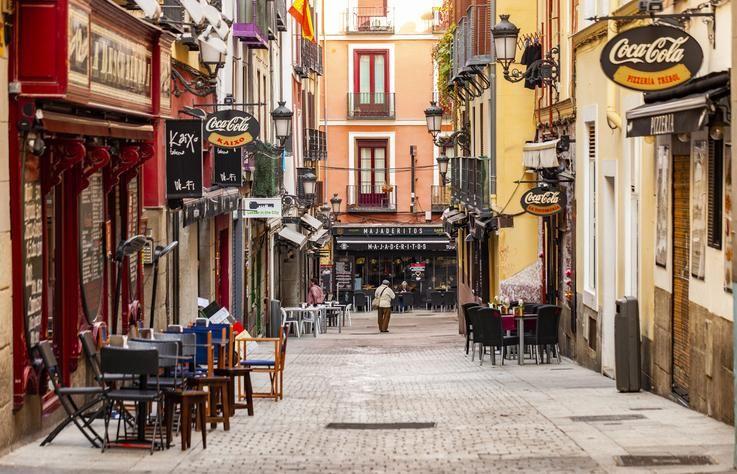
If there is one thing a Madrilenian is known for, it's their cockiness. Madrilenians don't have (or lack) an accent, but we let out an 'ej que' that comes from within. We say we are arriving when we are still getting into the shower, and whenever we travel anywhere, we ask if we can drink tap water. We drink beers in La Latina, on Sundays we go to El Rastro, and at Christmas, we enjoy Cortylandia.
- Three men arrive at hell, an Andalusian, a Catalan, and a Madrilenian. The devil says: the one who endures three lashes will go to heaven; also, you can put whatever you want on your back to endure the pain. First, the Andalusian puts a big cement slab that breaks at the first lash, and he says: I'm staying here. Then comes the Catalan, who kneels. The devil says: Aren't you going to put anything on your back? I just need meditation. Well, suit yourself. He gives the first lash and the Catalan just moans a little. The second lash and the Catalan is calm. The third lash and the Catalan is fresh as a lettuce. Then the devil says: Well, a promise is a debt, you can go to heaven. And the Catalan says: Yes, but first I want to see the Madrilenian. It's his turn, he kneels, and the devil says: Aren't you going to put anything on your back? - Can I put anything I want? - Whatever you want! - Hey you, Catalan, come here!
- A cocky Madrilenian crashes in the road and rolls several times; eventually, the car is upside down, and people come to help him out. - Excuse me, didn't you get hurt? - Oh come on, I empty my ashtrays like that...
Community of Navarre

Although the Autonomous Community of Navarre is not the largest in Spain, it is interesting to see how the personality of Navarrese people changes if they are in the northern or southern part. Those near the border with Aragón are more open than those living in the Cantabrian region. However, all Navarrese share a common trait: they are quite stubborn and deeply rooted in their traditions.
- Why do people from Navarre never get lost? Because even if they don't know where they are, they are always sure the rest is wrong.
- A Navarrese tells his friend: - They told me I'm very stubborn. - And what did you tell them? - That it's not true, and not to say it again!
- A Navarrese goes to the movies, and halfway through the film, someone yells: - Hey, you've been sitting in my seat for an hour! And the Navarrese responds: - Well, if you lasted an hour, hold on for the rest of the movie!
Valencian Community

If you want a good party, all you have to do is invite a Valencian. With their sociable and fun character, they can strike up a conversation even with the driest Catalan, but depending on the topic, they can also show their 'meninfot' character (that they don't care about anything). They only get upset when you get creative with their beloved paella, because for them, any other version is 'rice with things.'
- What does a Valencian say to a foreigner who asks how to make paella? - First you need to have a grandmother and the sun of Valencia!
- What do you call a Valencian who gets lost on the beach? A tragedy, because they will never find the ideal place to eat a good paella!
- Why don't Valencians go to the gym during Las Fallas? Because lifting the weight of firecrackers and ninots is enough exercise.
Extremadura
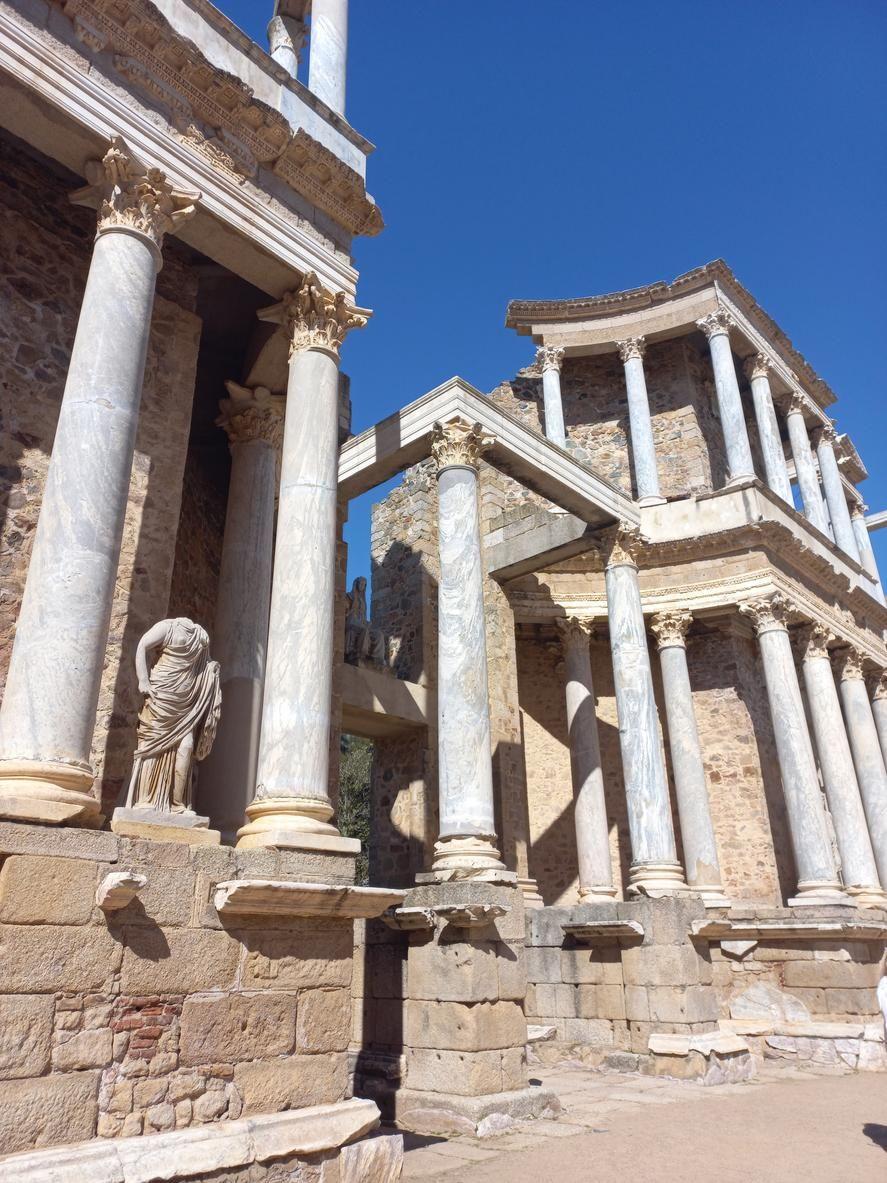
Much is said about Catalans, Galicians, and Basques, but... what about the Extremadurans? In their little corner of Spain, they are somewhat a 'want to but cannot' compared to Andalusia; and with the trains, they are tired of asking for high-speed trains to pass through their region. They are simple, frank, and direct people, and although they sometimes might lack a sense of humor, they have a good heart.
- Why don't people from Extremadura play hide and seek? Because they're always found in the kitchen, looking for something to eat.
- What does an Extremaduran do when someone tells him he's in a tourist spot? - Well, I'll have to take the winery to the beach to feel at home!
Galicia

It's easy to identify a Galician: the accent and musicality of their speech give them away. The personality of Galicians is often indecisive, and it's likely that the answer to your question will be another question or a 'depends', which can lead to the cliché that they're a bit 'slow'. In some cases, they might seem a bit rude, but in reality, they are delighting you with the 'retranca gallega'. At first, they might be untrusting, but once you get to know them well, you realize you've made friends for life (we wanted to say 'amiguiños' for humor, but the Galician word is 'amigos').
- A Galician writes a letter to his mother asking: 'Mom, does tarp need an accent?' In the response letter she writes: 'Yes... with time.'
- Why would a Galician look for a box in a gym? Because he needs a safe.
- Two Galicians on motorcycles: - Hey José, you're scratching your head with your helmet on! - Do you lower your pants when your butt itches?
Basque Country

Jokes about Basques relate to a very peculiar way of being, with little tact and a lot of irony. In them, Basques come off as tough and unimpressed by almost anything, no matter how exaggerated it may be.
- - Hello Patxi, did you buy a 600? - Yes, just a little while ago, how do you know? - Well, because you're wearing it as a backpack.
- - And you know, Peru, when you're out there, you have to be polite and not ask anyone where they are from. - Why can't I ask anyone where they're from? - Because if they are from Bilbao, they'll tell you; and if not, you shouldn't embarrass them!
- - How do you know in a chess championship that a player is from Bilbao? - Because they are the only one shuffling the pieces.
- Two Basques leaving a math exam: - Hey Iñaki, what did you get for the second problem? - For me, infinity. - Only?
Principality of Asturias

Asturians take everything literally, twisting the meaning of words. It's a direct and brutal humor that leaves no puppet with its head intact with their quips.
- This is an Asturian who goes to a funeral and when it's time to offer condolences he says: - Excuse me, I'm sorry. And they say: - Let it be as it is.
- An Englishman and an Asturian are on a boat, and the Englishman falls overboard and yells: - Help, help, help. And the Asturian says: - Gel, I don't have, but if you want shampoo.
- - Boss, I'm taking six days off to go to Asturias. - Skillful? - No, to Gijón.
- An Asturian tells his wife: - From now on I will call you Eve. - Why? - Because you are my first wife. - Well, then I will call you Peugeot. - Why? - Because you are the 206.
Region of Murcia
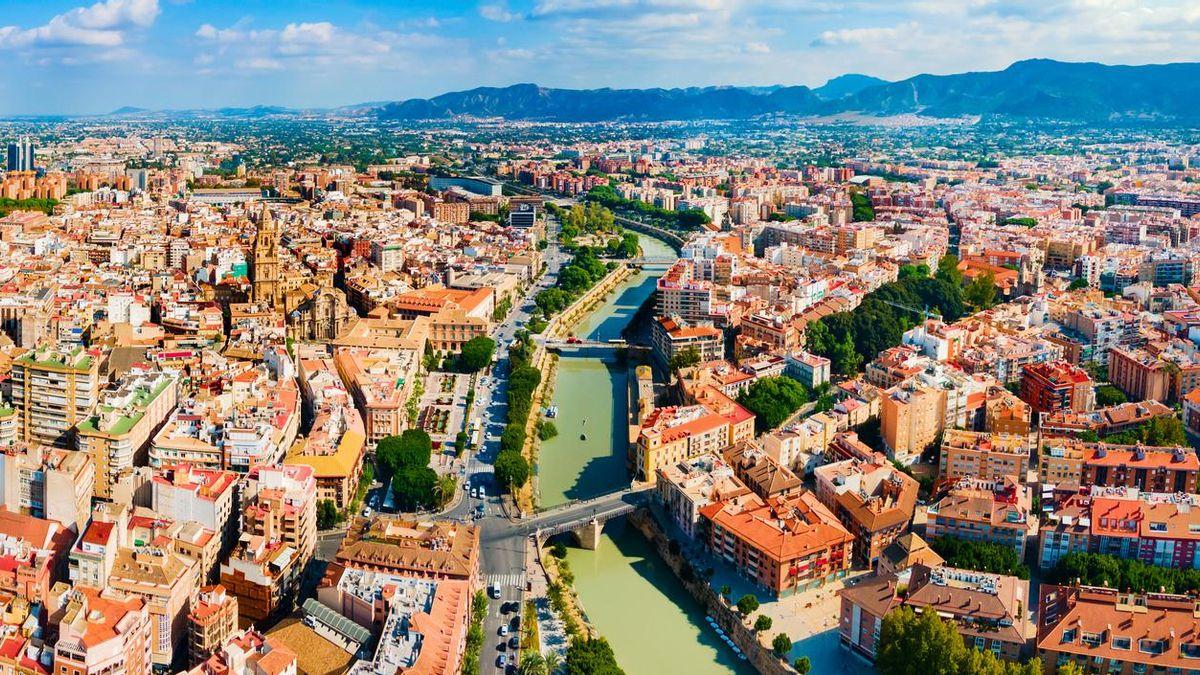
About Murcia, the most common thing is to make fun of how Murcians speak, leading to humor full of confusions and sarcastic comments.
- - Mom, what is bimensual? - That he likes men and women. - And biannual? - Kid, stop saying rude things.
- - Good afternoon ma'am, I'm calling you urgently. A lightning bolt has struck your husband and he is very... - Is it raining? - Of course, but... - Oh no, the clothes!
- - Did your son finish his medical degree? - Yes. - And how did it go? - Disappointed with the placement. - And why is that? - To be a speech therapist in Murcia.
- - Dad, can you help me with my language homework? - Sure, kid. - I have to make a sentence that includes the word catharsis. - Easy-peasy. Write down, kid: "before leaving home, there is catharsis the condoms of the shoes."
La Rioja

Jokes about people from La Rioja are closely tied to their food, wine, and manner of speaking, as well as the biases that exist within this autonomous community.
- - This weekend I'm going to La Rioja. - That's cool, you're going to enjoy yourself. - Well, I'm going more for the cultural offer. - Buff, the wine, blood sausages, chorizos, chops... how lucky!
- - I don't know much about you. For example, where are you from? - You may not want to ask so many difficult questions... - What's difficult about that? Are you from Calahorra? - There's going to be a lot of difficult questions...